

Wood decks are the number one source of contractor callbacks in outdoor construction. Rot, splintering, warping, discoloration — the list is familiar to anyone who’s had to go back and fix a deck that looked fine at handover. For distributors and contractors, that pattern has a real cost: labor hours, materials, and clients who remember the problem long after you fixed it.
Composite decking was built to cut out that whole category of rework. This guide explains what it is, how it’s made, and where it fits — so you can decide fast whether it belongs in your product lineup.
Composite Decking: A Quick Definition
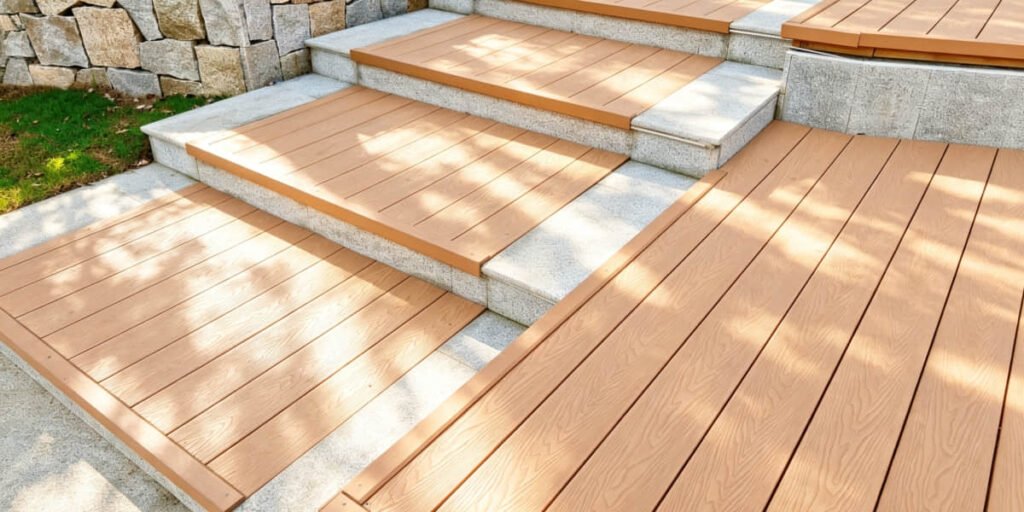
Composite decking is an outdoor board product made from a blend of recycled wood fiber and recycled plastic, engineered to look like real wood with far less upkeep. A protective cap layer bonded to all four sides keeps each board tough against moisture, UV, and staining over its full lifespan. The result is a deck surface that holds its shape and finish for decades — without the annual sealing, staining, or board replacement that timber demands.
What Is Composite Decking Made Of?
Composite boards combine two core materials that work better together than either does alone. Recycled wood fiber gives the board structure and a natural look. Recycled plastic binds the core and makes it waterproof.
The main ingredients in a composite decking board:
- Recycled wood fiber — hardwood fiber forms the structural core
- Recycled HDPE plastic — binds the core and blocks moisture
- UV stabilizers — protect against sun fade and color loss over time
- Pigments and processing additives — all heavy metal-free (RoHS compliant)
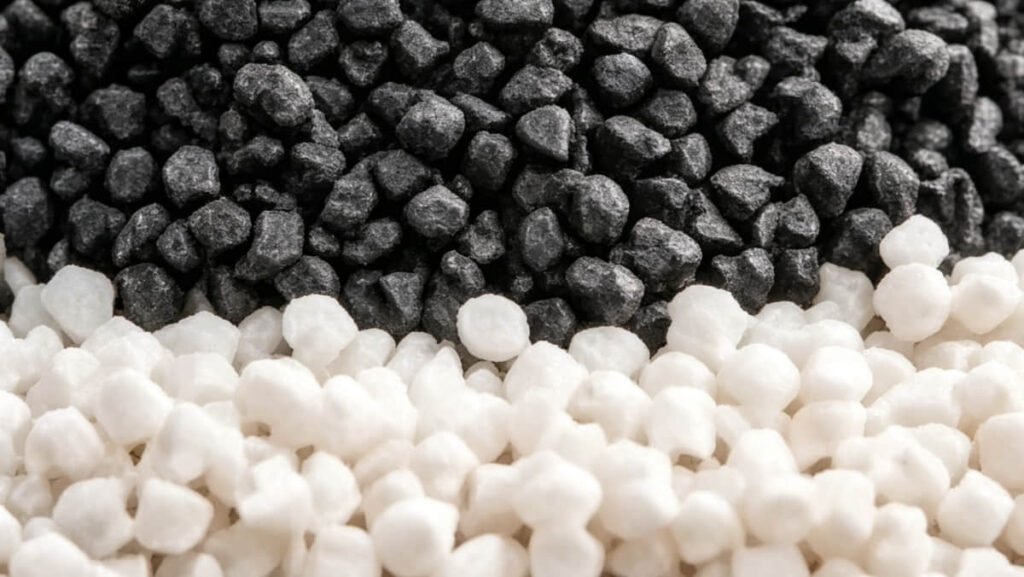
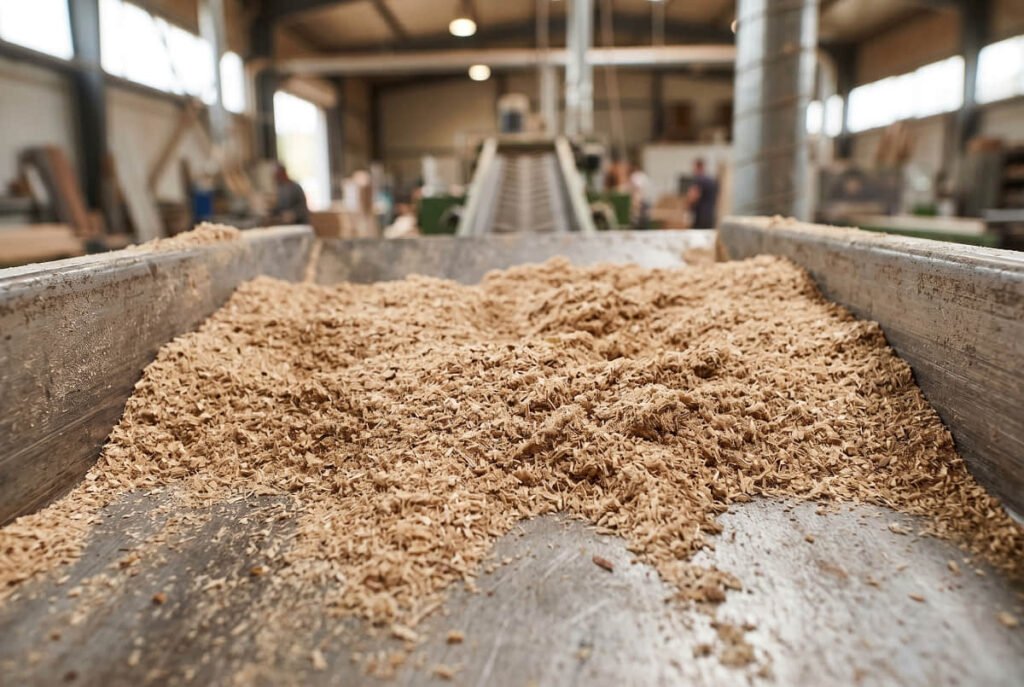
LastElegance boards use 60% recycled content — recycled HDPE and recycled wood fiber. Virgin material makes up the rest. That balance keeps every production batch consistent in strength and color.
How Is Composite Decking Manufactured?
The key process is co-extrusion. Here’s how it works:
- Mix the core — wood fiber and HDPE are blended with UV stabilizers and additives
- From the board — the blend is shaped under heat and pressure, creating the board’s profile and surface texture
- Bond the cap layer — a protective polymer cap is bonded to all four sides in the same production run
The cap layer is what separates a quality composite from a basic composite. A thicker cap means better UV protection, stain resistance, and color hold over time. For full technical specs — cap thickness, UV test results, and flexural strength — visit the composite decking product pages.
Types of Composite Decking Boards
Not all composite deck boards are built the same. Two decisions define most purchases: capped vs. uncapped, and solid vs. hollow.
Capped vs. Uncapped The Key Choice
A capped board has a protective polymer shell bonded to all four sides. An uncapped board leaves the wood-fiber core exposed at the surface, so it absorbs more water, stains more easily, and fades faster under UV.
The short version: capped is the current U.S. standard and the right call on any project where appearance matters past year five. Uncapped still works on shaded, low-traffic residential decks with a tight budget.
Cap quality varies more than most buyers expect — half-capped boards, caps with wood fiber blended in, and post-cut grooves all behave differently in the field. Our capped vs. uncapped composite decking guide breaks down the five cap levels, the cost gap, and which type fits each U.S. climate zone.
Solid vs. Hollow Boards
Solid boards are dense all the way through. They handle point loads better and feel firmer underfoot, which makes them the default for commercial decks, pool surrounds, and hot tub zones. Hollow boards use a multi-chamber core — roughly 30% lighter and 30–40% less material per linear foot, with better airflow under the deck.
Both come in grooved and square-edge profiles, and both are available capped. Core structure and capping are separate decisions. For load data, weight comparisons, and a project-by-project matching table, see our solid vs hollow composite decking guide.
Where Does Composite Decking Work Best?
Composite performs well across a wide range of outdoor builds. But there are specific project types where it pulls well ahead of wood.
Pool decks and wet areas
Composite boards handle standing water, pool chemicals, and constant wet-dry cycles without rotting or warping. Textured surface profiles provide a strong grip for wet, barefoot traffic — a key factor for pool surrounds and spa decks. This is one area where wood deteriorates quickly, and composite holds its ground season after season.
High-traffic outdoor spaces
Restaurants, hotels, apartment common areas, and retail terraces see heavy foot traffic year-round. Composite doesn’t splinter, rot, or show visible wear under sustained use. No annual sealing, no splinter liability, and no callback because a board cupped over the summer.

Coastal and harsh-weather locations
Salt air, driving rain, and freeze-thaw cycles punish wood fast. Composite resists moisture on all four sides and won’t swell, warp, or rot — even close to the coast. Contractors working in Florida, along the Gulf, and up the Pacific Northwest see the same result: composite holds its finish where timber fails within a few seasons.
Multi-family and hospitality developments
Large-scale projects need a consistent product across hundreds or thousands of square feet. Composite boards come out of the same production run looking identical — no color drift between batches, no knot patterns, no grain inconsistency. For developers who want a premium outdoor finish without premium maintenance costs, that consistency is a real advantage.
Residential decks where appearance matters long-term
Homeowners who want the look of real wood without the upkeep are the natural market for composite. For contractors, that’s a closing argument that works — and a low-maintenance product that won’t bring the client back to complain three years later.
Key Benefits of Composite Decking
Here’s why builders and contractors choose composite over wood:
- Low maintenance — no staining, sealing, or painting. Soap, warm water, and a soft brush, once or twice a year, cover it.
- Rot and insect resistance — no exposed wood surface means no rot risk and no termite damage.
- Moisture resistance — capped boards block water on all four sides. No swelling, cupping, or warping from rain or humidity.
- Slip resistance — textured surface profiles are rated for wet and barefoot-traffic areas, including pool surrounds and commercial outdoor spaces.
- Long lifespan — quality capped composite decking typically lasts 20–30 years. Pressure-treated lumber averages 10–15 years with regular maintenance.
- Consistent appearance — uniform color and grain across every board, every batch. No knots, no warping, no uneven finish between boards.
These apply to co-extruded capped composite boards. Uncapped products perform differently over time.
Expected Service Life
Quality capped composite decking is planned at 20–30 years, versus 10–15 for pressure-treated lumber and 15–20 for cedar. Premium solid lines carry a 30-year warranty.
Actual service life depends on cap quality, joist spacing, drainage, airflow under the deck, and climate — installation matters as much as the board. Our guide on how long composite decking lasts covers each factor, what shortens deck life, and when boards need replacing.
How Much Upkeep Does Composite Decking Need?
Minimal. Here’s the full maintenance routine:
- Rinse — clear loose debris with water
- Scrub — warm soapy water and a soft brush to lift dirt or stains
- Rinse again — done

No sealing. No staining. No painting. Ever.
A wood deck needs staining or sealing every 2–3 years, plus periodic board replacement as rot sets in. For large-scale projects or repeat clients, that ongoing service cost adds up fast. Composite removes it from the equation.
One practical note: avoid high-pressure washing at close range. It can damage the cap layer and may affect warranty coverage.
What Are the Downsides of Composite Decking?
Composite isn’t right for every situation. Here are three trade-offs to know before you specify it:
- Higher upfront cost — composite costs more than Pressure-treated wood at purchase. The gap narrows over time as wood maintenance and replacement costs stack up — but the day-one price is higher.
- Can’t sand or refinish — a badly damaged board needs replacing, not sanding back. Hidden fasteners make individual board swaps straightforward, but it’s a different repair process than with timber.
- Heat absorption — dark composite surfaces get hot in direct sunlight. In Sun Belt climates, this matters for barefoot-traffic areas like pool decks. Lighter colors stay cooler underfoot.
For commercial and multi-family projects, also check your local fire code. Composite decking carries an ASTM E84 Class C rating — suitable for many exterior uses, but always verify against local building code requirements for your specific project type.
For most mid-to-long-term projects, these trade-offs are manageable.
Composite vs. Wood: The Short Version
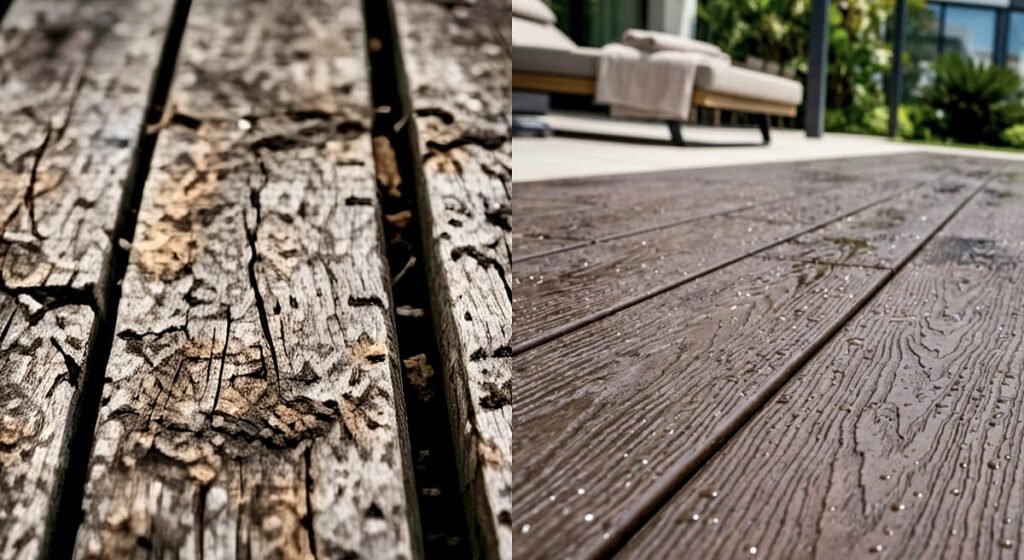
Wood wins on upfront cost and on-site repairability. Composite wins on maintenance, service life, and consistent appearance across every board.
| Factor | Composite | Pressure-Treated Lumber |
|---|---|---|
| Upfront cost | Higher | Lowest |
| Annual upkeep | Wash only | Stain or seal every 2–3 years |
| Service life | 20–30 years | 10–15 years |
| Repair | Replace individual boards | Sand, seal, or replace |
The upfront gap is real, but paid maintenance closes it. For installed cost per square foot by U.S. region, a 20-year cost model on a 300 sq ft deck, and the code and sourcing details, see our full comparison: composite decking vs. pressure-treated wood.
For distributors and contractors sourcing factory-direct, the upfront gap is smaller again — no importer markup, no reseller margin. Warranty runs by product line: 15 years on Renew, 20 on VerdeLife, and 30 on TimberLuxe.
Frequently Asked Questions
Is composite decking slippery when wet?
Quality composite planks have a textured surface built for grip. Grooved and brushed profiles are rated for wet areas, pool surrounds, and barefoot traffic. Smooth-profile boards offer less grip, so texture choice matters for high-moisture areas.
Can you paint or stain composite decking?
No — and you don’t need to. Capped boards hold their color through the protective cap layer, not surface paint. Painting can trap moisture under the film and may void your warranty.
Does composite decking get hot in the sun?
Yes — like any outdoor surface, composite planks absorb heat in direct sunlight, especially darker colors. Lighter deck boards manage surface temperature better. For pool decks in Sun Belt climates, color choice directly affects barefoot comfort in summer.
Can composite decking be repaired if a board is damaged?
Composite planks can’t be sanded or refinished — a damaged board needs replacing. Hidden fastener systems make individual board swaps easy without disturbing the rest of the deck. Order a few extra boards from the same production run for future color matching.
What is PVC decking, and how is it different from composite?
PVC decking is made entirely from plastic — no wood fiber content. Composite blends wood fiber and recycled plastic, giving it a more natural look, feel, and weight than pure PVC. PVC handles fully submerged conditions better; composite delivers a better wood aesthetic for standard outdoor spaces.
Does composite decking need a subframe, and what joist spacing is recommended?
Yes — composite decking is installed over a standard joist subframe, the same as timber. Spacing follows the board’s span table and local IRC/IBC rules; our boards call for 12″–14″ on center. See our solid vs hollow composite decking guide for how core structure affects span.
Ready to Spec It?
If you’re adding composite to your product lineup — or sourcing for a specific project — we can move fast. Samples ship on request, and our team can turn around project pricing quickly.
Contact our sales team for project pricing.