

Two composite deck boards can look the same on a shelf — and still sit $10 apart per square foot. If you’re quoting jobs or building a product line, that gap hits your margins hard. But the gap isn’t random.
Composite decking prices range from $4 to $18 per square foot for materials alone. The spread comes down to seven factors: board makeup, core material, profile, product tier, supply chain structure, install method, and long-term value. This is a breakdown from the manufacturer’s side — the part of the chain most buyers never see. By the end, you’ll know where the money goes in every composite quote, and where you can claw some of it back.
1. Board Makeup: Capped vs. Uncapped
The biggest price split in composite decking is whether the board is capped or uncapped.
Capped composite boards go through a co-extrusion process. The maker wraps the wood-plastic core in a polymer cap layer on all four sides. That extra step — and extra material — raises the cost. But it also adds real protection against UV, stains, and moisture.
Cap thickness matters. Thicker caps cost more to produce but hold up better over time. A cap in the 0.6–1.0 mm range (24–40 mils) is typical for mid-range to premium boards. The cap also carries UV stabilizers — most commonly a HALS + UV absorber system — which keeps the color from fading in direct sun.
Two other specs tie directly to long-term value. Water absorption tells you how much moisture the board takes on. A rate under 1% (tested per ASTM D1037) is a strong result — boards with very low absorption resist swelling, mold, and rot. Slip resistance matters for safety and surface wear. A rating of R11 or higher (per DIN 51130 / AS 4586) is suited for wet areas, pool surrounds, and barefoot traffic.
Uncapped boards skip the cap layer, which cuts the price. The trade-off is a shorter lifespan and faster fade.
Capped vs. Uncapped: Cost and Value at a Glance
| Factor | Capped Composite | Uncapped Composite |
|---|---|---|
| Upfront cost | Higher | Lower |
| Typical warranty | 20–30 years | 10–15 years |
| Expected lifespan | 25–30+ years | 10–15 years |
For a full comparison of performance and climate fit, see our capped vs. uncapped guide.
2. Core Material: Wood-Plastic vs. PVC
The material inside the board also moves the price.
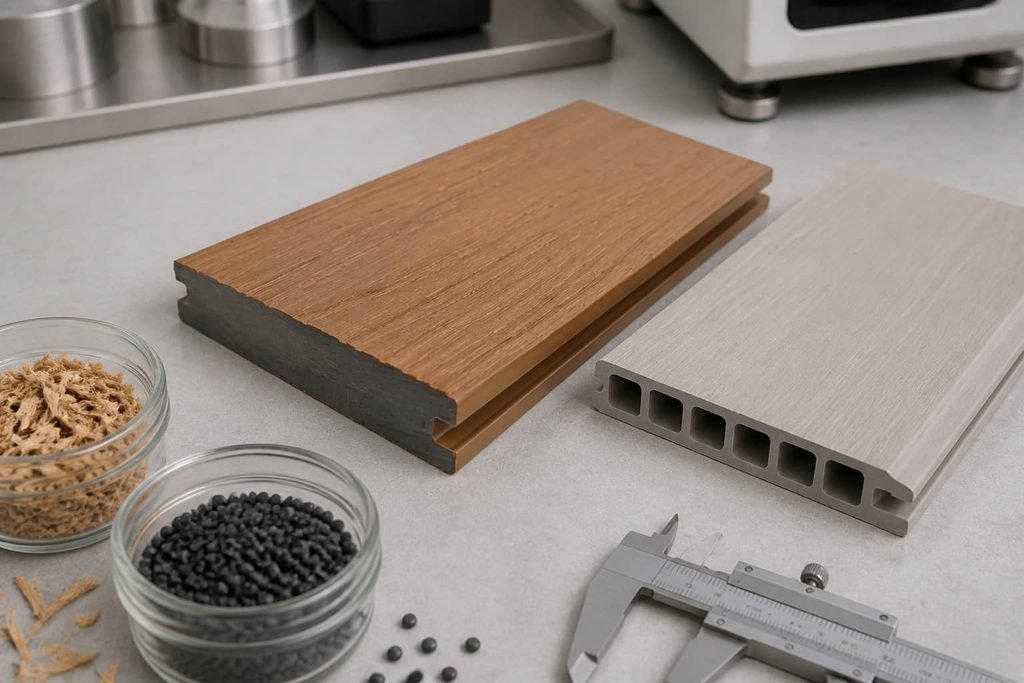
WPC (wood-plastic composite) blends wood fiber with HDPE plastic. It’s the most common type of composite decking and sits at a mid-range price point. PVC decking drops the wood fiber and uses only plastic. The raw material costs more, and the extrusion process is more complex — so PVC boards run higher per square foot.
Within WPC, two factory-level details affect cost. First, the HDPE density grade. Higher-density HDPE makes a stronger, more stable board. Grades around 0.95 g/cm³ sit at the top end and hold up well across climates. Second, the recycled-content ratio. A higher share of recycled HDPE lowers raw material cost without hurting performance — if the blend is done right. A 60/40 recycled-to-virgin ratio is a common sweet spot that balances cost, strength, and color consistency across production runs.
For a deeper look at HDPE, PVC, and PP — including heat performance and lifespan data — see our materials comparison guide.
3. Board Size, Profile, and Layout
Width, thickness, and board length all affect what you pay per linear foot and per square foot. The math is simple: bigger boards use more material, so they cost more.
But wider boards also cover ground faster, which can cut labor time. That trade-off is worth running the numbers on — especially for large projects.
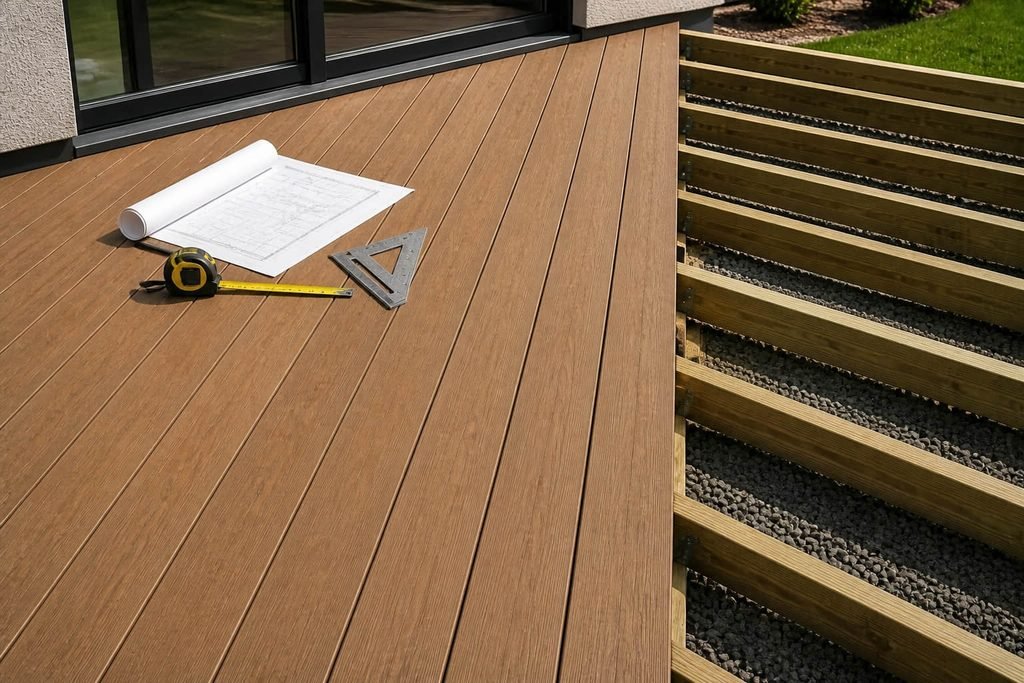
Common U.S. composite deck board sizes include 5.5″ × 0.91″ and 5.9″ × 0.91″. Non-standard widths or custom lengths add cost because they need dedicated production runs.
How Board Size Affects Price
| Profile | Dimensions | Relative Cost | Best For |
|---|---|---|---|
| Standard width, slim | 5.5″ × 0.79″ (140 × 20 mm) | Lower | Home projects, budget builds |
| Standard width, mid | 5.5″ × 0.91″ (140 × 23 mm) | Mid-range | General use, most deck projects |
| Wide, mid-thickness | 5.9″ × 0.91″ (150 × 23 mm) | Higher | Faster coverage, fewer seams |
| Custom sizes | Varies | Highest | Spec-driven or design-led projects |
Solid vs. Hollow: How Profile Affects Price
Solid boards use roughly 30–40% more raw material than hollow boards at the same outer size. That means a higher cost per board — and more weight per shipment.
Here’s a real-world example: a solid-core board at 140 × 23 mm weighs about 2.8 lb/ft. A hollow-core board at the same dimensions weighs about 1.95 lb/ft. That’s a 45% weight gap.
For container buyers, lighter boards mean more square feet per container at the same gross weight. That’s a real freight saving on every order.
For load data and a project-matching guide, see our solid vs. hollow comparison.
How Layout Drives Waste
Deck size drives total material cost. Layout drives waste.
A simple rectangular deck — say, 12×12 ft — uses boards with about 5–10% waste. That’s a clean, efficient layout. Curves, multi-level changes, angles, and diagonal patterns push waste to 15% or more.
One practical tip: match board length to your joist spans. This cuts offcuts and keeps waste low. On a large project, that 5% gap in waste adds up fast.
4. Product Tier and Warranty Level
The label “composite decking” covers products at very different price points. Here’s why.
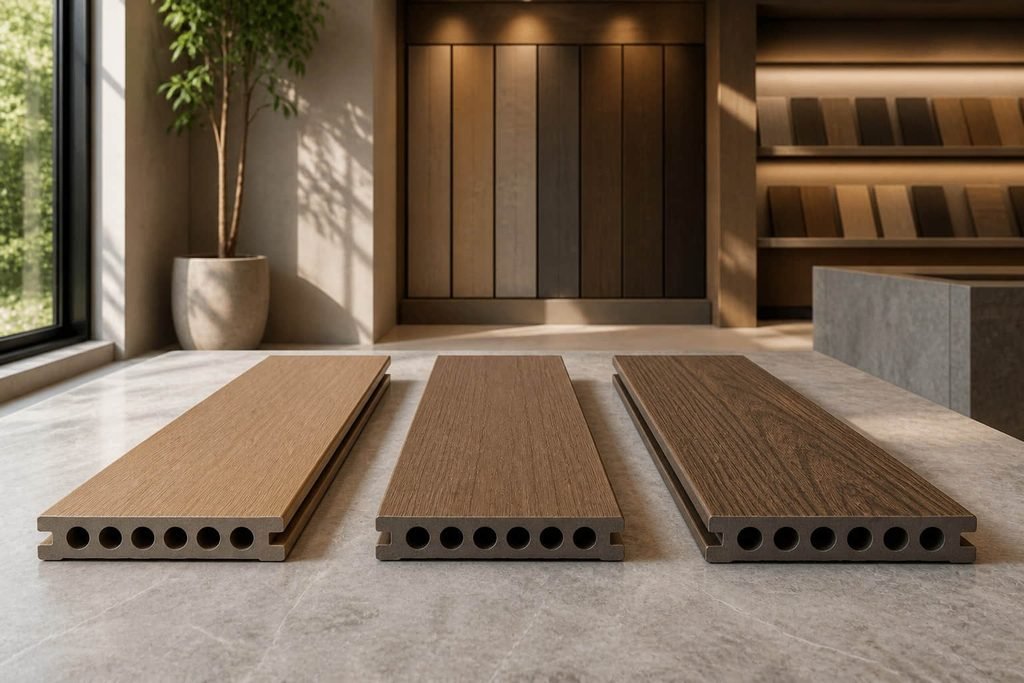
Entry-level lines use thinner caps, fewer UV stabilizers, and shorter warranties. They cost less — but they fade and wear faster. Premium lines invest in thicker caps, better color stability, and longer coverage. That quality costs more to produce.
How to Read a Product Tier
The table below shows what typically separates entry, mid-range, and premium composite decking. No two brands are identical, but these ranges give you a framework for comparing quotes.
Composite Decking by Product Tier
| Factor | Entry-Level | Mid-Range | Premium |
|---|---|---|---|
| Material cost | $4–$7 / sq ft | $7–$12 / sq ft | $12–$18 / sq ft |
| Cap layer | Thin or partial | Full 4-side cap | Thick full cap (0.6–1.0 mm) |
| UV aging (QUV hours) | < 1,500 hours | 1,500–3,000 hours | 3,000+ hours |
| Color shift (ΔE) | ΔE 6–8+ | ΔE 4–6 | ΔE ≤ 4–5 |
| Typical warranty | 10–15 years | 20–25 years | 25–30+ years |
| Best for | Budget home projects | General residential & light commercial | High-traffic, commercial, coastal |
UV performance data matters more than most buyers realize. A board tested to 3,000+ hours of QUV accelerated aging (per ASTM G154) with a color shift of ΔE ≤ 5 will hold its look in the U.S. Sun Belt — Florida, Texas, Arizona, southern California. A board with less than 1,500 hours of testing may not. If your projects serve high-UV regions, ask your supplier for QUV test data before you commit.
What the Warranty Tells You About Price
Warranty length is a rough guide to product tier and cost.
A 15-year warranty typically signals a solid entry-level board. A 25–30-year warranty reflects a premium product with better raw materials and tighter quality controls. Most warranties cover structural defects — cracking, warping, breakage — and set a limit on color fade. They don’t cover damage from bad installs or misuse.
Many manufacturers offer tiered warranties across their product lines. LastElegance, for example, backs its Renew line with a 15-year warranty, VerdeLife with 20 years, and TimberLuxe with 30 years. The price steps up with each tier — and so does the performance spec behind it.
5. Supply Chain: How Distribution Affects Price
Two boards with the same specs can carry very different prices. Often, the gap has nothing to do with the product itself — it’s the path the board takes from the factory floor to your job site.
The Distribution Markup Stack
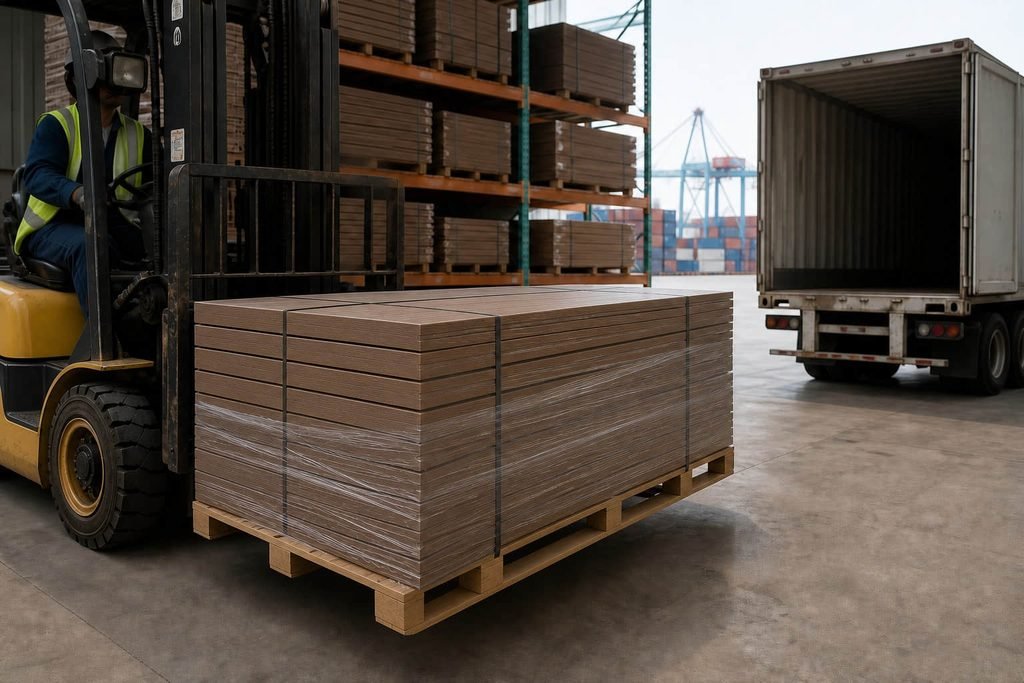
Most composite decking passes through several hands before it reaches a builder or contractor. Each link in that chain adds margin.
Typical Cost Layers in Composite Decking Distribution
| Cost Layer | Typical Markup |
|---|---|
| Raw material + production | Base cost |
| Factory margin | 10–15% |
| Export logistics (freight, port, customs) | 5–10% |
| National importer or master distributor | 10–20% |
| Regional distributor | 10–15% |
| Retailer or lumberyard | 15–25% |
By the time a board moves through four or five links, the end price can be double the production cost — or more. That’s not waste. Each layer adds value: warehousing, local stock, service, returns handling. But it does explain why the same core technology shows up at $6/sq ft from one source and $14/sq ft from another.
A manufacturer-direct model cuts two to three of those layers. The board goes from factory to buyer with fewer markups. The trade-off: lead times are longer — typically 6–10 weeks from order to U.S. port, covering production, packing, and ocean freight. Minimum order quantities also apply, often around 1,000 sq ft (roughly one 20-ft container) for a first order.
For buyers who plan ahead, that trade-off works. For those who need boards on-site next week, local stock from a domestic channel may be worth the higher per-board cost. The right model depends on how you buy and how far ahead you plan.
Tariffs and Landed Cost
If you’re sourcing from an overseas manufacturer, import duties and freight belong in every cost comparison. Tariff rates shift, and freight costs vary by port and season. A good factory-direct supplier will help you build a full landed-cost estimate — not just quote an FOB price. If a supplier can’t walk you through the landed cost, that’s a red flag.
6. Labor and Install Costs
Boards might run $4–$18 per square foot. But fully installed, a composite deck often costs two to three times that. The gap is labor.
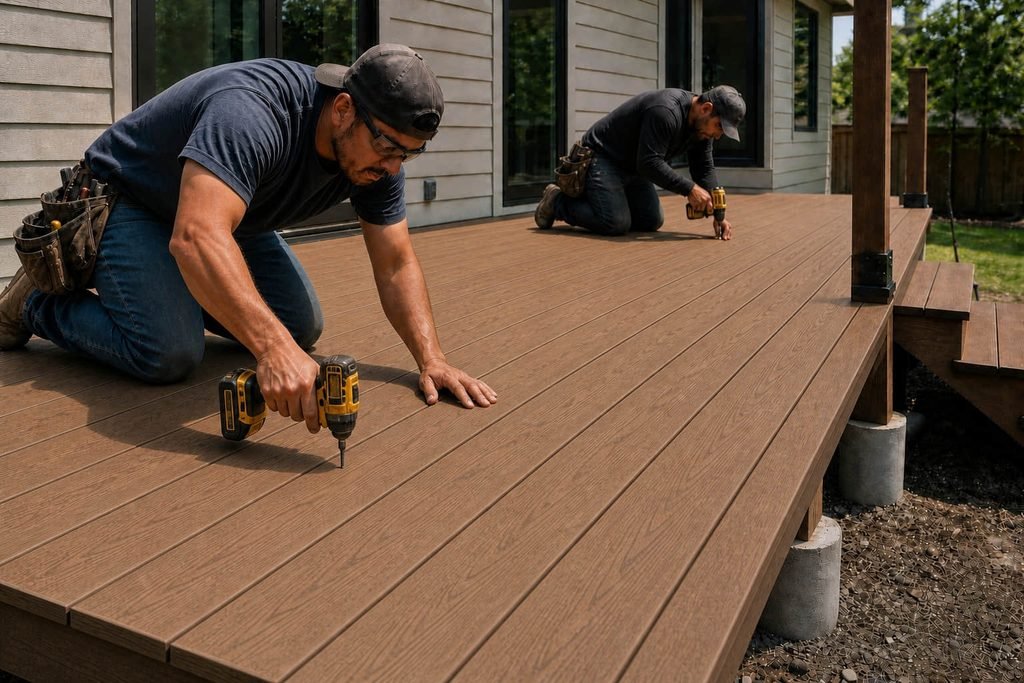
Here’s what goes into the labor line: subframe build-out (pressure-treated joists, ledger board, posts, concrete footings per IRC requirements), board installation, the fastener system, stairs, railings, and finishing.
Hidden fastener systems speed things up. With clip-based installs, experienced crews can lay 150–200 sq ft per hour. But the clips add to material costs. For the full install process — tools, framing, and fastener details — see our installation guide for contractors.
Labor rates also differ across the U.S. Crews in the Northeast and West Coast charge more than those in the South and Midwest. The same project can carry very different install costs by region.
Costs Most Buyers Overlook
When comparing quotes, make sure you’re comparing the same scope. These line items often catch buyers off guard:
- Permits — fees vary by city and county, sometimes by project size
- Old deck tear-out and disposal
- Subframe materials — pressure-treated joists, concrete footings, hardware
- Engineering or structural drawings — required on some projects
- Stair stringers, railings, and fascia board
If one quote is much lower than another, check whether these items are included. The total looks different when the scope isn’t the same.
7. Long-Term Value: Total Cost Over Time
The upfront cost doesn’t tell the full story. What matters — especially if you’re selling or specifying composite — is the total cost over the life of the deck. This is a number your sales team can use when a client pushes back on the initial price.
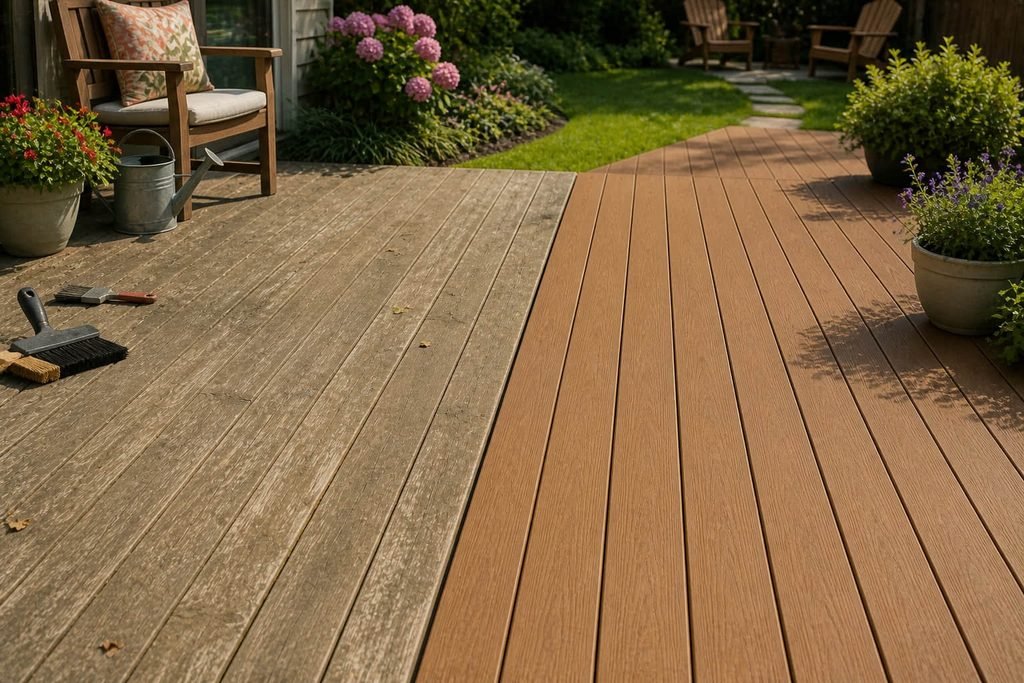
Wood costs less up front. But wood needs staining every 1–2 years, periodic board replacement, and often a full rebuild at 10–15 years. Composite needs only periodic soap-and-water cleaning — no staining, no sealing, no sanding.
15-Year Cost Comparison: Pressure-Treated Wood vs. Composite (per 200 sq ft)
| Cost Category | Pressure-Treated Wood | Mid-Range Composite |
|---|---|---|
| Initial investment (boards) | $1,200–$1,600 | $2,000–$3,000 |
| Staining/sealing (15 years) | $1,500–$2,500 | $0 |
| Board replacement / repairs | $400–$800 | $0–$100 |
| Estimated 15-year total | $3,100–$4,900 | $2,000–$3,100 |
The numbers shift by product tier, local labor rates, and how well the wood is maintained. But the pattern holds: composite’s higher upfront cost is often the lower number at the 15-year mark.
For the full comparison — durability, maintenance, and appearance side by side — see our composite decking vs. pressure-treated wood guide.
How to Get the Best Price
Three things help you get the best cost on a composite project.
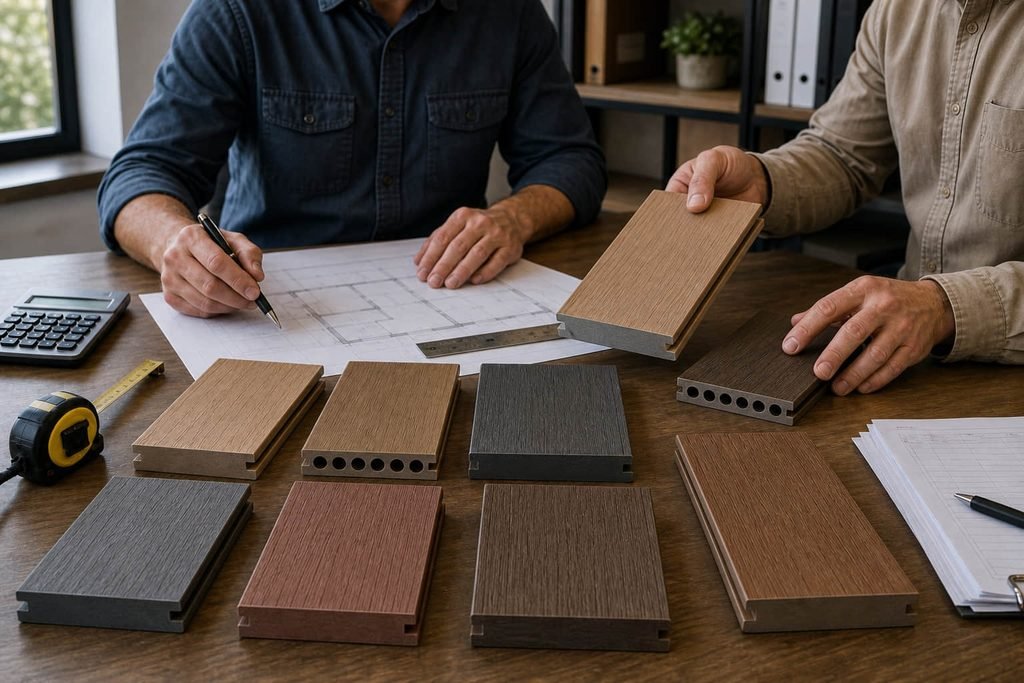
Match the product to the job. Don’t overbuy a 30-year premium board for a backyard deck that doesn’t need it. Don’t underbuy a budget board for a commercial pool area that does. Picking the right tier saves money without cutting corners.
Compare the same scope. Ask suppliers to break out materials, labor, subframe, and fasteners as separate line items. That’s the only way to see where the money goes — and the only way to compare quotes fairly.
Ask how many links sit between the factory and your job site. Fewer middlemen means a lower board cost — without lower quality. This matters most on volume orders, where each layer of markup compounds across hundreds or thousands of square feet. If you’re sourcing at scale, ask about factory-direct options, custom sizing, and container-level pricing.
Knowing what moves the price helps you quote smarter, stock better, and protect your margins — whether you’re building, selling, or specifying.
Request free samples to compare products and pricing for your next project.
FAQs
How much does a 12×12 composite deck cost?
For boards alone, expect $600–$2,600 depending on product tier. Fully installed — including subframe, fasteners, and labor — the range is about $2,200–$4,600 or more. The final number depends on board type, subframe needs, and local labor rates.
How long does composite decking last?
Most composite decking lasts 15–30+ years. Lifespan depends on product tier, cap quality, and site conditions. Warranty length is a useful rough guide — a 25-year warranty usually means a board built to last at least that long.
Do composite deck prices vary by region across the U.S.?
Yes. Three factors create real price gaps for the same product: labor rates (which differ by state and metro area), shipping distance from the supplier or port (which affects freight cost), and permit fees (which vary by city and county).
What’s a typical minimum order for a factory-direct supplier?
Most factory-direct suppliers set a minimum around 1,000 sq ft — roughly one 20-ft container. LastElegance offers flexible trial quantities for first-time buyers. Sample boards and color swatches are usually available before you commit to a full order.
Can I order custom colors or profiles from a factory-direct supplier?
Yes — and that’s one of the key advantages. Unlike fixed product lines from domestic retail brands, a manufacturer with in-house production can offer custom colors, textures, board widths, and profiles. Custom orders typically need a full container minimum and may add a few days to the production schedule.
How long does delivery take from a factory-direct supplier?
Plan for 6–10 weeks from order to U.S. port. That includes roughly 2–3 weeks for production and packing, plus 4–6 weeks for ocean freight (varies by port and shipping route). Add a few days for customs clearance and inland delivery. The lead time is longer than pulling stock from a domestic warehouse, so build it into your project schedule.