

A board-only estimate on a 200 sq ft composite deck might show $2,000 in materials. The real installed cost? Closer to $8,000–$22,000 once you add the subframe, labor, permits, and a buffer for the unexpected.
That gap is where budgets break — and where client disputes start. This guide walks through every line item your project needs, priced out as five cost blocks that contractors and distributors can drop straight into a quote.
What Goes Into a Deck Budget?
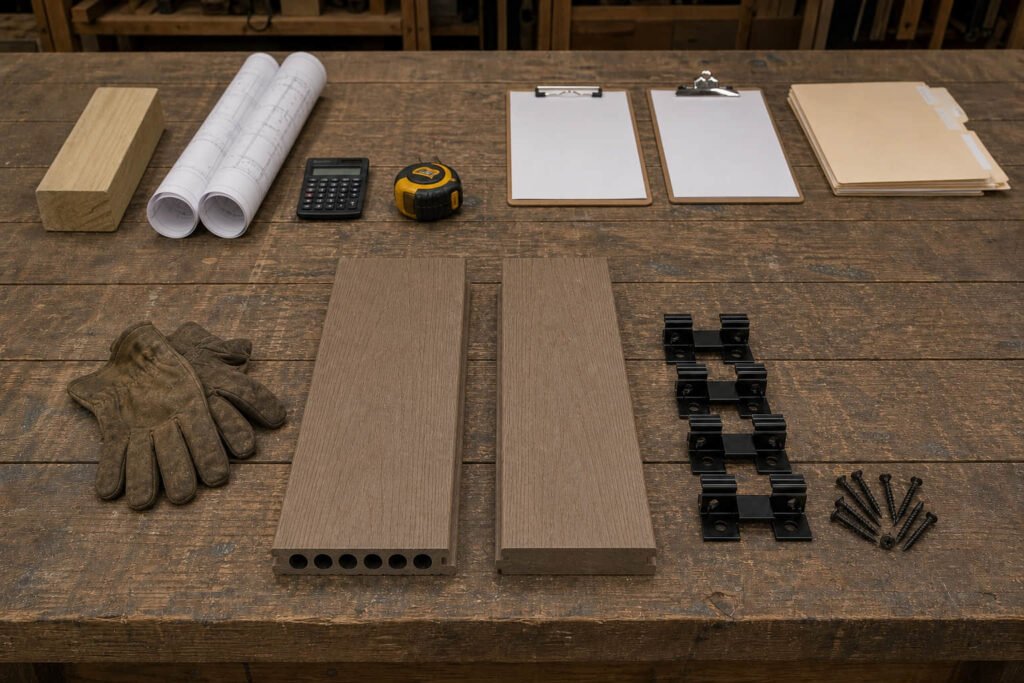
A realistic budget breaks your project into five cost blocks:
- Decking materials — boards, trim, and fascia
- Subframe and hardware — joists, posts, footings, clips, and fasteners
- Labor — from site prep through final cleanup
- Permits and site prep — building permits, tear-out, grading
- Contingency buffer — 10–15% for the things you can’t predict
Most quoting errors come from skipping blocks 2 through 5. A board-only estimate can understate the total cost by 50% or more. The rest of this guide prices out each block so you can build a cost estimate your client — and your margin — can trust.
Step 1 — Estimate Your Decking Materials
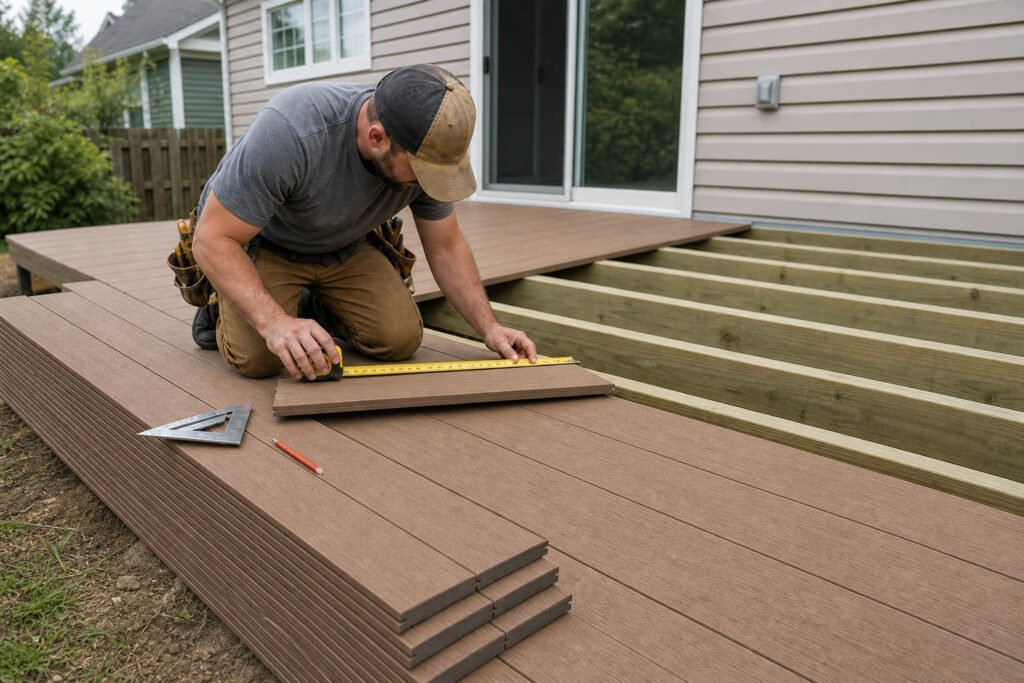
Start with your deck size in square feet. A 12×16 deck is 192 sq ft.
Next, figure out how many boards you need. This depends on board width and length. For example, a LastElegance TimberLuxe board at 5.5″ × 0.91″ (140 × 23 mm) and 9 ft 10 in. long covers about 4.5 sq ft per board. Divide your total square footage by that number to get your board count.
Composite decking materials range from $4 to $18 per square foot for boards alone — a wide range. The spread depends on a few key factors: the type of composite (capped vs. uncapped), profile (solid vs. hollow), and order volume. Capped composite boards cost more than uncapped. Solid profiles cost more than hollow. For a full breakdown of what moves composite board prices, see our guide to the 7 cost drivers.
Here’s a quick formula you can use for any deck project:
(Deck sq ft × waste factor) ÷ board coverage per piece = number of boards needed
Multiply your board count by the per-board price to get the decking line item.
One more thing to factor in: weight per linear foot affects freight cost, especially on container orders. For example, a LastElegance TimberLuxe solid board weighs 2.82 lb/ft — nearly a pound more per foot than a hollow profile at the same width. On a full container, that gap adds up fast.
View our full product catalog for board specs, weights, and profiles →
How to Figure Waste Factor
No deck uses 100% of the material you order. Cuts, angles, and layout patterns all create offcuts. Build waste into your estimate from the start.
| Layout Type | Waste % | Example |
|---|---|---|
| Simple rectangle | 5–10% | Standard backyard deck |
| Diagonal or picture frame | 10–15% | Angled board pattern with border |
| Curves or multi-level | 15–20% | Wraparound or tiered deck design |
One easy way to cut waste: match your board length to your joist span. If your joists run 12 ft, order 12-ft boards and you’ll have almost zero offcuts.
On large jobs, custom-length orders from the manufacturer can reduce waste even more. This is one area where working with a factory-direct supplier gives you options that off-the-shelf product lines don’t.
Step 2 — Price Out the Subframe
The subframe is the cost block most budgets underestimate. It’s everything under the deck boards: posts, footings (concrete piers or helical piles), ledger board, joists, joist hangers, flashing tape, and blocking.
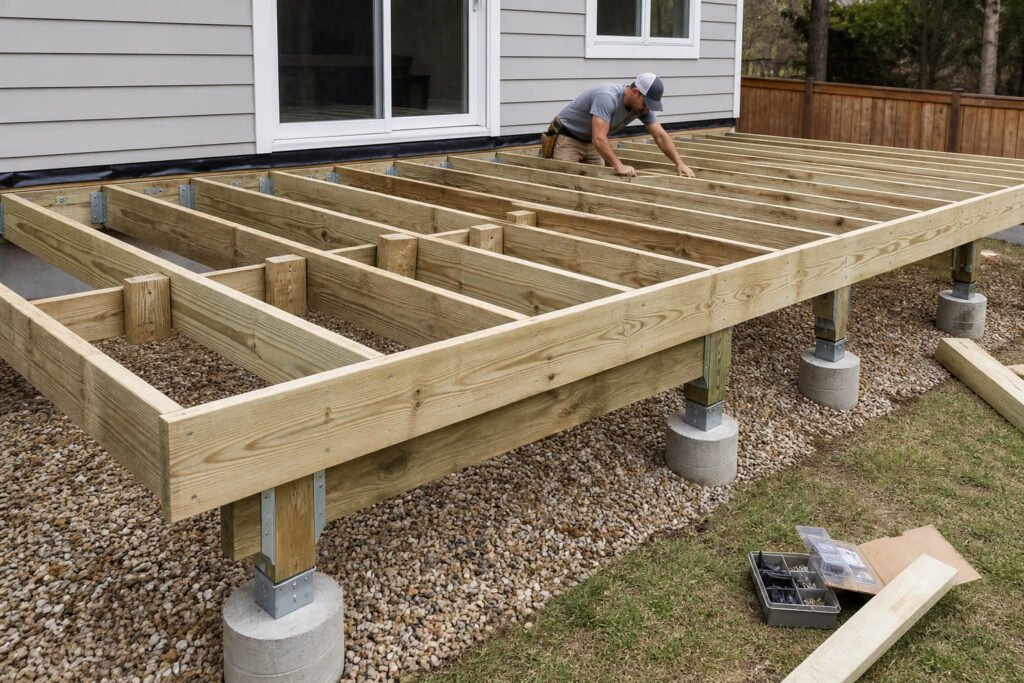
Even on a composite deck, the subframe is almost always pressure-treated lumber. That means lumber prices — which fluctuate — directly affect your project budget. Check current pricing before you lock in a quote.
A good rule of thumb: subframe materials add 30–50% on top of your board cost for a ground-level deck. Elevated or multi-level builds run higher because they need more posts, longer spans, and extra blocking.
Joist spacing also drives cost. LastElegance recommends 11.8 in. on center (300 mm) for its composite decking boards. Tighter spacing means more lumber and more joist hangers per square foot. Always follow the board manufacturer’s specs — and check IRC requirements for your subframe. For full subframe specs and fastener details, see our composite deck installation guide.
Fasteners, Clips, and Hardware
These are small per-unit costs that add up across a full deck building project. Don’t treat them as a rounding error — list them as a line item.
Hidden fastener clips (like stainless steel hidden clips) cost more per piece than face screws. But they save real labor time. Experienced crews install 150–200 sq ft per hour with clip-based systems — faster than face-screwing and with a cleaner finish.
Don’t forget stair hardware. Stringers, stair nosing, and railing brackets all belong on the estimate. If your project includes stairs or railings, price these out early. They can add $500–$1,500+ to the installation costs depending on run length and style.
Step 3 — Budget for Labor
Labor costs are often the single biggest line on a composite deck budget — typically 50–60% of the total installed cost. That makes this the line item worth getting right.
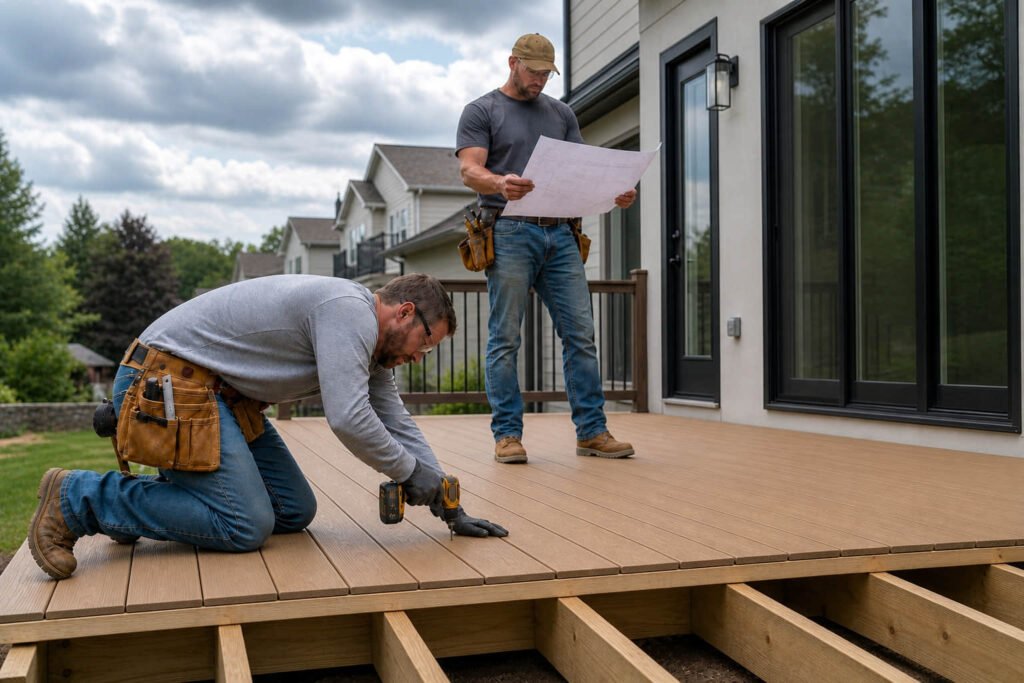
Break labor into sub-tasks so your client can see where the hours go:
- Site prep and layout
- Subframe construction (posts, footings, joists)
- Board installation
- Stairs and railings
- Trim, fascia, and finishing
- Cleanup and haul-off
Labor rates vary by region across the U.S. A crew in the Southeast may charge less per hour than one in the Northeast or West Coast. The complexity of your deck design also plays a big role — elevation changes, curves, built-in seating, and custom features all add hours. Timing matters too: crews in peak season (spring and summer) often charge more and book out weeks ahead. Scheduling a build in late fall or early winter can cut labor costs and shorten lead times.
To estimate: take your total sq ft, figure the install hours based on crew size and speed, and multiply by the local rate. For professional labor, expect to pay $15–$35 per square foot installed — depending on region, season, and complexity. Skilled labor in tight-access lots or elevated builds will push toward the higher end.
DIY vs. Pro Install: What Changes?
If a client asks “Can I save money doing it myself?” — the honest answer is yes, on paper. DIY cuts 50–60% of the installed cost by removing the labor line. But it adds tool rental, slower build time, and the risk of install errors that void the board warranty.
When you’re quoting against a DIY option, focus on what professional installation protects: code-compliant framing, proper gapping for thermal movement, and full warranty coverage. Most board manufacturers won’t honor claims on owner-installed decks with incorrect joist spacing or fastener patterns. That’s the conversation that closes the job.
Step 4 — Add Permits and Site Prep
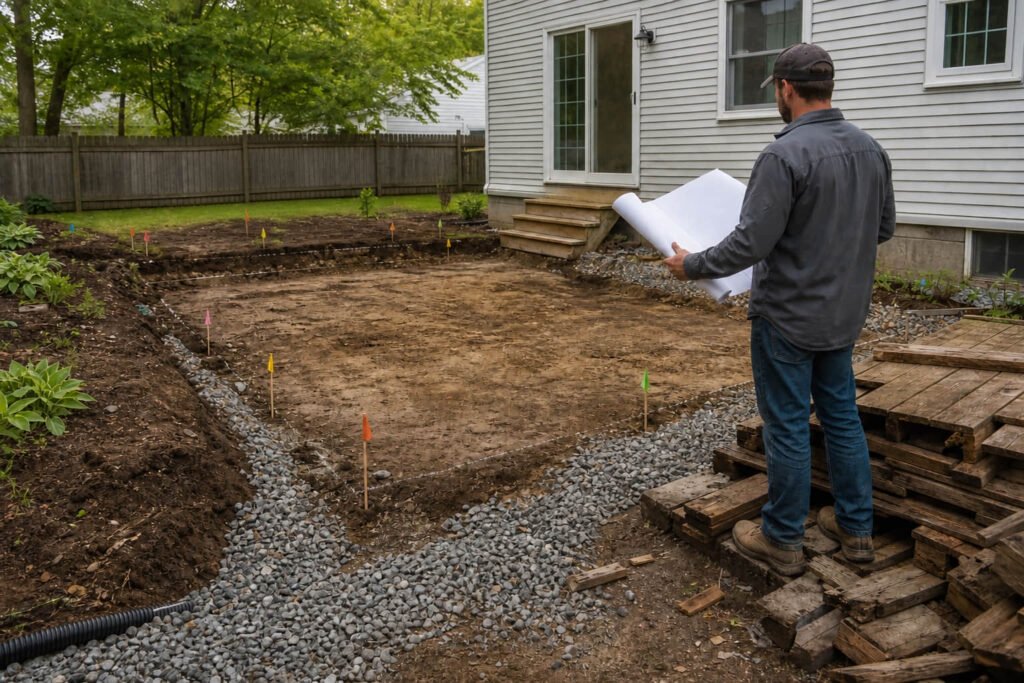
Permits belong on every deck project quote. Fees vary by city and county — typically $100–$500+ for a standard deck. Some areas require engineering drawings or inspections at each build stage, which adds to the total project cost. Check local building codes before you quote. IRC and IBC compliance for deck framing isn’t optional, and a missed permit can shut a job down mid-build.
Site prep is the other line item that surprises clients. Grading, drainage work, and vegetation removal all cost money. If the client has an old deck, tear-out and disposal can run $3–$8 per square foot depending on the existing deck structure. List permits and site conditions as separate line items in every quote — no surprises means fewer disputes.
Step 5 — Build In a Buffer
Add 10–15% of your total estimated cost as a contingency line. This isn’t padding — it’s protection.
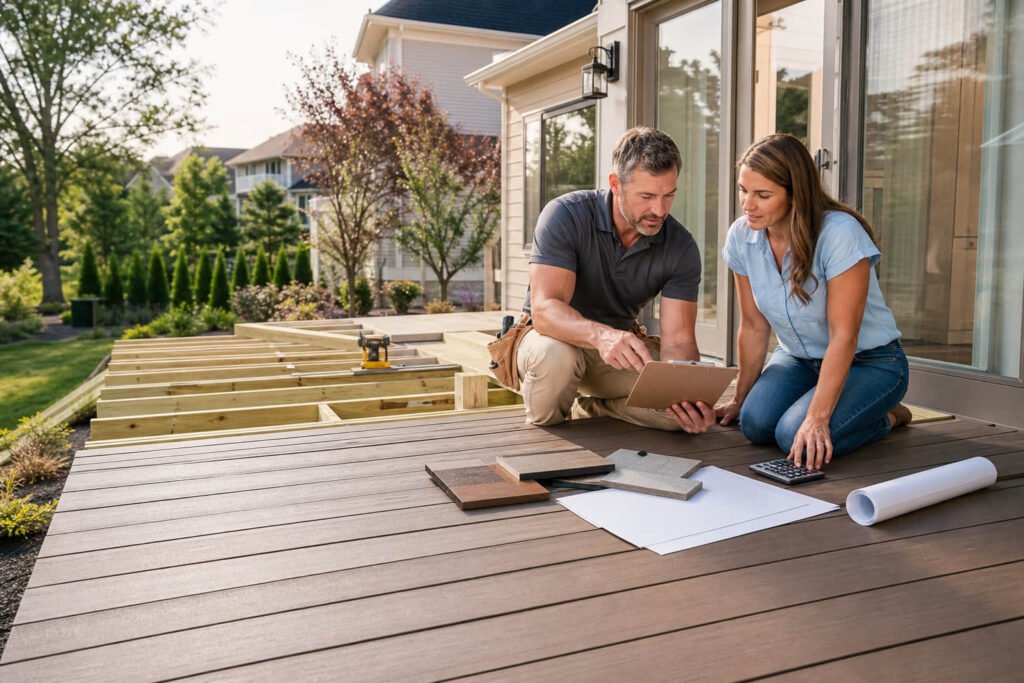
The buffer covers real risks: material price changes between quote and order, unexpected site conditions (soft soil, buried utilities, drainage problems), mid-project design changes, and shipping delays. For distributors buying containers, exchange rates and freight costs can shift between quote and delivery. A buffer protects your margin and keeps your project on track. The final price should account for what you know and what you don’t.
Sample Budget: A 12×16 Deck
Here’s a worked example for a 192 square feet ground-level rectangular composite deck with standard railing on three sides. This gives you a template to adapt for your own quotes.
| Line Item | Low Estimate | High Estimate |
|---|---|---|
| Composite deck boards (192 sq ft + 10% waste) | $845 | $3,800 |
| Subframe materials (pressure-treated lumber, footings, hangers) | $1,550 | $2,900 |
| Fasteners, clips, and hardware | $200 | $450 |
| Railing and stairs (if applicable) | $1,200 | $4,500 |
| Labor (professional installation) | $3,450 | $6,720 |
| Permits and site prep | $200 | $800 |
| Contingency buffer (10–15%) | $750 | $2,870 |
| Total estimated deck cost | $8,195 | $22,040 |
That’s a wide range — and that’s the point. The final bill depends on your material choice, product tier, region, and project specs. A new deck using mid-tier capped composite with professional labor in a mid-cost region will typically land somewhere in the middle.
A few notes on the numbers: Board cost and railing drive the widest spread. The $4–$18 per square foot range for boards reflects everything from entry-level uncapped to premium solid co-extruded profiles. Railing runs $25–$120+ per linear foot depending on material (composite, aluminum, cable, or glass). If you’re sourcing boards on volume, manufacturer-direct pricing — buying by the container from a maker like LastElegance — can lower the materials line without changing the product spec.
Ready to price out your project? Request a custom quote →
5 Ways to Cut Costs Without Cutting Quality
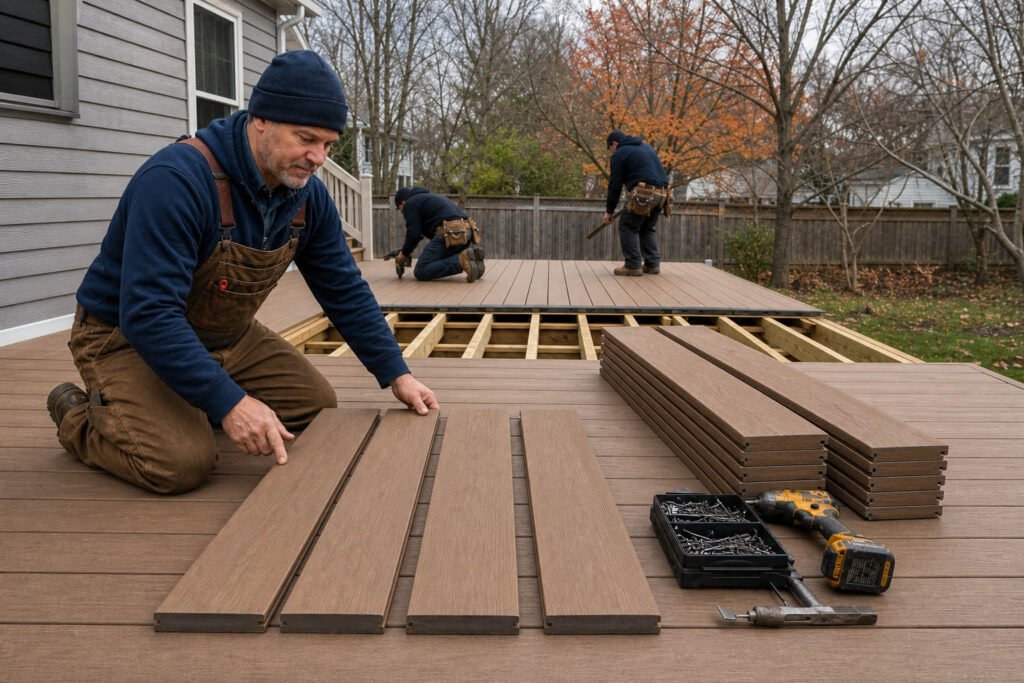
1. Match the product tier to the job. A backyard deck doesn’t need the same board as a hotel pool deck. Pick the right tier for the application and save on material costs without losing performance where it counts. Different price points exist for a reason — use them.
2. Order custom lengths to cut waste. If your joist layout runs 14 ft, order 14-ft boards. Custom-length orders from the manufacturer can cut waste to near zero on large jobs. That’s material savings and less disposal cost. LastElegance offers custom lengths on full-container orders.
3. Compare quotes line by line. Make sure every quote covers the same scope — boards, subframe, labor, permits, and buffer. A low bid that skips the subframe isn’t a better price. It’s an incomplete one.
4. Buy direct from the manufacturer. On volume orders, cutting out distribution markup lowers your cost of composite decking without changing the product. Factory-direct sourcing also opens the door to custom features like colors, textures, and profiles that stock distributors can’t offer. For a step-by-step framework on choosing a factory-direct supplier, see our supplier vetting guide.
5. Schedule builds in the off-season. Labor rates drop and crews open up in late fall and winter. If you’re quoting an outdoor living space project that doesn’t need to finish by summer, shifting the timeline can shave 10–15% off labor costs alone. For distributors, ordering in the off-season also means shorter production lead times and smoother delivery in the long run.
Want to talk through pricing on a specific project? Contact our sales team →
FAQs
What is the average price per square foot for composite decking materials?
Board-only prices range from $4 to $18 per square foot, depending on board tier, profile type, and order volume. Full-container orders often bring the per-square-foot cost down compared to pallet-quantity buys.
What hidden costs should I be aware of when planning a composite deck?
The most common surprises are permits, old deck tear-out, subframe lumber, stair hardware, railing, and delivery or unloading fees. Freight to a job site with no forklift access can add $200–$500 per drop. Plan for these line items, or they can push the final bill 30–50% above your board cost.
Is composite decking cheaper than wood in the long run?
In most cases, yes. A wood deck costs less upfront but needs staining every 1–2 years and periodic board replacement. Over 15 years, total maintenance costs often exceed the composite price gap. For a side-by-side comparison, see our composite decking vs. pressure-treated wood guide.
How much does labor cost to replace deck boards with composite?
A board-swap job — keeping the existing subframe — costs less than a full build because the framing is already in place. Expect to save 20–30% on labor compared to a new build. The existing deck subframe must be inspected for structural soundness and code compliance before you start.
How much to budget for a DIY composite deck?
DIY removes the labor line, which is often 50–60% of the total installed cost. Budget for composite decking materials, fasteners, subframe lumber, permits, tool rental (miter saw, impact driver, post-hole digger — typically $200–$500 for a weekend project), and a 10–15% buffer. Most DIY builds take 3–5× longer than a pro crew.
Are there additional costs for permits when building a deck?
Yes. Building permit fees vary by city and county — typically $100–$500+ for a standard deck. Some areas also require engineering drawings or staged inspections, which add to the cost. Always check local codes before you finalize your cost estimate.