

Most siding buyers want one thing first: a clean wood-style exterior that fits the budget. But engineered wood siding vs composite siding is not just a curb appeal choice.
For builders, contractors, and distributors, the real cost shows up after handoff. Rain exposure, paint cycles, crew time, warranty risk, and supply control all affect profit.
This guide compares makeup, weather performance, maintenance, installed cost, handling, appearance, and sourcing. It also shows which material fits each project type.
Quick B2B Verdict: Which Siding Fits the Job?
Most pros choose by climate, risk, and owner expectations. Engineered wood works well when the buyer wants a painted wood look and lower upfront cost. Composite siding is stronger when you need lower water uptake, repeatable specs, and fewer maintenance issues.
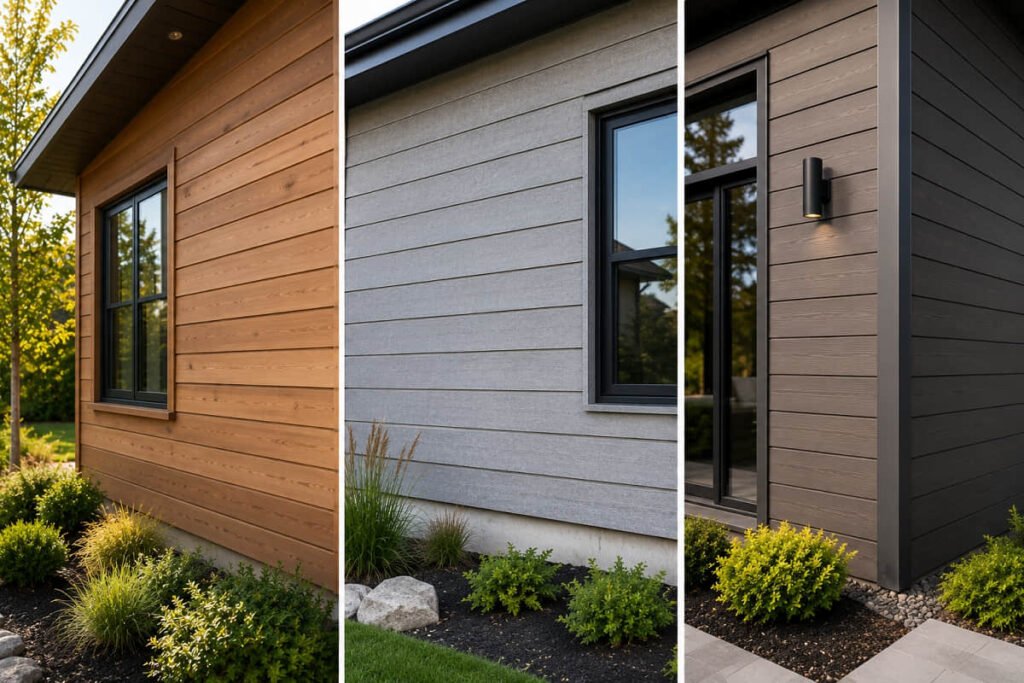
| Project Need | Better Fit | Why |
|---|---|---|
| Lower upfront cost | Engineered wood | Lower board price in many markets |
| Painted wood look | Engineered wood | Real wood content and familiar finish |
| Humid or coastal work | Capped composite | Lower water uptake and less edge risk |
| Commercial jobs | Capped composite | Better spec control across larger scopes |
| Distributor programs | Capped composite | Custom colors, profiles, and OEM options |
| Low maintenance target | Capped composite | No field paint cycle in normal use |
Product specs still matter. Always check the data sheet, warranty, fire rating, and installation guide before you quote a job.
What Are They Made Of?
These siding options sound close, but they’re not the same. Engineered wood is wood-based. Composite siding is a broader material group made from blended inputs.
Engineered Wood Siding
Engineered wood siding is made from wood fibers, wood strands, or other wood stock bonded with resins. Makers treat the boards for exterior use, then prime, coat, or finish them.
That real wood content helps the look and texture. It also makes the product feel familiar on site. Crews can cut and fasten it with standard siding skills.
The downsides of engineered wood siding are tied to water and coatings. Cut edges, seams, fasteners, and trim lines need care. If crews rush sealing or paint upkeep, those points can fail first.
Engineered wood is a good fit for dry markets and budget-led work. It needs a clear maintenance handoff after the job.
Composite Siding
Composite siding can mean several things. It may refer to wood-plastic composite, fiber cement, mineral-polymer siding, or other blended siding materials.
For our siding line, composite siding means co-extruded wood-plastic composite siding. The core blends recycled HDPE with wood fiber. The cap layer is 0.8 mm thick and wraps the board for color control, stain resistance, and moisture defense.
The technical data lists 60% recycled content and 0.2% water absorption by ASTM D1037. That low water uptake gives capped composite an edge where heavy rain and humidity drive call-backs.
The downsides of composite siding are upfront cost, install discipline, and spec checks. A clip system needs trained crews. You also need to check heat movement, fire rating, and batten spacing before quoting.
Where Fiber Cement Fits
Fiber cement is also a composite siding type. It blends cement, sand, and cellulose fibers. It is not engineered wood or capped wood-plastic composite siding.
| Material | Main Makeup | Key Note |
|---|---|---|
| Engineered wood | Wood strands and resin | Wood-based |
| Fiber cement | Cement and cellulose | Heavier cement siding |
| Capped composite | HDPE and wood fiber | Capped composite |
Fiber cement matters because many buyers compare it with engineered wood, vinyl siding, and capped composite. Keep the material classes clear before you compare price or performance.
Side-by-Side Comparison
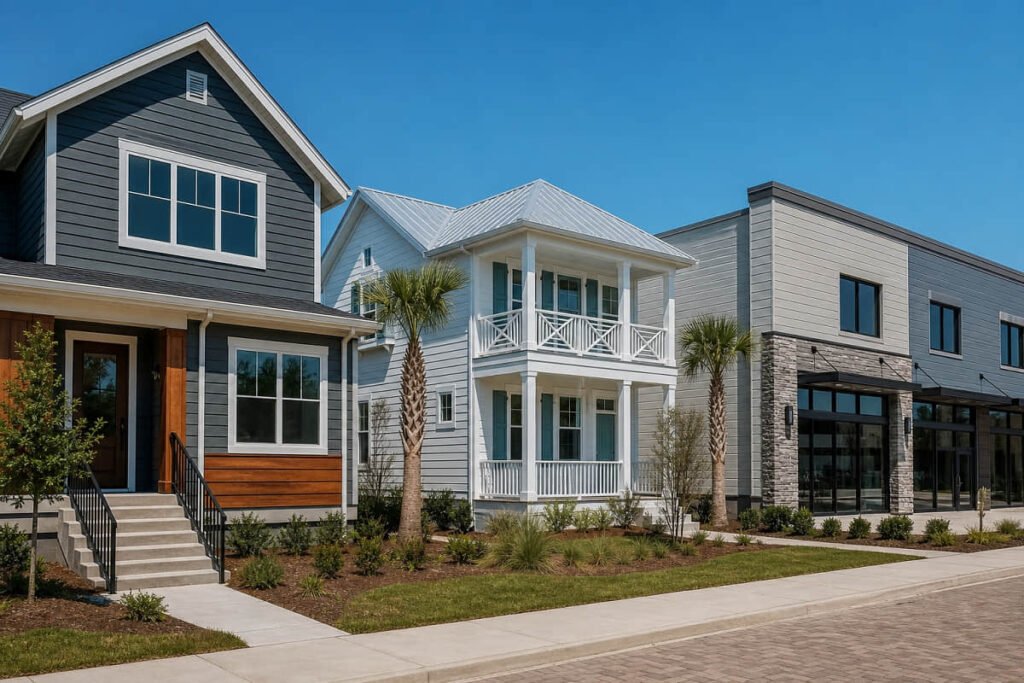
| Factor | Engineered Wood Siding | Capped Composite Siding |
|---|---|---|
| Material | Wood fibers or strands | HDPE and wood fiber |
| Upfront cost | Usually lower | Often higher |
| Install | Cuts like wood | Clip system over battens |
| Moisture risk | Higher at cuts and seams | Very low water uptake |
| Maintenance | Repaint and reseal | Wash and inspect |
| Lifespan | Care-dependent | Cap and install dependent |
| Best use | Dry, cost-led work | Humid, custom, B2B programs |
The table gives a fast view, but it should not replace product review. For B2B work, the better choice depends on the whole wall assembly and the buyer’s risk tolerance.
Moisture, Rot, and Weather Performance
Capped composite usually has the edge against water, rot risk, insects, and harsh weather. Engineered wood can perform well, but the crew must seal cuts, joints, and penetrations.
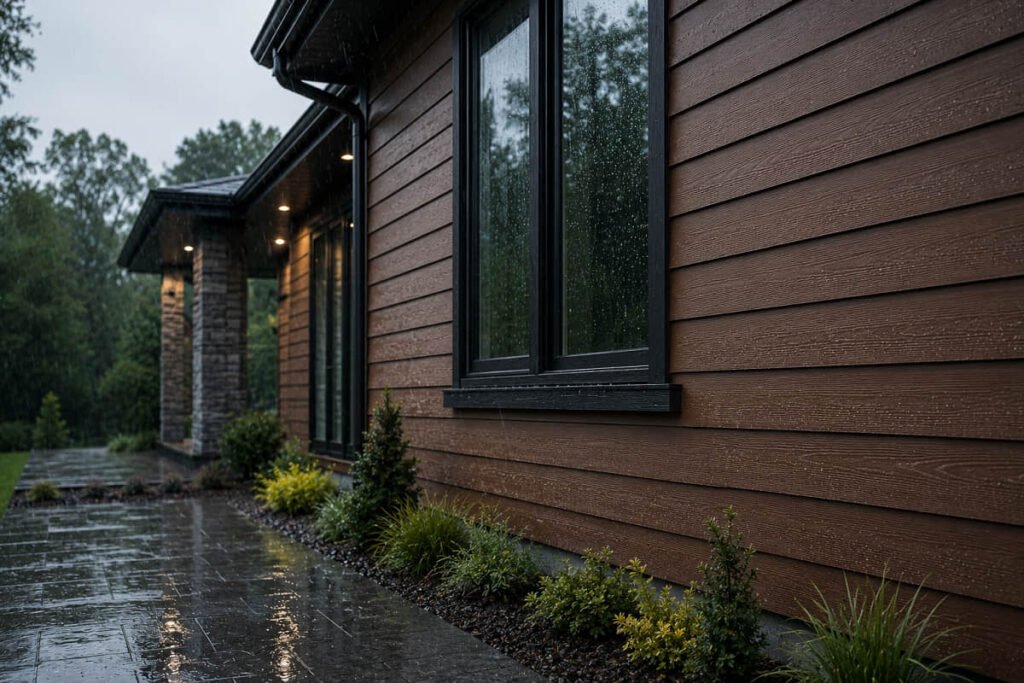
Our capped composite siding has tested water absorption of 0.2%. That matters in heavy rain, coastal air, and wall assemblies with poor drying.
Fire is more project-specific. The product data lists ASTM E84 results of FSI 85 and SDI 300, which is Class C. ASTM E84 reports flame spread and smoke developed indexes, but it does not make composite siding noncombustible.
Use this quick check:
- Wet or coastal region: composite has the edge.
- Dry region with tight budget: engineered wood can work.
- High-UV Sun Belt project: check cap quality and color data.
- Commercial project: verify IRC, IBC, and local fire needs.
If you’re checking fire, water, and cap data now, start with composite siding product specs. That keeps the spec tied to tested values, not sales claims.
Maintenance and Lifespan
Composite siding needs less maintenance. It still needs cleaning and checks, but it does not need the same paint cycle as wood siding.
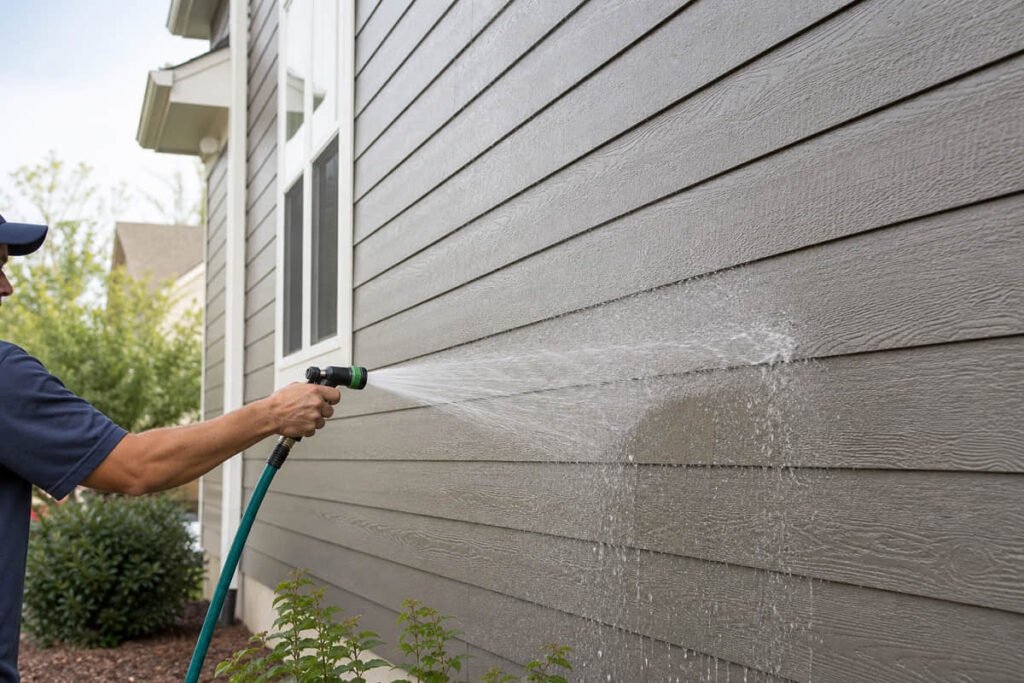
Engineered wood siding needs more care at seams, end cuts, fasteners, and trim lines. Those are the spots where water gets in first.
| Task | Engineered Wood | Capped Composite |
|---|---|---|
| Wash surface | Yearly | Yearly |
| Check seams | After storms | After storms |
| Seal cut edges | During install | Not typical |
| Repaint | Often 7-10 years | Not field-painted |
| Replace failed boards | As needed | As needed |
Do not market any exterior cladding as “no maintenance.” Lower maintenance is the safer claim. It also protects your sales team from warranty fights later.
Engineered wood can last for decades with proper care. Its weak points are coating wear, unsealed edges, and spots where water sits.
Capped composite lifespan depends on cap quality, drainage, UV stability, and correct install. It should not borrow lifespan claims from fiber cement or other siding types.
| Item | Engineered Wood | Capped Composite |
|---|---|---|
| Service life | Strong with proper care | Strong with correct install |
| Weak point | Cuts, seams, coating wear | Heat movement, poor subframe |
| Warranty | Product-specific | Product-specific |
| Best check | Paint and seal schedule | Cap, UV, and water data |
Cost: Board Price vs Installed Cost
Engineered wood siding cost often looks better at purchase. But B2B buyers should compare landed cost, installed cost, waste, freight, clips, battens, trims, and replacement risk.
Engineered wood is often less expensive than fiber cement at the board level. Local labor can change that math. Fiber cement is heavy and can add handling, cutting, and dust-control costs.
The lowest board price does not always win the job. A cheaper panel can cost more if it adds sealing labor, field paint, or more call-backs.
| Cost Item | What to Check |
|---|---|
| Material | Price per square foot |
| Labor | Cutting, sealing, fastening, crew time |
| Waste | Breakage, offcuts, trim loss |
| Freight | Pallet size, lead time, container use |
| Maintenance | Paint, sealant, repairs |
| Risk | Moisture claims and call-backs |
We sell manufacturer-direct. That can reduce distribution markup on volume orders, private label programs, and custom profiles.
For a real quote, send the profile, color, quantity, trim needs, and delivery ZIP. Our team can price the full package through a project-specific siding quote.
Installation and Job-Site Handling
Engineered wood often cuts like wood. That helps siding contractors move fast, but every cut edge needs the right sealant or coating.
This composite siding uses a male-female interlocking clip system. Boards install over steel battens, with a WRB behind the cladding. Recommended batten spacing is 12-16 inches on center.
A basic composite siding install flow looks like this:
- Install the WRB per local code.
- Set steel battens at the right spacing.
- Fix starter clips and trim details.
- Lock boards into the clip system.
- Leave proper movement gaps.
- Inspect drainage and ventilation paths.
For commercial and residential work, professional installation is the right choice. The subframe, WRB, and gapping details protect the wall.
Appearance, Samples, and Curb Appeal
Engineered wood has real wood in its makeup, so it can feel closer to natural wood. That matters for builders who want a painted wood siding look.
Composite siding can still give an authentic wood look. The advantage is control. You can repeat colors, textures, profiles, and lengths across a full project.
If the client wants a cedar-style look, review samples in real light. Cedar warmth, painted wood texture, and capped composite grain can read very differently on a wall.
Our siding can share colors and surface textures with the decking range. Available siding profiles include Oakling at 5.5 in. x 0.47 in. and DecoGroove at about 8.6 in. wide.
Before final color approval, view free composite siding samples next to trim, roofing, and wall materials. That small check can prevent a large change order.
Sustainability and Sourcing
Do not answer the environmental question with wood versus plastic alone. Sourcing, service life, recycled content, freight, and maintenance all matter.
Engineered wood uses wood fiber, which can support a lower-impact story when sourcing is clear. But repainting, repair, and early replacement can add material over time.
Capped composite can offset some impact when it uses recycled content and stays in service longer. Our technical data lists 60% recycled content, which helps buyers document that claim.
For bid packages, ask for recycled content, FSC-certified sourcing where relevant, warranty terms, and maintenance notes. These details matter more than broad green claims.
Best Fit by Project Type
The best siding depends on climate, budget, labor, and who owns long-term care.
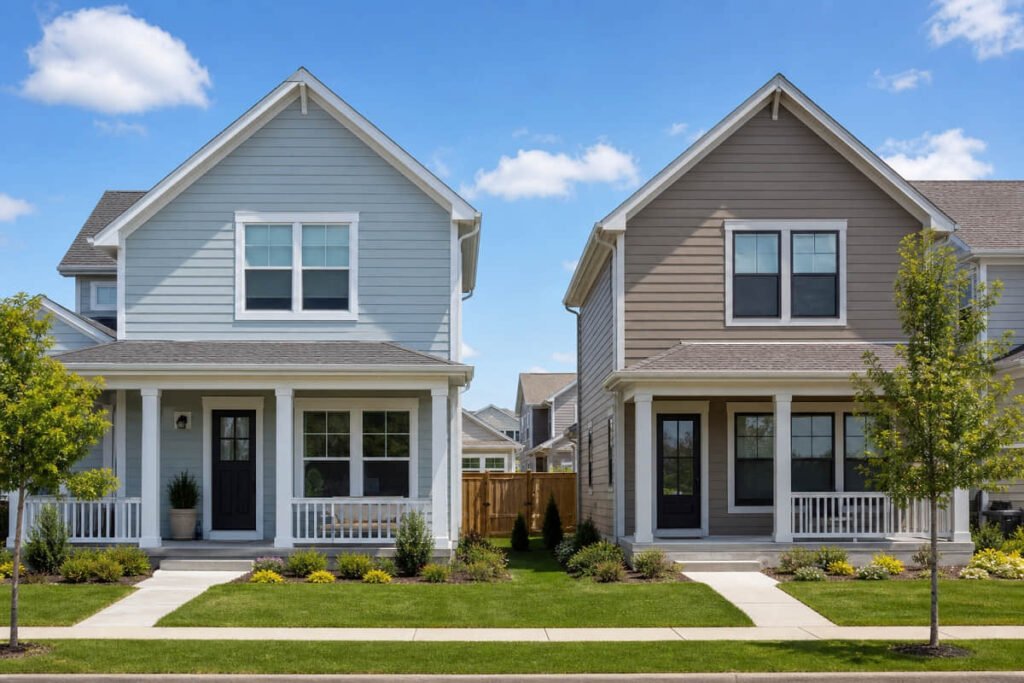
| Project Type | Better Fit | Why |
|---|---|---|
| Budget remodel | Engineered wood | Lower upfront cost |
| Dry climate homes | Engineered wood | Less moisture stress |
| Humid regions | Capped composite | Lower water uptake |
| Sun Belt projects | Capped composite | Capped color control |
| Commercial jobs | Capped composite | Repeatable specs |
| Distributor programs | Capped composite | Custom colors and profiles |
| Traditional curb appeal | Engineered wood | Real wood feel |
Composite siding is a strong choice when your buyer wants lower care, design flexibility, and repeatable supply. Engineered wood remains a useful option for cost-led jobs in drier markets.
How to Specify and Buy the Right Siding
Start with climate. If the job faces heavy rain, high humidity, or coastal air, composite siding should be on the short list.
Then review the full wall assembly. Siding alone does not protect the building. WRB, flashing, drainage, ventilation, and trained crews matter just as much.
Use this buying checklist:
- Climate and water exposure
- Maintenance capacity
- Fire rating and local code
- WRB and rainscreen details
- Crew skill and install speed
- Budget over 10-30 years
- Color, profile, and sample approval
- Supply reliability and lead time
- Packaging and freight needs
- OEM/ODM or private label needs
LastElegance is a manufacturer-direct option for custom composite siding. We support custom colors, profiles, textures, and lengths.
If you’re building a product line, do not start with a catalog SKU alone. Bring your target market, and price band to contact our sales team.