

A fence that passes the sample review can still fail the job on cost, lead time, installation, or long-term performance. That can mean rework, lost margin, and warranty calls.
For builders, contractors, and distributors, comparing composite fencing vs. vinyl goes far beyond appearance. Vinyl often costs less upfront and uses lighter panels. Composite offers a denser, wood-like finish and more design options, depending on the system.
This guide compares installed cost, lifespan, maintenance, climate performance, installation, lead times, and replacement parts. Use it to match the right fence system to your project, customer, and supply plan.
How Do the Materials Differ?
Composite fencing usually feels denser and looks more like wood. Vinyl is lighter, smoother, and more uniform. These are broad traits, not fixed rules. Wall thickness, reinforcement, cap quality, and system design can change how either fence performs.
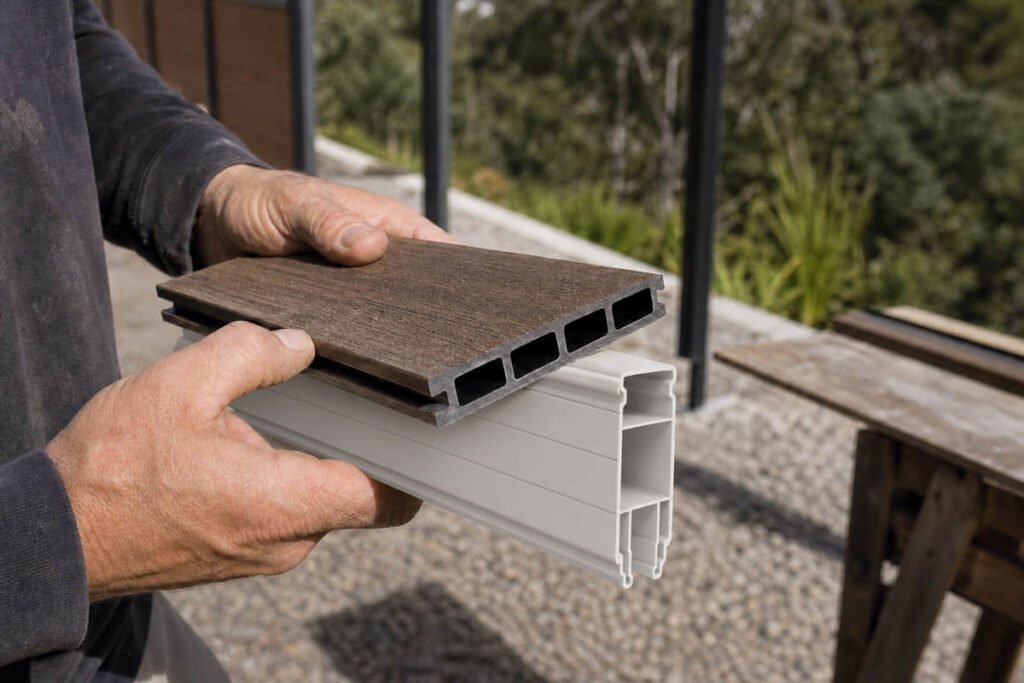
How Composite Fencing Is Made
A composite fence starts with wood fibers and plastic. Capped boards add a hard outer shell that helps block stains, water, and UV rays.
LastElegance wraps its HDPE and wood-fiber core on all four sides. The cap is 0.8 mm thick, or about 31.5 mils.
Those figures apply to LastElegance products. If you’re comparing bids, view the product specs and check like for like.
How Vinyl Fencing Is Made
A vinyl fence uses rigid PVC panels, rails, and posts. Better systems may add metal support inside the rails or posts.
Wall thickness and UV inhibitors can vary a lot. Rail support matters too. Ask for a cut sample, then compare the written specs. A glossy face tells you little about strength.
Which Fence Lasts Longer?
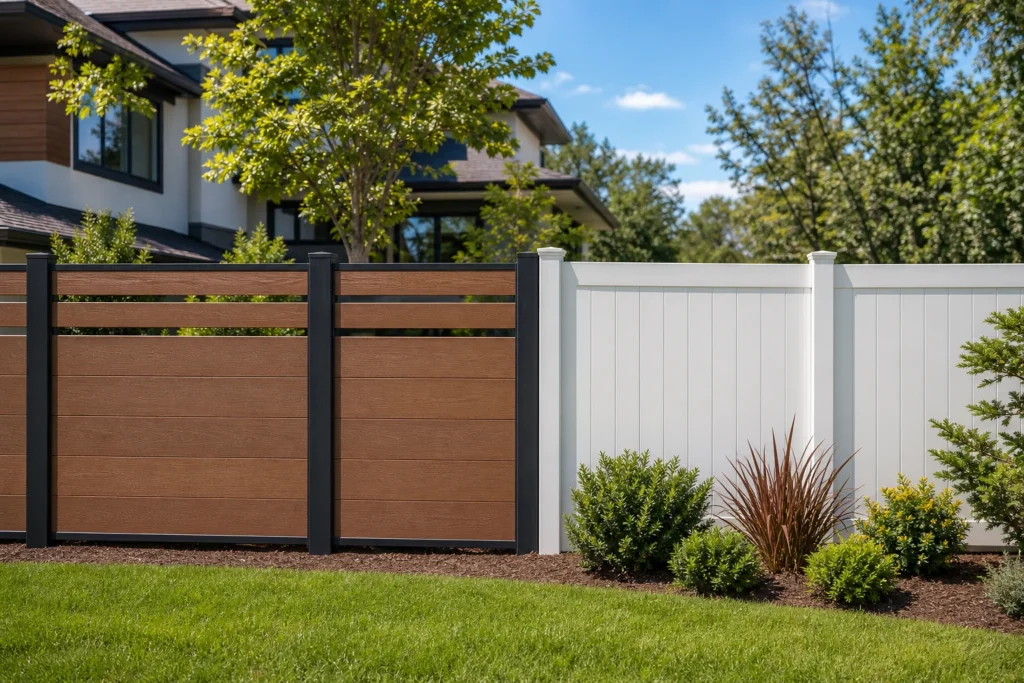
Both can last for decades, so there is no honest universal winner. Capped composite often feels tougher under impact. Vinyl keeps water out, but thin panels may crack.
| On the job | Capped composite | Vinyl |
|---|---|---|
| Rot and pests | Resists both | Resists both |
| Impact | Dense, rigid feel | Lighter; cold can raise crack risk |
| Strong sun | Cap quality controls fading | UV package affects fading and movement |
| High heat | Needs room to expand | May move or warp |
| Warranty | Varies; LastElegance offers 15 years | Varies by brand and product line |
A long warranty helps, but read what it covers. Wind damage, poor footings, and wrong gaps often sit outside the terms.
Sun and Heat
Strong sun makes long, dark fence runs hotter. Both systems need the gaps shown in the maker’s guide.
LastElegance tested its cap for 3,000 QUV hours under ASTM G154. The color stayed within the stated change range. That is useful test data, though it is not a promise of field life.
Put expansion gaps on the drawings. Crews should not have to guess on site.
Cold and Rain
Vinyl handles rain well because PVC does not soak up water. In hard freezes, lower-grade panels may become brittle.
Capped composite also resists rain, rot, and insect damage. LastElegance recorded 0.2% water absorption under ASTM D1037. That result applies to the tested board.
Good drainage still matters. Keep cut ends clear of standing water, and detail post bases with care.
Wind and Impact
A privacy panel acts like a sail. Posts and footings often matter more than the board material.
LastElegance does not yet have formal ASCE 7 wind-load data. For high-wind sites, ask an installer or engineer to check the fence height, post spacing, soil, and footings.
How Do Costs Compare?
Vinyl often has a lower starting price, especially for standard white privacy systems. Composite may cost more when wood-like texture or custom work leads.
National installed-price ranges can mislead B2B buyers. They often mix fence heights, product grades, labor markets, gates, removal, and site conditions.
Compare the full installed system instead:
| Cost factor | What to check |
|---|---|
| Panels and posts | Compare full systems, not board prices |
| Gates and hardware | Include hinges, latches, frames, and bracing |
| Freight | Check order size, distance, packaging, and delivery access |
| Site labor | Price slopes, rock, corners, removal, and tight access |
| Spare parts | Confirm stock for boards, rails, caps, and gate parts |
| Call-backs | Review crack, movement, stain, and repair risks |
Upfront Cost
Standard white vinyl usually costs less at the start. The gap can shrink once a vinyl design adds color, stronger posts, or complex gates.
On real jobs, site work can erase a small material saving. Rock, slopes, removal, and tight access all add crew time.
LastElegance sells manufacturer-direct, which can help on larger orders. Freight and lead time still belong in the quote. Send the full material list when you request project pricing.
Cost Over Time
Compare material, freight, labor, cleaning, spare parts, and expected call-backs. A lower panel price may not produce a lower installed cost.
Repair design also matters. Replacing one board may cost less than removing and rebuilding a full bay.
Ask who stocks matching parts and how long colors remain available. That answer may matter more than small cleaning costs over time.
Which Fence Needs Less Care?
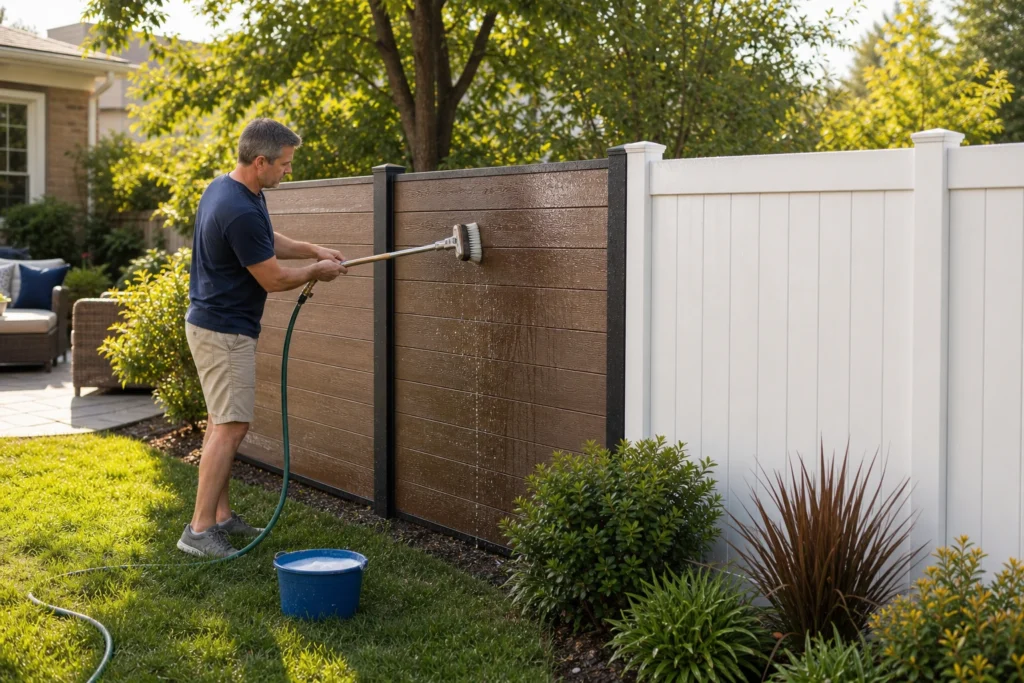
Both are low maintenance compared with traditional wood fencing. You will not need a yearly cycle of paint, stain, or sealer.
| What needs care | Capped composite | Vinyl |
|---|---|---|
| Routine wash | Mild soap, water, soft brush | Mild soap, water, soft brush |
| Mold or algae | Clean when seen | Clean when seen |
| Stubborn stains | Use the approved cleaner | Use the approved cleaner |
| Scratches | May remain visible | May remain visible |
| Damage | One board may come out | A full bay may need removal |
Most dirt comes off with mild soap, water, and a soft brush. Test stronger cleaners in a hidden spot first. Sites near trees or sprinklers may need more frequent washing.
Which Fence Looks Better?
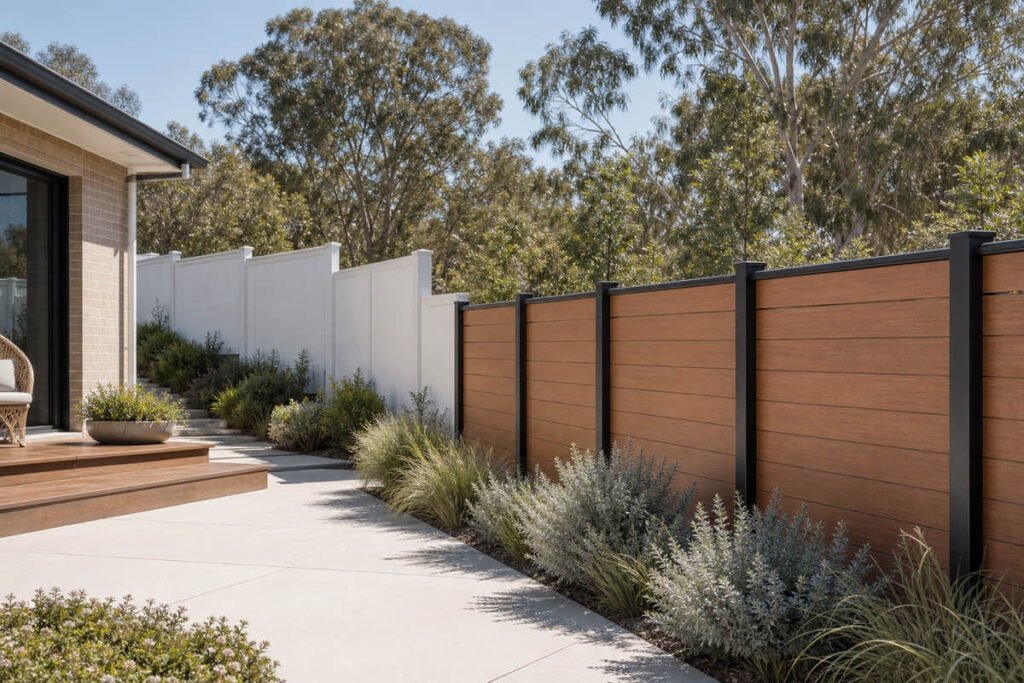
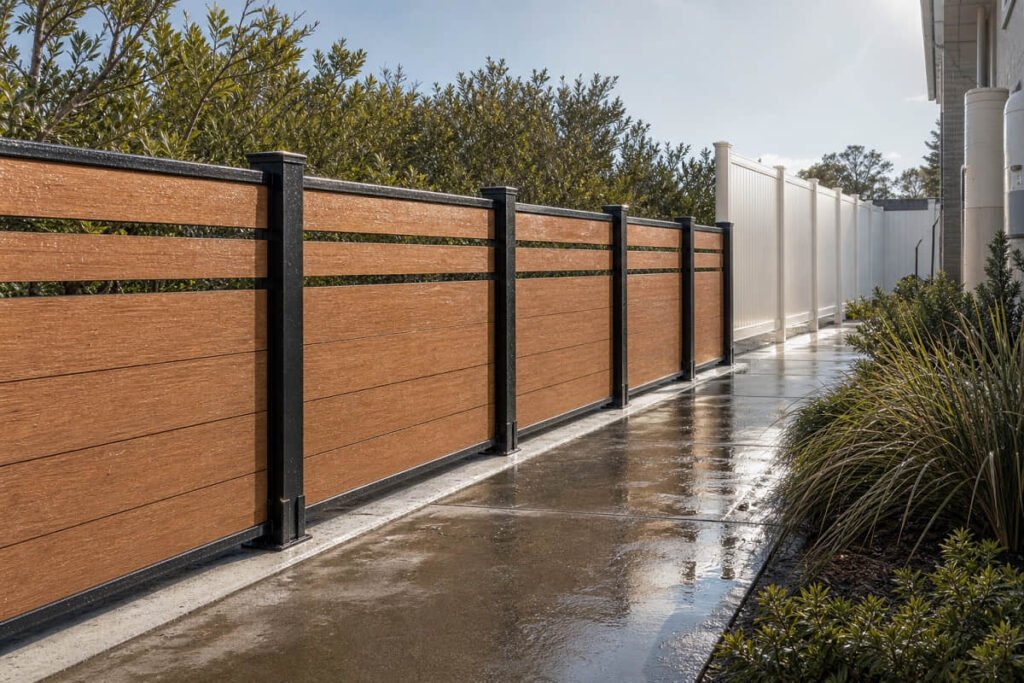
Composite usually wins if the plan calls for the look of wood. Vinyl suits projects that need crisp lines and an even finish.
| What you see | Composite fencing | Vinyl fencing |
|---|---|---|
| Surface | Deep grain and lower sheen | Smooth, clean, uniform appearance |
| Best fit | Natural or modern plans | Clean traditional or modern plans |
| Color depth | Often layered or mixed tones | Often flat and even |
| Joints | Board lines may stay visible | Panel and rail joints define the bay |
A six-inch swatch can hide sheen and repeating grain. View a full panel in daylight before the design team approves it.
Request free samples to compare color, texture, cap coverage, and cut edges during design review.
Colors and Custom Designs
Vinyl offers useful stock colors and styles. Custom work is less common, so the catalog may set the limits.
LastElegance can make custom colors, textures, lengths, sizes, and profiles for volume orders. That helps designers match a brief. It also lets distributors build a product line that is not sold everywhere.
Privacy and Panel Styles
Both materials work for privacy, semi-private, picket, and horizontal slat fences. Stand behind a sample bay and check the view from both sides. Small gaps look wider at an angle.
Solid privacy panels need more wind planning than open slats. Set the post and footing plan before the style is approved.
Which Is Easier to Install?
Vinyl is often easier to lift. Composite board systems can be easier to adjust on slopes or repair one piece at a time.
| On site | Composite system | Vinyl system |
|---|---|---|
| Handling | Heavier boards; smaller pieces | Light panels; wind can affect handling |
| Assembly | Slot-in or clip-fixed parts | Panels often fit routed posts |
| Cutting | Common tools; follow guide | Clean PVC cuts needed |
| Slopes | Board systems may step or adapt | Panel layout may need stepped bays |
| Repairs | A board may be replaceable | A full bay may need to come apart |
Post work still sets the pace on most jobs. Soil, access, corners, and gates can add more labor than the panels.
Compare the Fence Systems
Most vinyl panels slide between routed posts and lock into top and bottom rails. It is a familiar system for many crews.
LastElegance boards slot or clip between aluminum or WPC posts. The full kit can include trim, brackets, clips, caps, skirts, and edge pieces. Linea, TwinLine, and Vista cover slat and privacy layouts.
Order all parts from one confirmed system list. Mixing trim or posts between series creates avoidable site delays.
Plan Labor and Repairs
Build one sample bay before pricing a large run. Time the posts, cuts, trim, and gate work.
Then remove one board and fit it again. That quick test shows what a future repair will take.
Composite Fencing vs. Vinyl: Which Fits Your Project?
The short answer is simple. Pick composite for a wood-like, custom look. Pick vinyl for a lighter system and a lower starting price.
- Choose composite for wood-like texture, a rigid feel, or custom profiles.
- Choose vinyl when light panels, a uniform appearance, and lower upfront cost lead.
- Check climate data, shade, drainage, and darker colors.
- Set wind needs, fence height, post spacing, and footing size.
- Compare warranty terms, lead time, freight, and spare parts.
- Price the full fence installation, including gates and site work.
For volume or custom work, contact our sales team with drawings and the project schedule. We can review profiles, samples, supply needs, and custom mold options.
FAQs
Which is more eco-friendly, vinyl or composite?
The answer depends on recycled content, service life, factory data, and end-of-life options. LastElegance reports 60% recycled HDPE and wood fiber, but that figure doesn’t apply to all composite fencing.
Which fence material adds more home value?
Design fit, condition, privacy, and local demand matter more than material alone. A well-built privacy fence may aid curb appeal, but no material assures a fixed rise in value.
Can composite fencing be customized for distributor programs?
Some manufacturers offer custom colors, textures, lengths, profiles, and packaging for volume orders. Ask about minimum order quantity, mold fees, sample approval, and lead time.
What documents should contractors request before specifying a fence?
Request the technical data sheet, test reports, installation guide, warranty, and care guide. High-wind or regulated projects may also need system-level engineering and local approval.