

A garden fence can look right and still fail on site. Poor material choice, weak access planning, or missed council rules can cause rework and client complaints.
These 12 garden fence ideas help builders, contractors, and distributors match each fence to its job. They cover plant protection, pet control, garden zones, materials, drainage, access, and local planning checks.
You’ll also see where composite screening offers consistent specs and low maintenance across Australian projects.
12 Fence Designs to Suit Australian Gardens
The best garden fencing fits the job first. A low picket fence can frame flowers, while mesh can protect crops. A composite screen can create a clean backdrop for planting.
Here are 12 garden fence designs that work across Australian backyards.
1. Low Fence Around Veggie Beds
A low garden fence marks the edge of a vegetable garden and stops people from walking on loose soil. It also gives the garden a tidy shape.
Use timber pickets, short composite slats, or simple metal edging with posts. A gate makes it easier to move mulch, tools, and a wheelbarrow in and out.
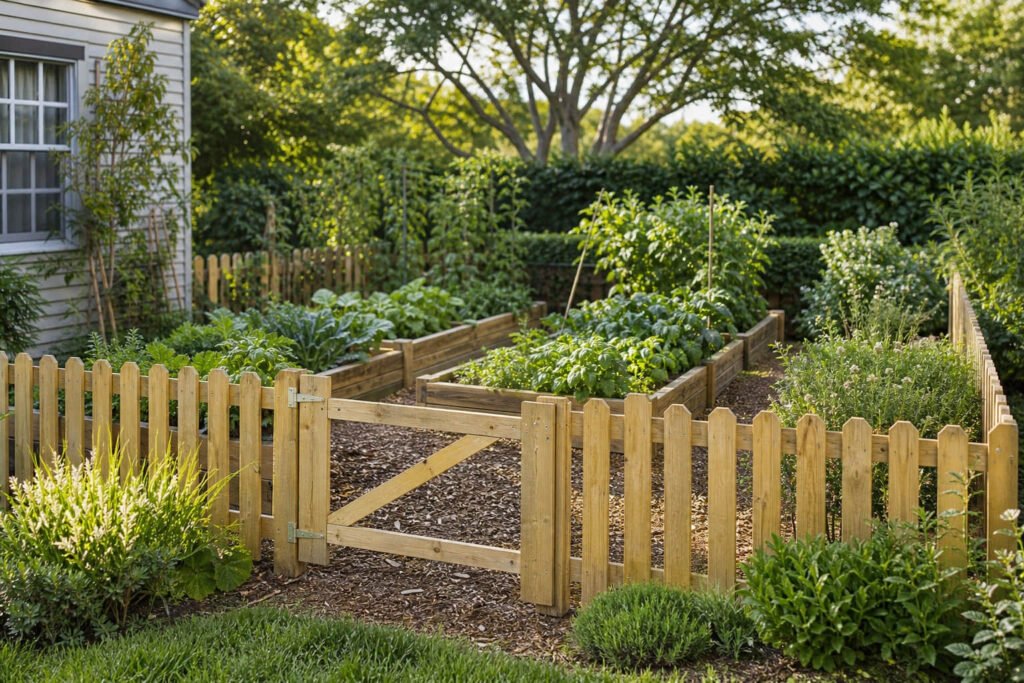
Keep it low if the aim is to define beds rather than contain animals. Most dogs, rabbits, and climbing pets will pass a low fence with ease.
2. Fine Mesh Stops Small Pests
Fine mesh works best where rabbits and other small critters are the main threat. It lets light and air pass through while protecting food crops.
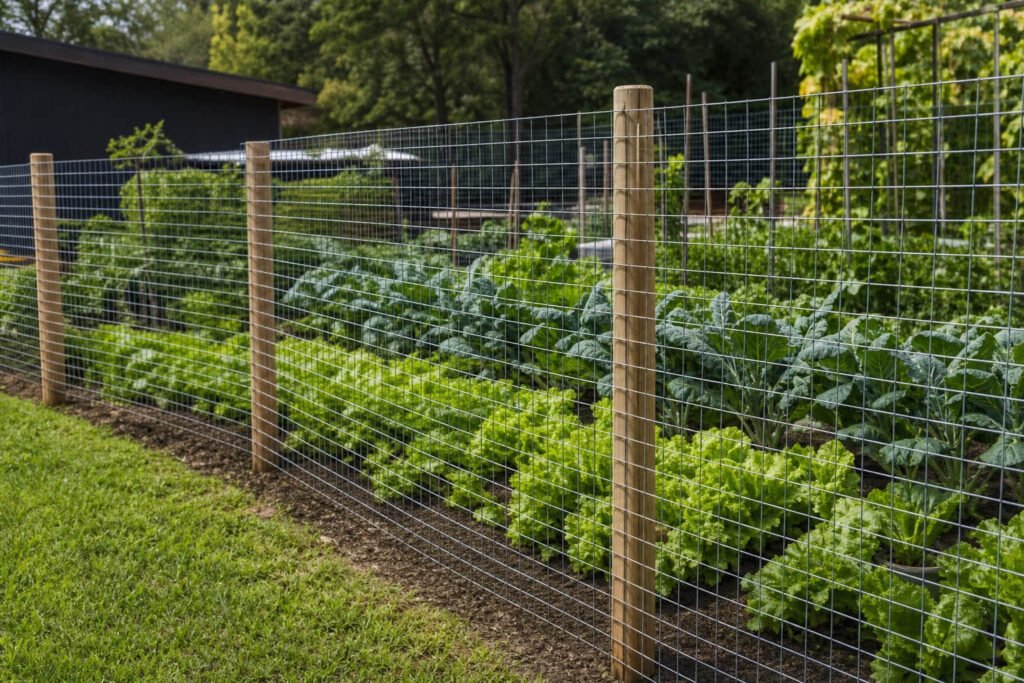
Choose the mesh opening for the animal you need to stop. A rabbit fence also needs a secure bottom edge, as rabbits can dig below a loose panel.
Chicken wire can suit light-duty garden use, but welded mesh is stronger and keeps its shape better. Check the coating before you buy, especially near the coast.
The trade-off is visual cover. Mesh protects the garden, but it will not hide sheds, bins, or neighbouring yards.
3. Welded Mesh for Climbing Crops
Welded mesh gives peas, beans, cucumbers, and other climbers a strong place to grow. It turns a fence line into growing space without taking up much room in the bed.
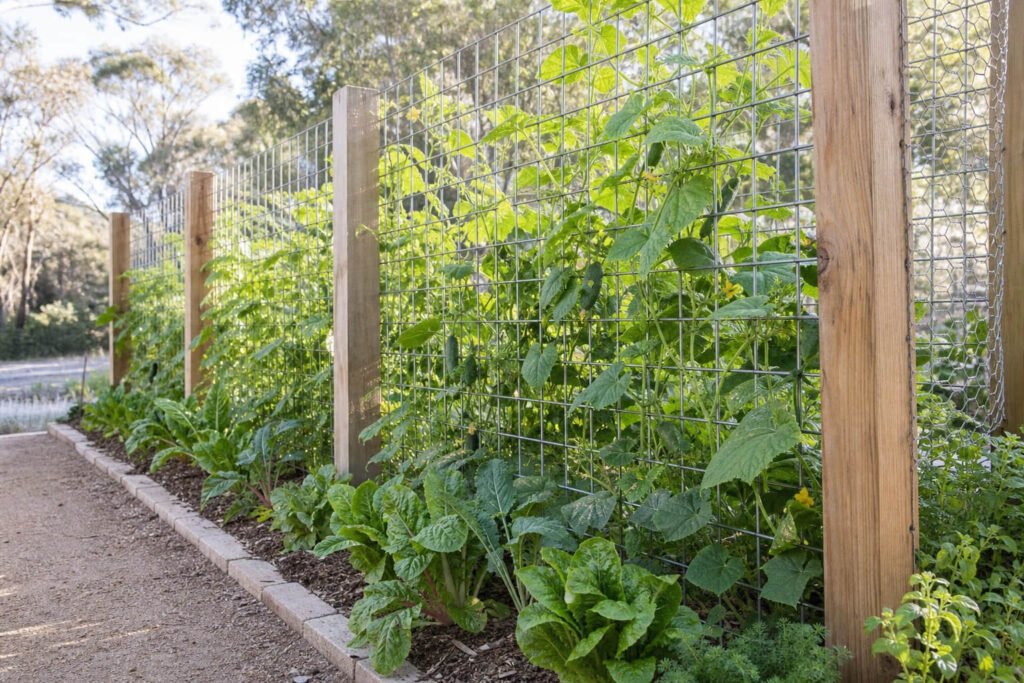
Fix the mesh to solid posts and leave room to reach both sides. This makes pruning and picking far easier when plants fill out.
Use a grid size that suits the crop. Large openings are easy to harvest through, but young vines may need twine for their first few weeks.
A trellis fence needs a check at the end of each growing season. Remove old vines before they trap moisture against timber or fence panels.
4. Picket Fence Around Cottage Beds
A short picket fence gives flower beds a classic cottage feel without blocking the plants. It suits roses, lavender, daisies, and soft shrubs that spill through the pickets.
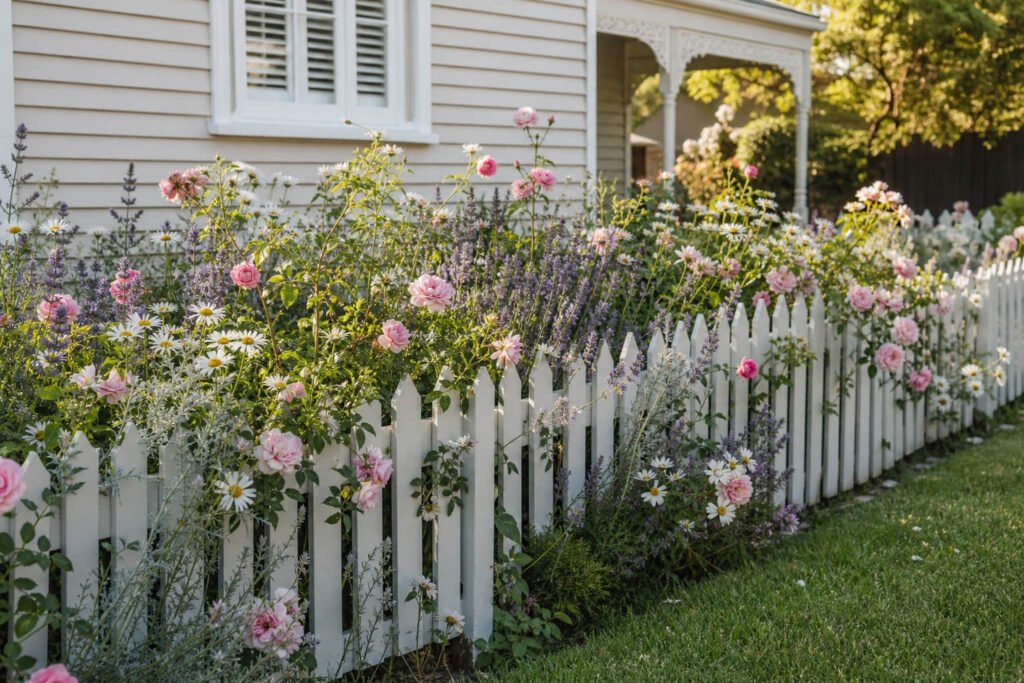
A white picket fence creates a bright, traditional look. Natural wood works too, though it needs stain, paint, or sealing over time.
Use pickets around internal beds, not as a substitute for a street boundary fence. That keeps the design focused on the garden rather than kerb appeal.
The trade-off is maintenance. Timber pickets can crack, fade, or rot if the paint system fails.
5. Post and Rail for Large Gardens
Post and rail fencing suits large gardens, acreage blocks, and broad backyard zones. It marks a fence line while keeping the view open.
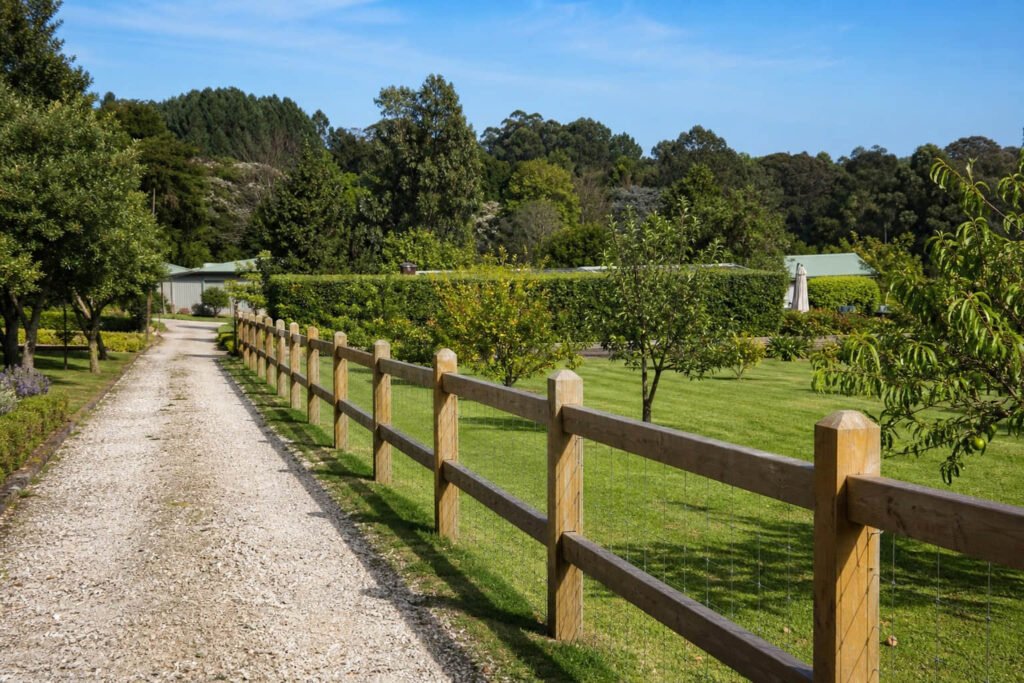
A rail fence works well beside orchards, lawns, and long paths. Add wire mesh behind it if you also need to contain pets or keep pests out.
Set the post spacing to suit the rail length and ground conditions. Loose or wet soil may need stronger footings than firm, level ground.
This style offers little privacy. Use it where openness matters more than screening.
6. Composite Slats Behind Garden Beds
Composite slats make a neat backdrop for shrubs, native plants, and narrow garden beds. The even lines help foliage stand out, especially against darker colours.
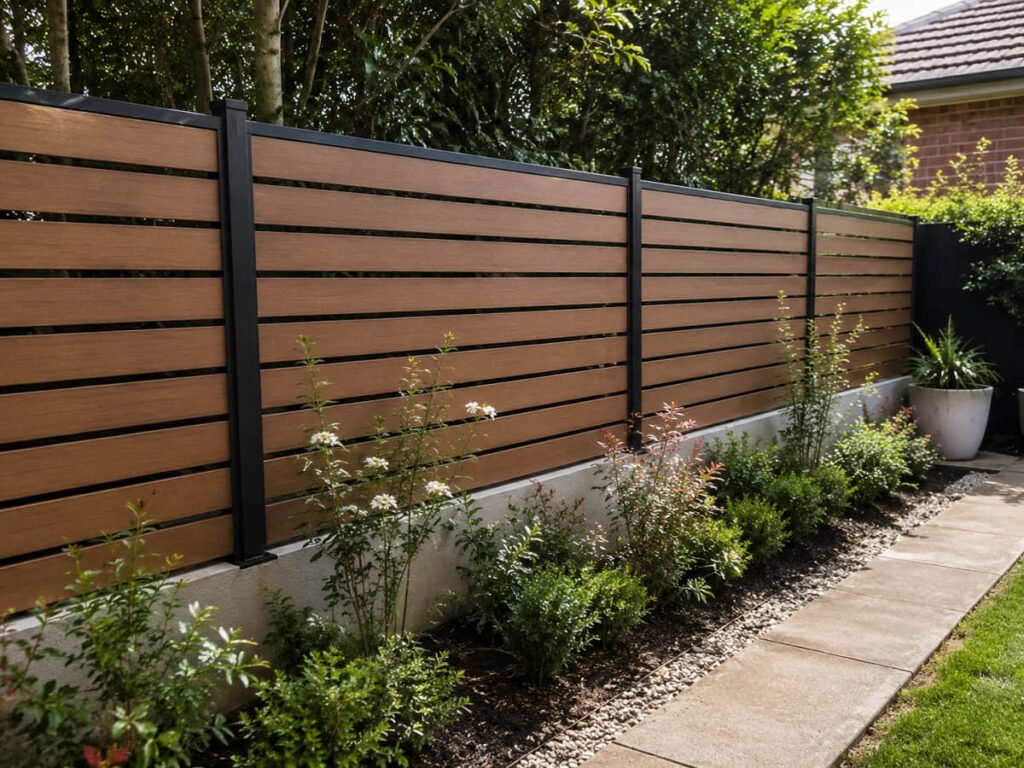
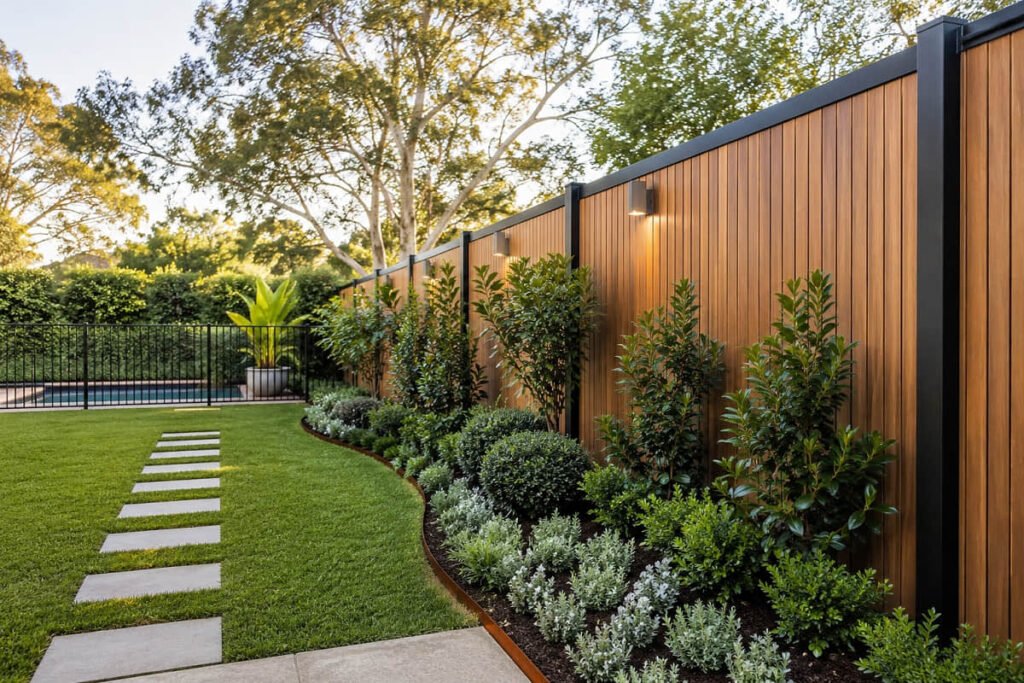
Horizontal slats can make a narrow yard feel wider. Vertical slats draw the eye up and can add height to a compact garden space.
Composite fencing suits gardens that need a low-maintenance finish. LastElegance composite screening has a 0.8 mm co-extruded cap layer and uses UV stabilisers to help manage colour fade.
Our test data shows a colour change of ΔE ≤4 after 3,000 hours of QUV weathering tests, with slight changes in colour. The material also has 0.2% water absorption in ASTM D1037 testing.
Leave a gap between dense planting and the panels. You need airflow and room to wash the fence.
Want to check colours against your planting palette? Request Free Samples before you lock in the fence design.
If the main goal is to block overlooking or screen a narrow boundary, see our outdoor privacy screen guide
7. Raised Beds Along the Fence
Raised beds add depth to a plain fence and bring herbs, flowers, and veggies closer to hand. They work well along a side boundary or beside a patio.
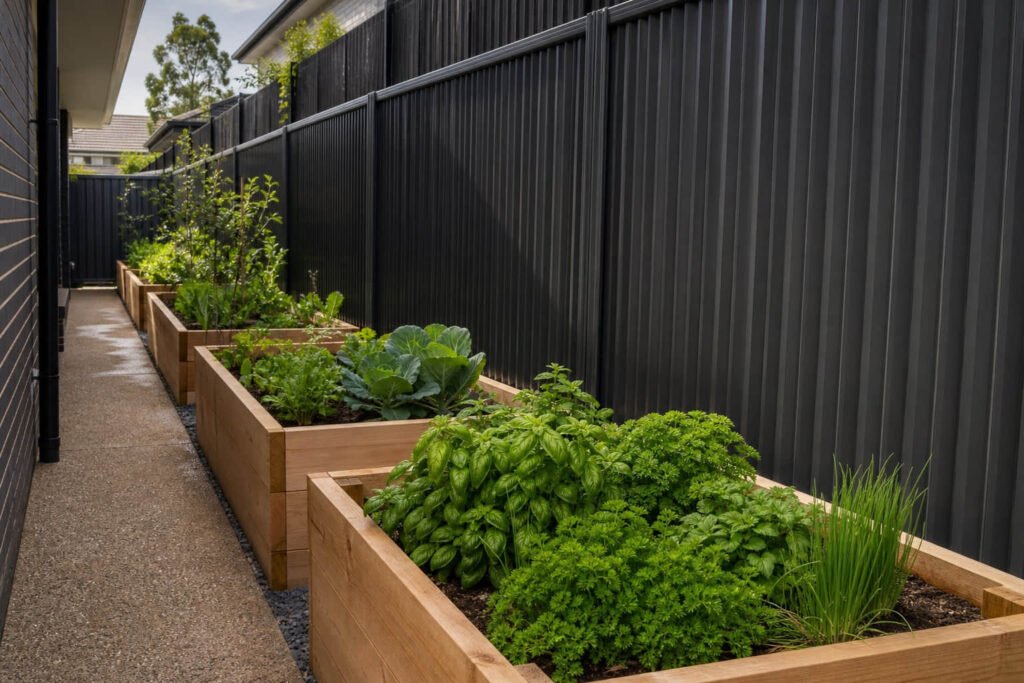
Keep wet soil and mulch away from the fence. A drainage layer and a small air gap help protect both the garden bed and fence fixings.
Plan enough room to clean the panels and repair parts if needed. A narrow path between the bed and fence can save work later.
Do not use the fence as a retaining wall. The soil load needs its own bed structure.
8. Garden Gate With Climbing Arch
A gate and light arch make a garden entry feel like a destination. It works well at the start of a flower garden, productive garden, or quiet seating area.
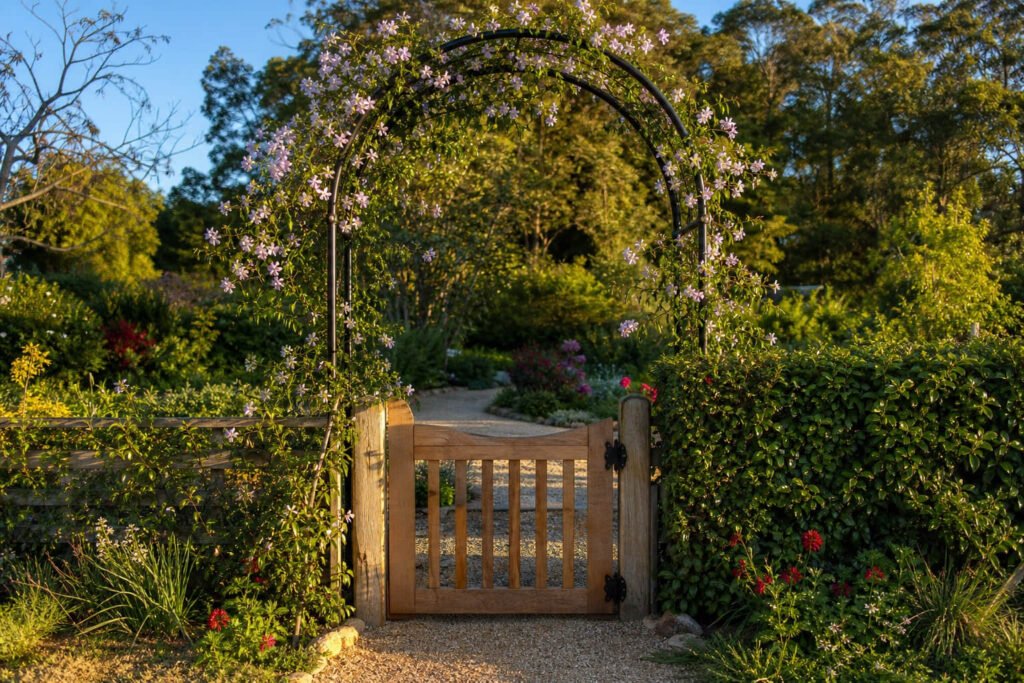
Allow enough clear width for a barrow, mower, or bins. A 900 mm opening suits many garden jobs, while wider access may suit larger yards.
Choose a latch that is easy to reach and shuts cleanly. Keep the arch separate from the gate frame, so plant weight does not pull the gate out of line.
Wisteria, ivy, and other heavy climbers can overwhelm a light arch. Match the frame to the mature plant, not the size it is at purchase.
9. Stepped Panels for Sloping Yards
Stepped fence panels keep the top of each panel level as the ground falls away. This gives a crisp, deliberate look to a sloping yard.
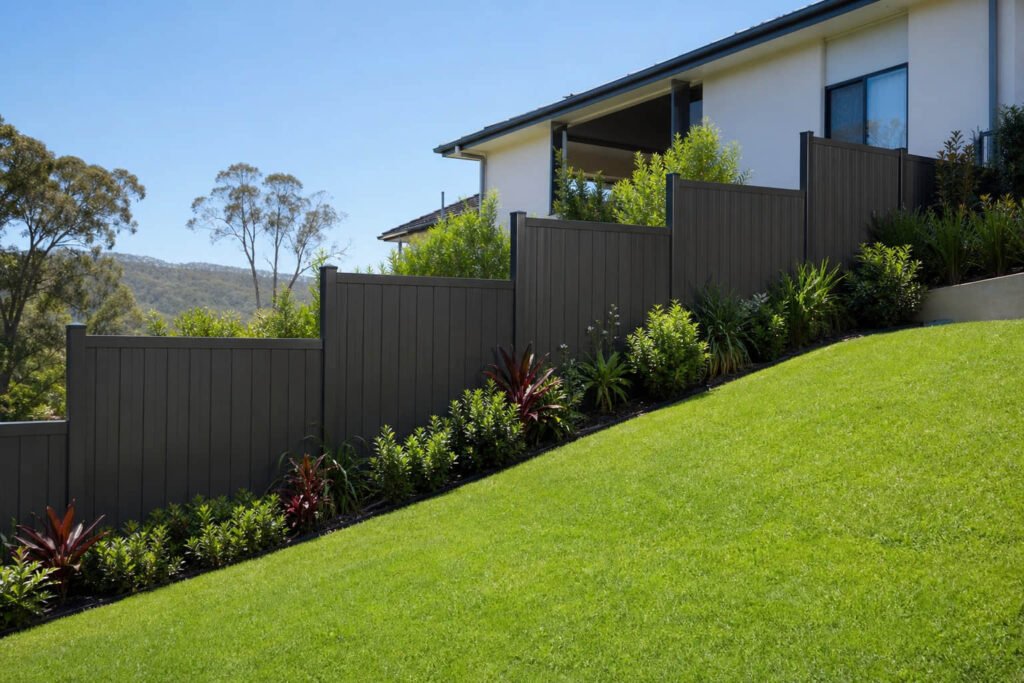
A raked fence follows the slope in one continuous line. It can look smoother, but it often needs custom cutting and more planning.
Stepped panels suit modular composite screening and standard fence panels. Check the gaps below each step, as pets and pests may use them as access points.
10. Mixed Heights for Garden Zones
Mixed fence heights can divide a small garden without making it feel closed in. Keep low sections near paths and seating areas, then raise panels where you need screening.
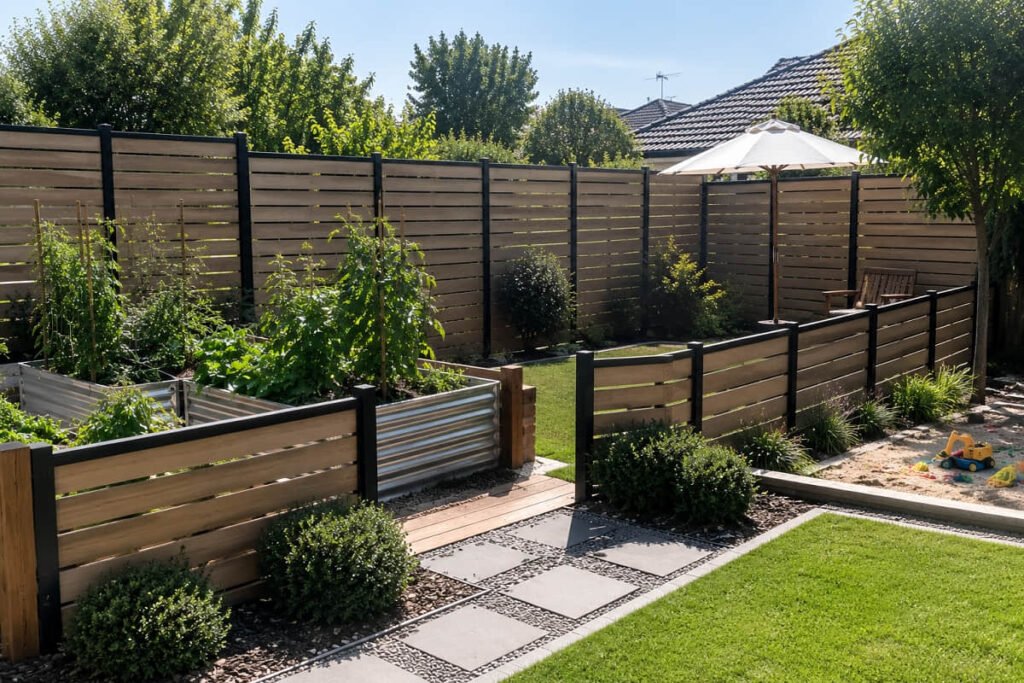
For example, a low fence can edge a lawn beside a patio. A taller panel can hide bins, a work area, or a compost zone.
This approach creates focal points and guides the view of the garden. It also helps each outdoor space feel useful rather than crowded.
Plan the sightlines from inside the house first. A tall panel in the wrong spot can block the best part of the yard.
11. Open Panels Frame Garden Views
Open fence panels can frame a feature tree, sculpture, or planted bed. The gaps become part of the fence design instead of a weak point.
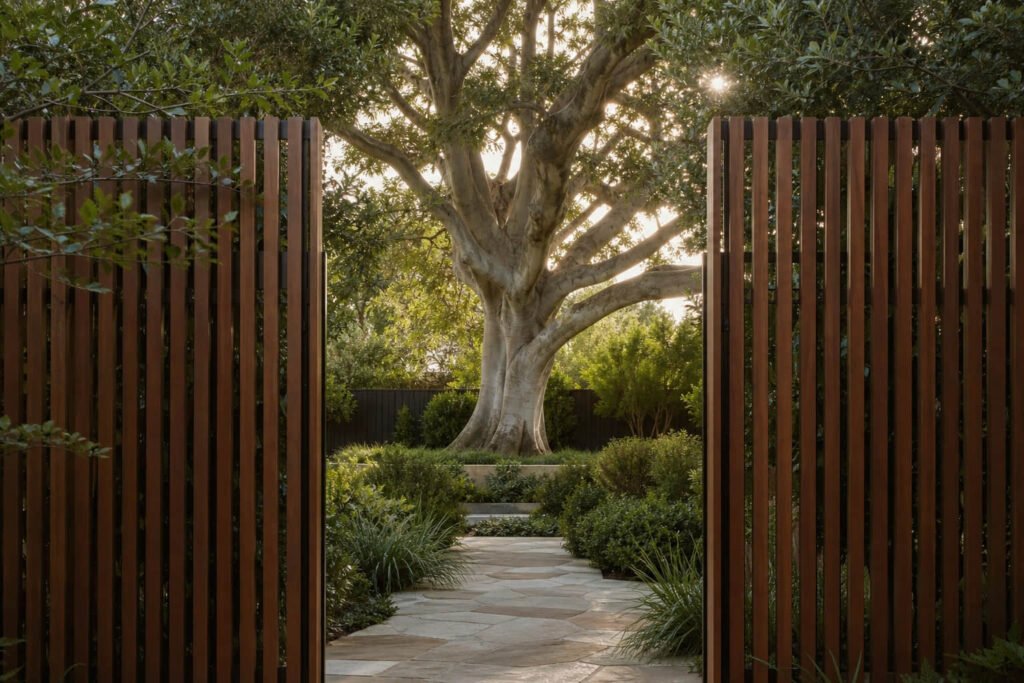
Use spaced slats, a light lattice, or an iron fence style for this effect. A semi-open screen can also soften a boundary without acting like a full privacy fence.
This is an ideal way to keep a view while adding structure. It suits gardens with a strong focal point at the end of a path.
Avoid placing open panels where you need real privacy or pet control. A decorative garden fence still needs to match its job.
12. Pet-Friendly Garden Fences
A pet-friendly garden fence must suit the animal’s size, strength, and habits. A fence that contains a quiet small dog may not hold a large dog that digs or jumps.
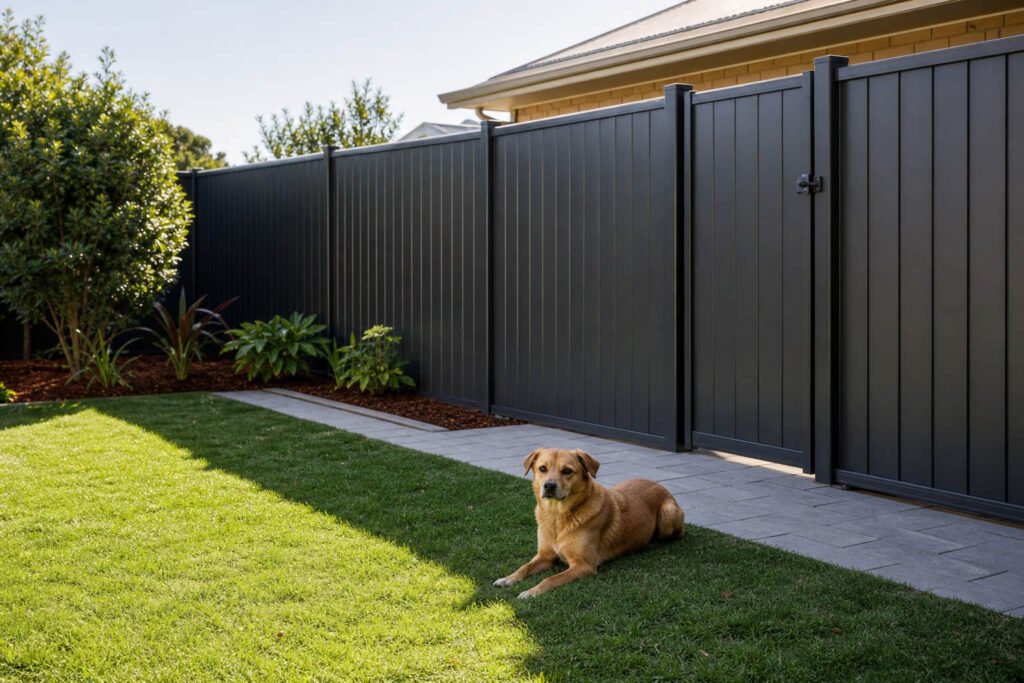
Check these points before you build:
- Set the height for the pet’s jumping ability.
- Keep gaps too small for the pet’s head or body.
- Use smooth edges and secure latches.
- Stop digging with a buried edge or a hard strip below the fence.
- Check every gate after installation.
Do not rely on one standard fence design for every pet. An experienced installer can help match the fence, gate, and bottom edge to the site.
Match Materials to Your Garden
The best garden fence material depends on the use, weather exposure, and how much maintenance you want to take on. Performance also changes with material grade, coating, fixings, and installation method.
| Material | Best garden use | Care needs | Main trade-off |
|---|---|---|---|
| Composite | Plant backdrops and garden zones | Wash as needed | Higher upfront cost than basic timber |
| Timber | Cottage beds and easy custom work | Paint, stain, or seal | Can warp, rot, or attract termites |
| Metal mesh | Crops, pets, and pest control | Check coating and fixings | Gives little visual cover |
| Masonry | Permanent garden walls | Low once built | Higher cost and more site work |
Composite screening gives builders a clean, modern fence without the regular staining cycle of natural wood. It is termite-resistant and moisture-resistant, which matters beside irrigated beds and wet garden zones.
LastElegance is a manufacturer, not a middleman. We make composite products in-house, which gives trade partners more control over colour, size, texture, profile, and product specifications.
Composite does cost more upfront than basic timber. Its value comes from consistent specs, low maintenance, and custom options across a wider landscape project.
For a deeper cost and lifespan comparison, see our composite versus wood fence guide.
Need panel sizes, fixing details, or colour options for a project? View Product Specs.
Check Before You Build
A good idea can still fail if the fence line, permits, drainage, or access are wrong. Check these points before you order materials or start work.
- Confirm the boundary and speak with the adjoining owner.
- Check council rules for height, material, and location.
- Plan gate widths for the tools and equipment you use.
- Mark drains, taps, services, and wet ground.
- Treat any pool barrier as a separate compliance item.
Government guidance was checked on 20 July 2026. Rules change by state, council, planning overlay, and fence location.
Confirm the Fence Line
Confirm the title boundary before you replace or build a dividing fence. Do not assume an old fence sits on the legal line.
Speak with your neighbour before agreeing on materials, style, or shared costs. In Victoria, the state guidance explains the fencing process and notices that may apply between adjoining owners.
Read the current Victorian Government fencing guide before you start a shared boundary project.
Check Height and Permits
Fence height and permit rules vary across Australia. Side, rear, front, and corner fences can face different rules, even on the same lot.
For example, NSW exempt development rules set different limits by location and zone. Residential side and rear fences may be up to 1.8 metres under that pathway, while road-facing fences have lower limits.
Always check your council before ordering panels. The NSW Planning Portal fence rules show why local checks matter.
For a fence that faces the street, see our front fence guide before you choose a height or panel style.
Plan Access and Drainage
Plan the gate around how the garden will work. A narrow gate may look fine, but become a problem when you need to move a barrow or mower.
Mark drains, taps, irrigation lines, and wet areas before setting posts. Do not trap water against the bottom of fence panels or raised beds.
For composite screening, use the specified post spacing and keep within the system limits. LastElegance recommends 0.8–1.4 metres between posts, with a maximum of 1.6 metres.
Keep Pool Barriers Separate
A decorative garden fence may not meet pool barrier rules. Do not treat a garden screen as a pool barrier unless the full design meets the required standard.
Use a qualified installer for pool fencing. Check the current NCC provisions and the applicable AS 1926 requirements for your state and site.
FAQs
What Fence Works Best for Gardens?
The best fence depends on its job. Use composite for a low-maintenance backdrop, timber for cottage-style beds, and mesh for crops, pets, or pest control.
What Fence Keeps Pets Out?
Choose the height, gap size, gate, and bottom edge for your pet’s behaviour. Dogs that dig, climb, or jump need more than a basic low garden fence.
Can Plants Grow Against Composite Fencing?
Plants can grow near composite fencing, but heavy climbers need their own support. Leave a gap for airflow, cleaning, and plant care.
How High Can a Garden Fence Be?
Fence height depends on location and local planning rules. Check with your council before you order panels or posts.
Do Garden Fences Need Council Approval?
Approval can depend on the height, material, location, and planning overlays. Side, rear, corner, and pool fences may all have different rules.
A well-planned fence gives plants a better backdrop, keeps work areas neat, and helps the garden last. If you need custom composite screening for a trade project, contact our sales team to discuss colours, profiles, and manufacturing options.