

Front fences get value-engineered out of the budget more often than any other finish item. Clients see them as optional until the project is nearly done — then they want something that looks good, costs nothing, and installs yesterday.
Getting the spec right early solves all three. This guide covers 15 front fence styles suited to Australian projects, with cost ranges, install notes, material comparisons, and council rules by state.
What Makes a Good Front Fence in Australia?
A well-designed front fence does four things: lifts street appeal, delivers the right privacy level, holds up in Australian conditions, and meets council rules. Getting all four right on the same project is where most spec decisions get made.
Material choice drives everything else. Salt air breaks down untreated timber fast in coastal areas. High UV fades unprotected surfaces across most of the country. Termites are a real risk in Queensland and coastal NSW. Any front fence you spec needs to handle the local climate without adding to your client’s maintenance schedule or yours.
15 Front Fence Ideas for Australian Projects
1. Horizontal Composite Slat Fence
Horizontal slat fencing is the fastest-growing front fence style for contemporary homes in Australia. Flat boards run left to right across the frontage — a modern look that suits new builds and recently renovated homes alike.
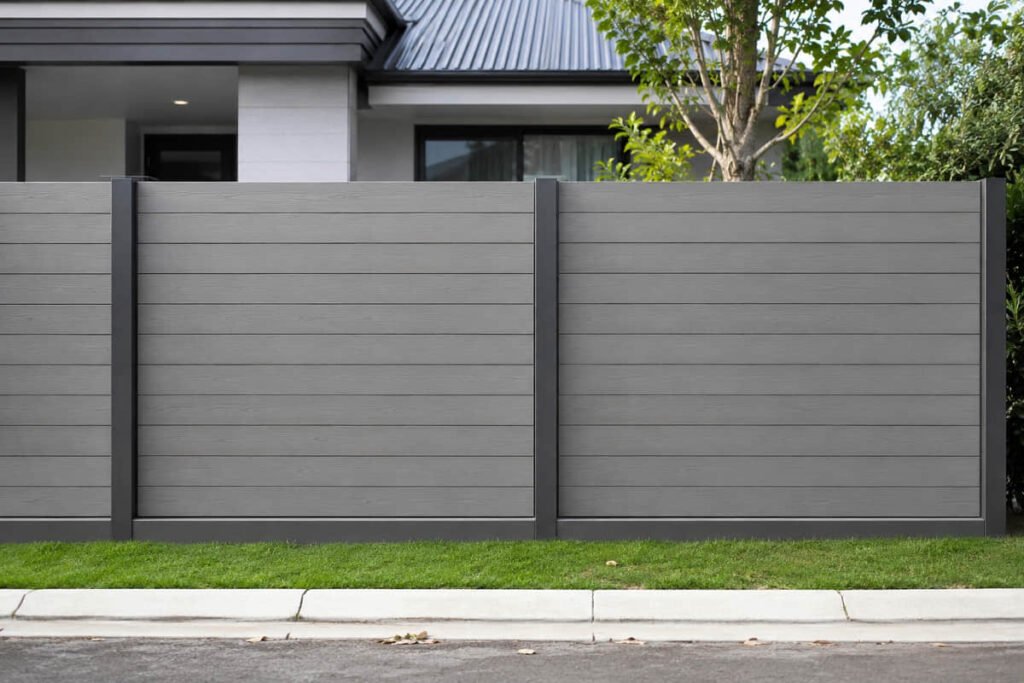
Composite boards deliver the timber aesthetic without the paint cycle. The Vista Composite Screening range — available in 180×20mm, 160×20mm, and 90×20mm profiles — is purpose-built for this kind of install. Water absorption sits at just 0.2% (ASTM D1037), slip resistance is rated R11 per AS/NZS 4586, and the 0.8mm UV-stabilised cap layer holds colour through years of Australian sun. No sealing, no re-coating.
You can install composite slats in closed, semi-open, or open layouts. That means you control privacy without boxing in the street frontage. Recommended post spacing runs 0.8m to 1.4m, and two people can complete a standard 15m front fence in a day. The clip system means no surface screws — the face stays clean.
For coastal areas where salt air eats through untreated timber fast, this is the first profile we recommend.
Explore the full composite screening range — all profiles, dimensions, and colour options.
2. Vertical Batten Fence
Vertical slats bring a different rhythm to the street frontage — more structured than horizontal slats, and well-suited to modern architecture and townhouse developments.
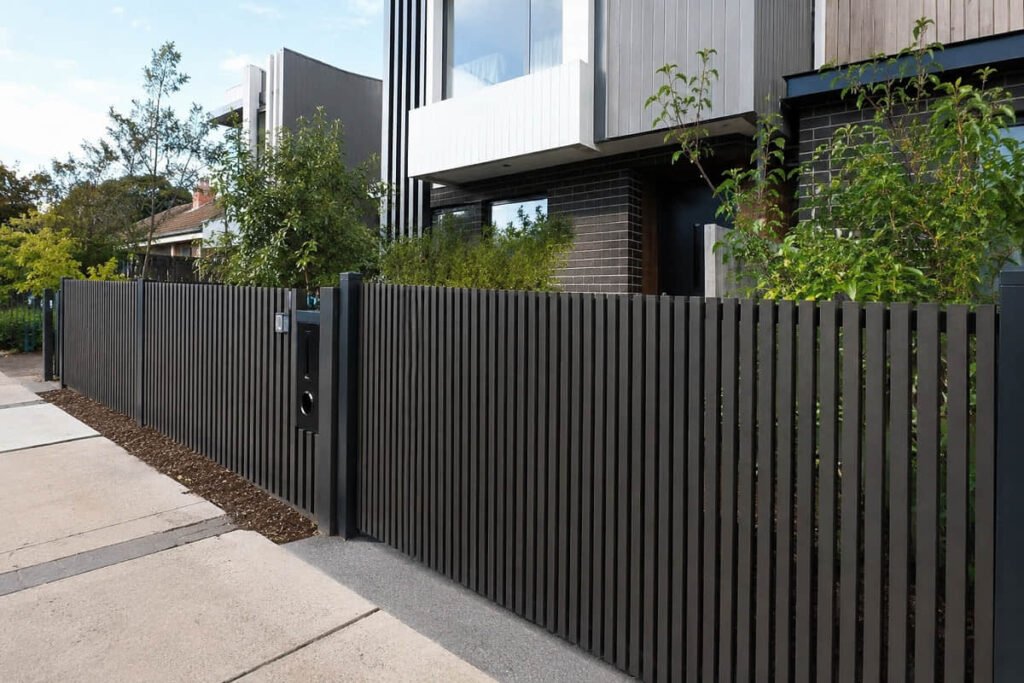
The Linea Composite Fence Panels in 45×90mm and 50×50mm profiles work well here. Gap spacing controls privacy: 10mm gaps give close to full screening; 50mm gaps create a semi-open design with good light and airflow. Vertical slats also read well on narrow frontages — they draw the eye upward and make the block appear wider.
For tighter installs, keep post spacing to 1.2m max. Vertical orientation puts more lateral load on posts than horizontal does, so don’t stretch the spans.
3. Blade / Batten Feature Fence
Blade fencing uses wider boards — vertical or horizontal — with deliberate gaps between them. The result is open and architectural: strong visual interest without a solid wall.
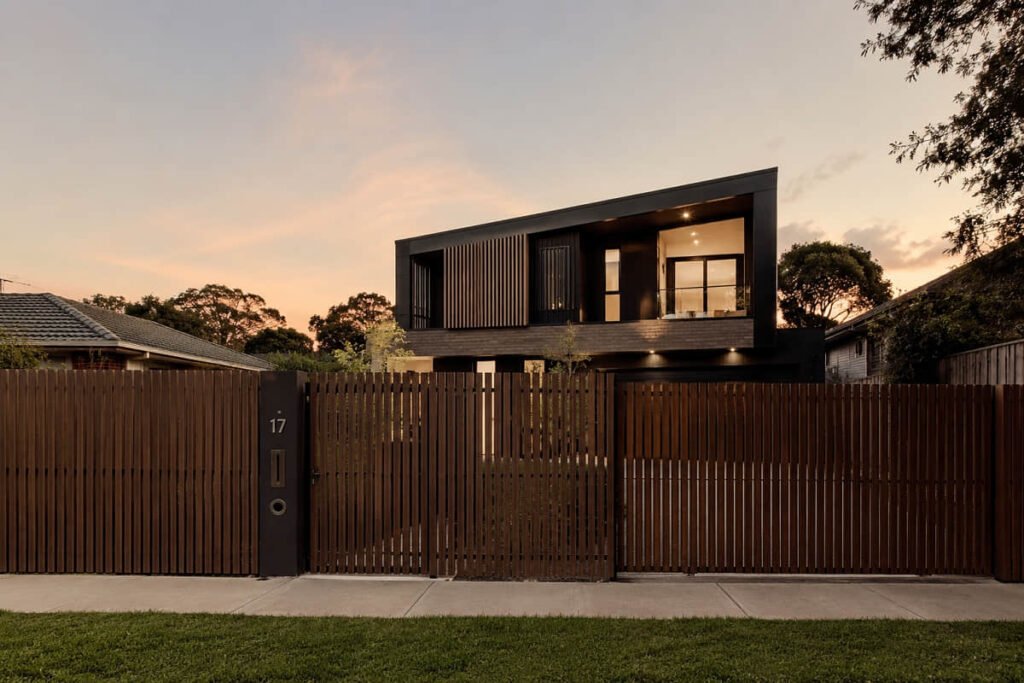
It’s a strong choice for new builds and estate developments where you want street presence without a fortress look. Tighten the gaps for more privacy; widen them for an open design. The Linea 45×90mm profile is the main product for this fencing style. Composite blade panels need no oiling, no repainting, and no annual upkeep — a real advantage over timber battens.
4. Hamptons-Style Coastal Fence
Wide rails, horizontal boards, and clean lines give the Hamptons-style fence a relaxed coastal authority. It suits beachside homes from the Mornington Peninsula to Sydney’s Northern Beaches — and works equally well on any home leaning into the coastal aesthetic.
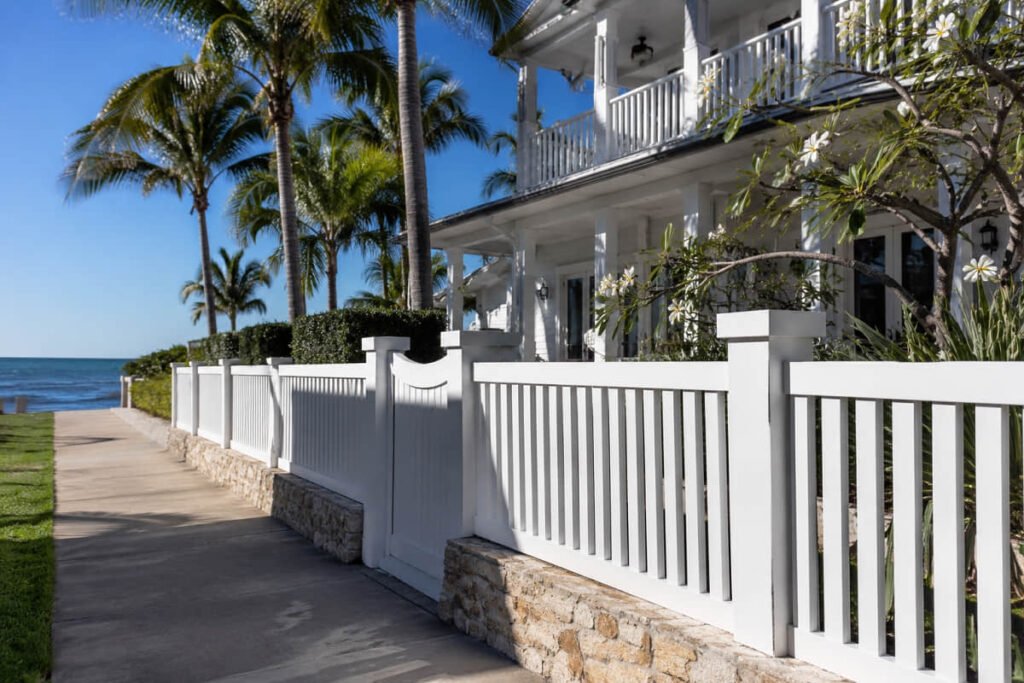
Composite boards handle salt air and moisture far better than raw timber. With a water absorption rate of 0.2% (ASTM D1037), the boards won’t swell, crack, or need sealing after a wet winter. For a complete system, pair the TwinLine 158×20mm panel with aluminium or WPC posts, post caps, top and bottom trim strips, and clip fasteners. The finish looks clean end to end.
5. Classic Picket Fence
The white picket fence is a timeless look that still gets specified regularly across Australian projects. It marks a clear property boundary, lifts curb appeal, and suits Federation, Edwardian, and cottage-style homes well.

Today’s composite picket-style screening panels give you that classic look with none of the paint cycle. Timber pickets need repainting every 3–5 years in Australian conditions. Composite doesn’t.
The honest trade-off: picket fencing works best at heights up to 1.2m. It’s the right call when street appeal drives the brief — not when full privacy is the goal.
6. Capped Rail Picket Fence
Capped picket fencing adds a horizontal top rail that gives the fence a stronger, more finished look. The cap adds structure and visual weight — a popular choice for period homes where a clean top edge reads as more formal.
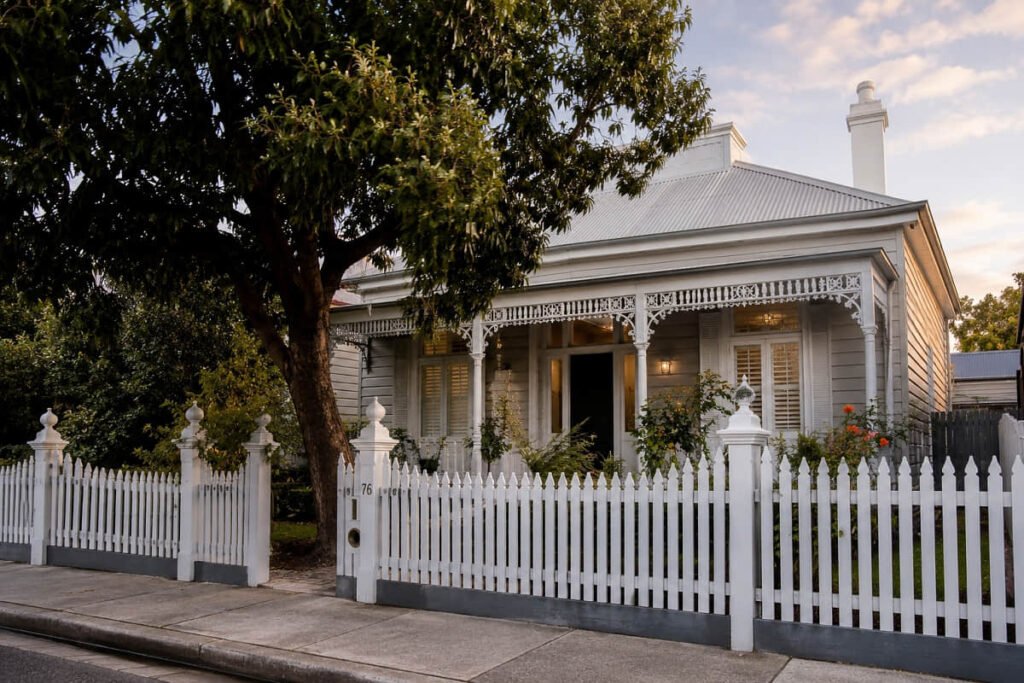
The same composite materials apply here. The capped profile also works on contemporary homes where a defined top line suits the home’s architecture. It’s a versatile fence design that sits between the softness of a plain picket and the solidity of a full privacy fence.
7. Heritage-Compatible Fence Design
Heritage overlay projects are a regular challenge for Australian contractors. The council wants the new fence to match the street’s original character, which rules out anything that looks overtly modern.
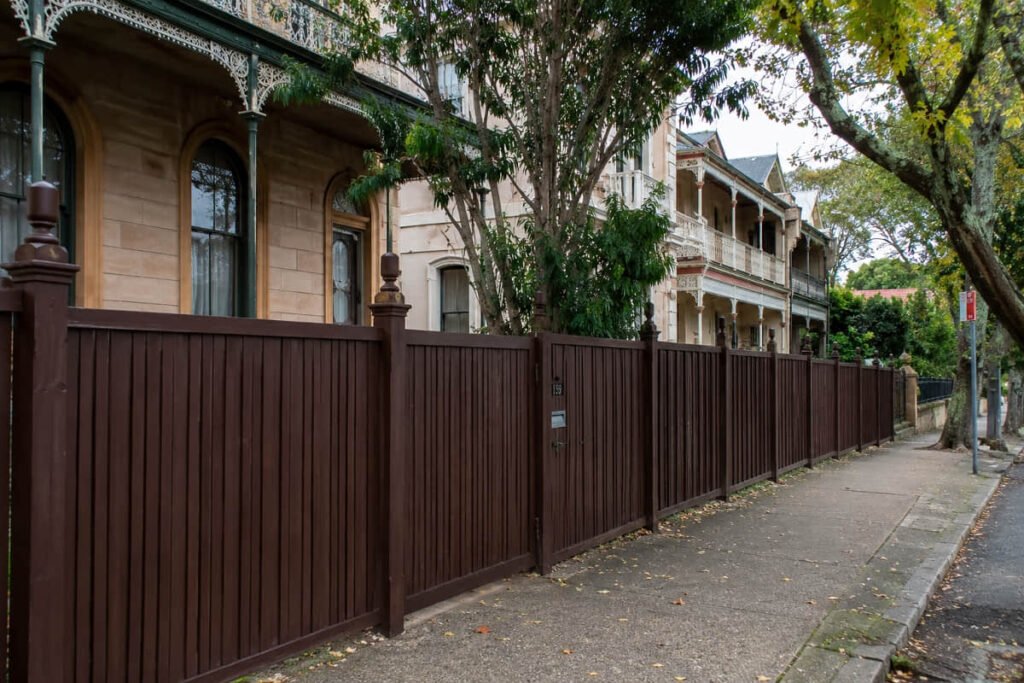
For these projects, vertical narrow battens and classic pickets are the safest bet. Composite in deep timber-grain colours — dark brown, warm grey — reads as natural from the street and satisfies most heritage guidelines. Avoid bright or highly saturated colours; they typically get knocked back.
One practical note: confirm the local guidelines before you quote. Some councils are strict about material type, not just appearance. A quick call before you pour the first post footing saves a lot of grief later.
8. Mixed Material Fence (Composite + Rendered Pillar)
Mixed material fencing combines rendered masonry wall pillars with composite panel infill. It’s a popular choice for high-end residential projects and estate developments where a strong street frontage statement is the brief.
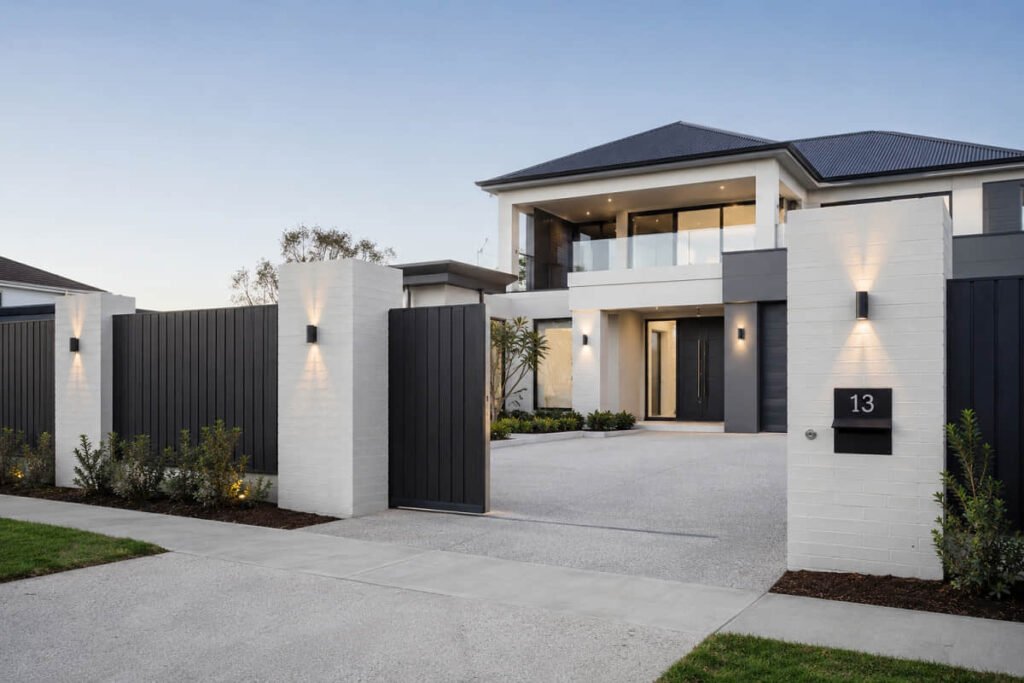
The masonry pillars give weight and permanence. The composite infill keeps maintenance low and delivers design flexibility. Post spacing runs 1.2–1.6m pillar to pillar. Fix the composite panels to a steel sub-frame between the pillars, and finish the junction with an aluminium trim strip — it handles the expansion gap and gives a clean edge at the reveal.
Clients who want the look of a full rendered masonry wall without the full build cost find this a practical middle ground.
9. Modern Minimalist Fence
For contemporary homes with a dark palette — black, deep grey, charcoal — a narrow-board closed fence in a matching colour is a sharp, confident choice. No decoration, no gap pattern. Just flat, linear, and uncluttered. A minimalist’s dream in fence form.
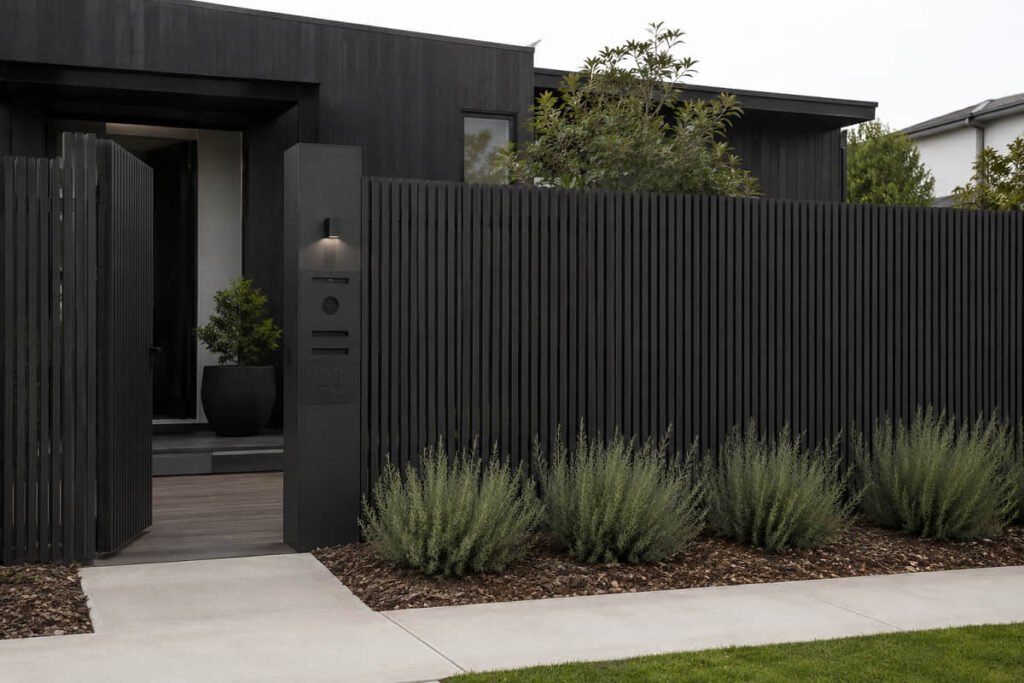
The 90×20mm Vista profile in closed installation works well here. Matte woodgrain finishes in deep charcoal are the most popular spec for this modern design in 2026. The fence disappears into the home’s architecture, which is exactly what minimalist design needs.
10. Semi-Privacy Slatted Fence
Not every client needs a solid wall at the front. Semi-privacy fencing — horizontal or vertical boards with 15–30mm gaps — gives 60–70% visual screening while keeping the street frontage open and light.
It’s the right call when the brief is street appeal first, privacy second. A semi-open front fence still reads as tidy and intentional from the footpath, and most councils treat it more favourably than a solid wall when you’re working near a driveway sightline.
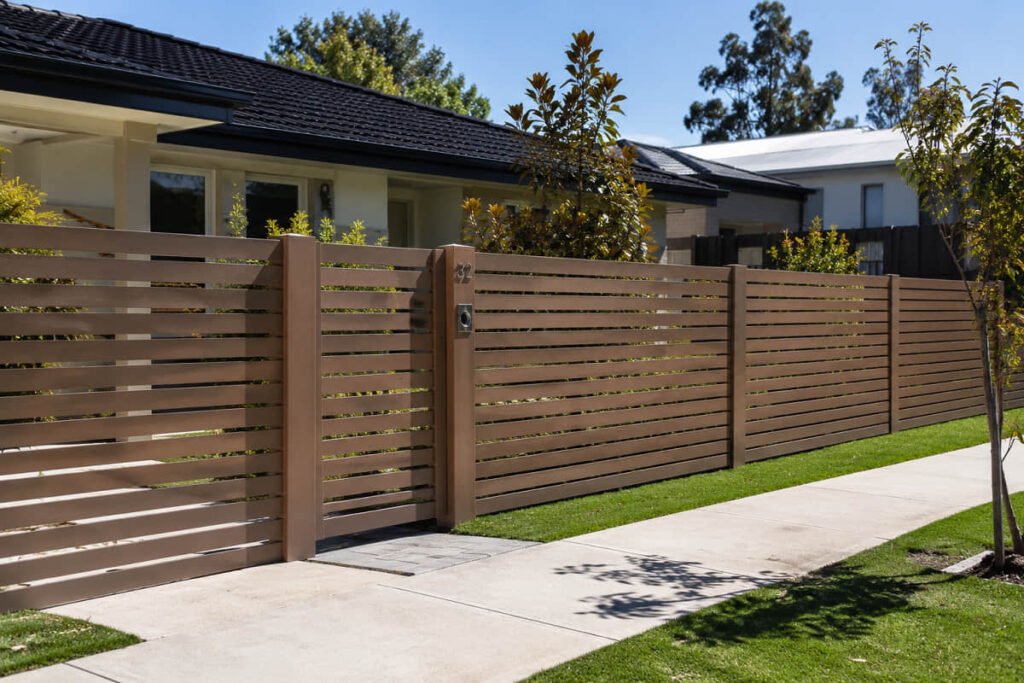
The Vista range covers this in one product line — closed, semi-open, or open from the same board, so you can quote one product across different privacy briefs on the same project.
11. Open Decorative Screen Fence
At 0.9–1.2m height with wider board spacing, an open decorative screen marks the property boundary without blocking the street view. It works best when the front garden is doing the visual work, and the fence just needs to frame it.
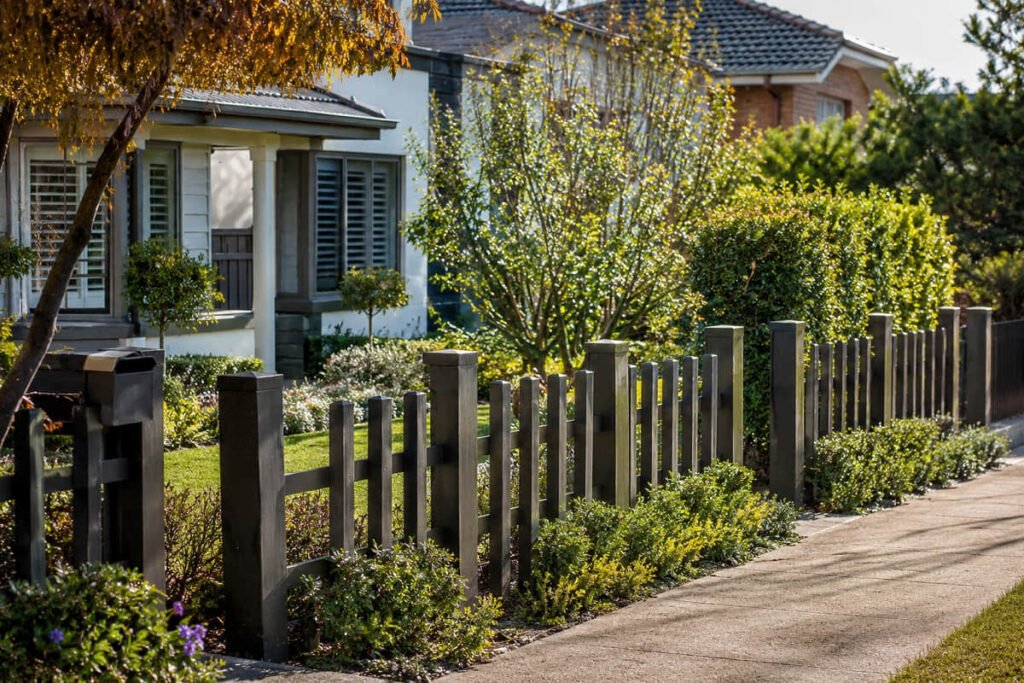
The Linea 50×50mm square profile suits this style well. Consistent spacing and a clean profile give the fence a contemporary look even at a modest height.
It’s a popular choice when the home’s style and front garden are the feature, not the fence itself.
12. Colorbond Steel Fence
Colorbond fencing is Australia’s default for back and side fences. As a front fence, Colorbond panels work when security and cost are the top priorities — fast to source, easy to install, and low maintenance.
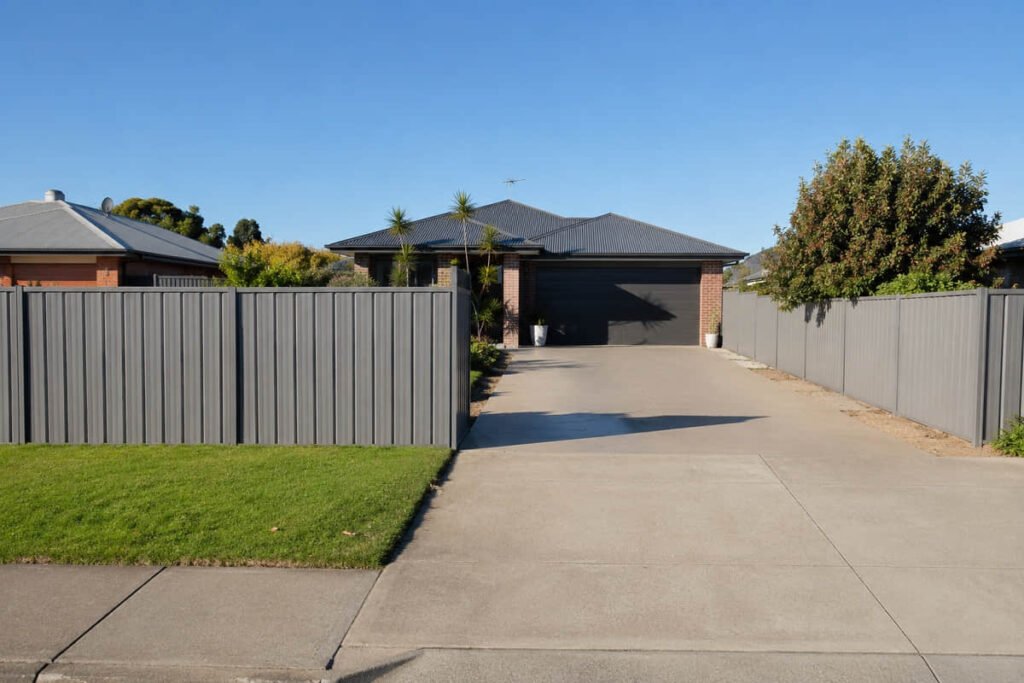
For boundary marking and security-focused briefs, it’s a proven, practical choice. Where design flexibility matters — contemporary homes, coastal properties, or heritage streetscapes — the flat sheet profile has its limits. Composite slat systems offer a comparable cost with significantly more design options for front-of-home work.
13. Aluminium Slat Fence
Aluminium slat fencing is a premium option for modern homes and coastal properties where rust is a real concern. Powder-coated finishes hold up well in salt air and don’t need painting.
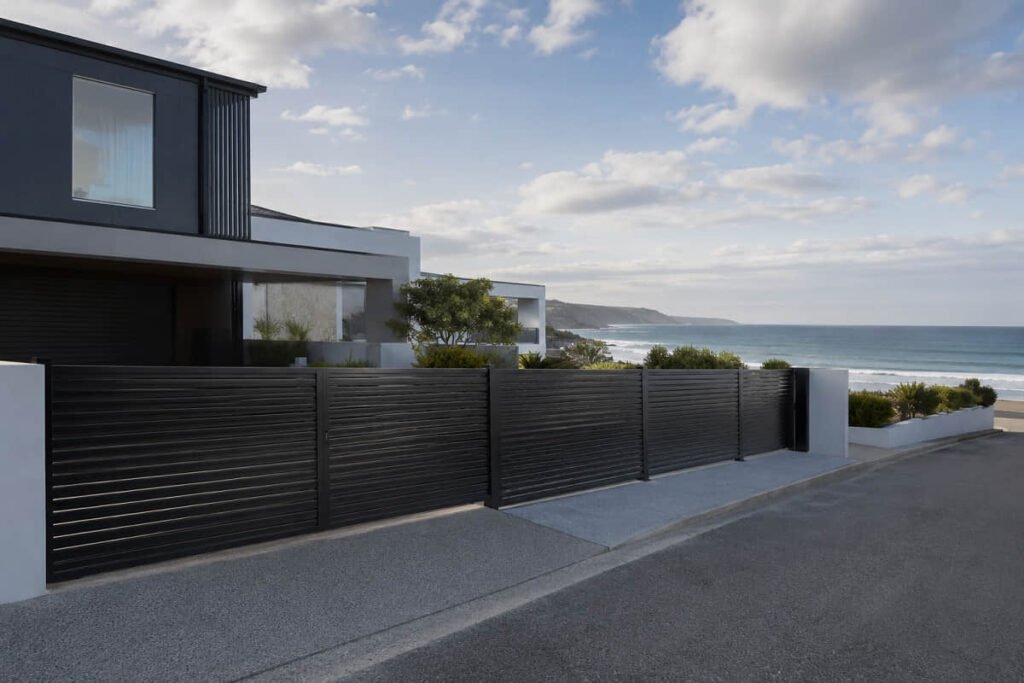
The trade-offs are real. Aluminium slats scratch and dent more easily than composite, and aluminium slat fencing comes in at $180–$350 per metre installed — the upper end of the residential market. For volume projects or tighter margins, composite slat systems deliver a comparable modern look at a better price point. The 0.8mm cap layer on the composite also gives better surface hardness for high-traffic frontages.
14. Modular Wall Fence
Modular walls give the look of a rendered masonry boundary at a fraction of the cost of a full brick build. They suit modern architecture, estate developments, and knockdown-rebuild projects where a strong street frontage is the brief.
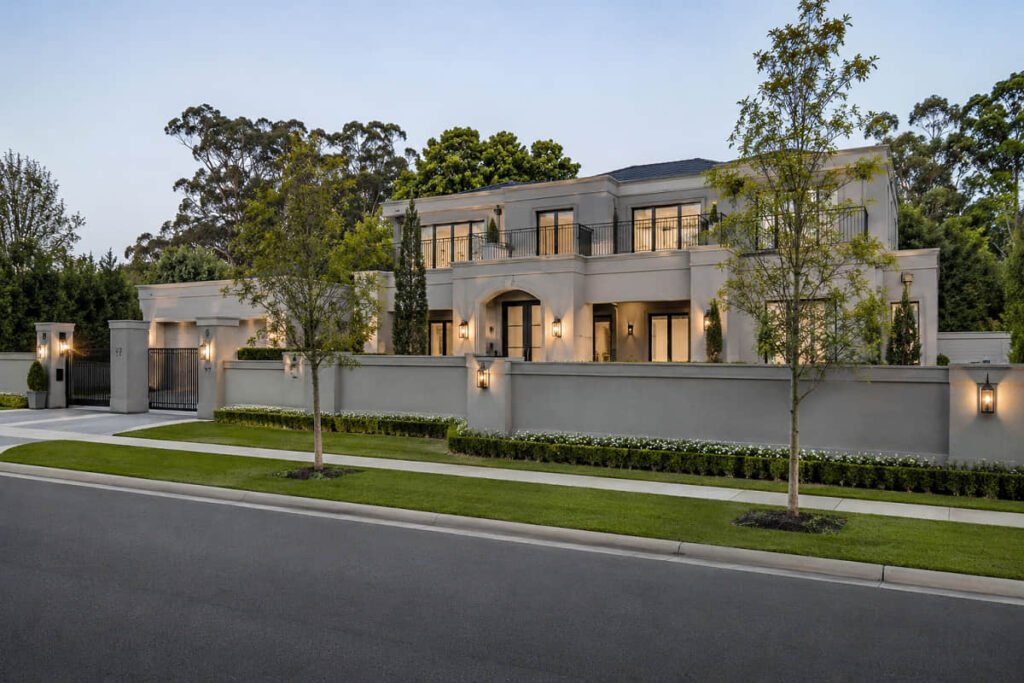
The practical note for contractors: modular walls require proper footings and take longer to install than a composite panel system. Factor that into your labour budget before you spec them. For clients who want the modular walls look but need to control cost, the rendered pillar + composite infill hybrid (style 8 above) is worth presenting as an alternative.
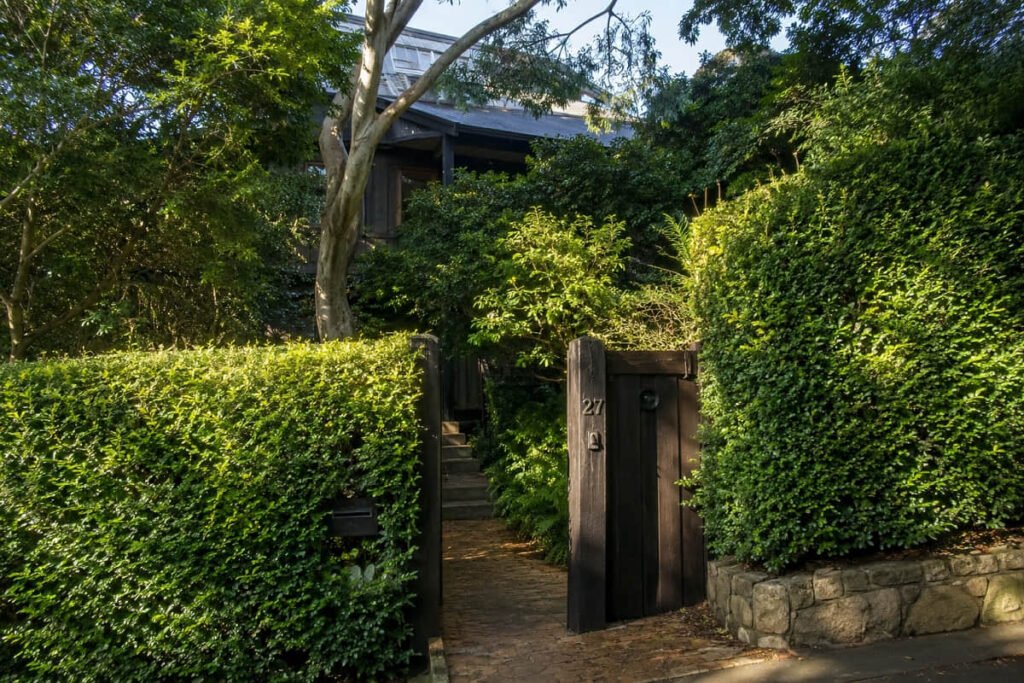
15. Brush and Natural Hedge Fencing
Brush fencing and planted hedges suit coastal and bushland areas where an organic look fits the setting. Of all 15 types of fence in this guide, this carries the highest maintenance load — brush fencing needs replacing every 10–15 years, and hedges need regular trimming. It’s the right call for the right property, but it’s not a low-maintenance choice.
How to Match Front Fence Style to Project Type
The fastest way to spec the right front fence for your client’s project is to match the style to the project type and maintenance expectations. This table covers the most common project types we see across Australian builds.
| Project Type | Recommended Style | Product Range | Key Spec |
|---|---|---|---|
| Modern new build | Horizontal composite slat | Vista 180×20mm | 0.8mm cap layer, R11 |
| Coastal development | Hamptons-style / horizontal slat | TwinLine 158×20mm | 0.2% water absorption |
| Heritage overlay | Vertical batten / classic picket | Linea 45×90mm | Timber-grain colours |
| Estate development | Blade / mixed material | Vista + aluminium post | Post spacing 0.8–1.4m |
| Budget residential | Colorbond / treated pine | — | — |
| Premium residential | Mixed material / aluminium | Vista + rendered pillar | 15-year warranty |
Before finalising any spec, answer three questions:
- Privacy level needed? Closed installation for full screening; semi-open or open for a lighter, more porous frontage.
- Client’s maintenance tolerance? Composite needs almost nothing. Timber needs regular work. Brush needs the most.
- Council restrictions? Heritage overlays, corner blocks, and arterial roads all have their own rules. Check before you quote.
Front Fence Cost Ranges in Australia (2026)
Cost data is the single biggest gap in most front fence guides. Here’s a realistic breakdown across the main materials, based on 2026 Australian market pricing for supply and professional installation.
| Material | Supply + Install (per metre) | Lifespan | Maintenance | Best For |
|---|---|---|---|---|
| Composite WPC | $150–$280 | 15–25 years | Very low | Modern, coastal, low-maintenance |
| Treated pine | $80–$150 | 10–15 years | High | Period homes, budget builds |
| Colorbond steel | $100–$180 | 15–20 years | Low | Boundary marking, budget |
| Aluminium slats | $180–$350 | 20+ years | Low | Premium modern and coastal |
| Brick / modular wall | $400–$800+ | 30+ years | Very low | High-end estate, heritage |
These are market reference ranges. Actual pricing varies by state, site conditions, and project scale.
LastElegance ships composite screening factory-direct from production. No middlemen, no local reseller margins — the cost savings go straight to you.
A new fence in composite also compares favourably over time. Treated pine at $100/m installed looks cheap upfront — but factor in repainting every 3–5 years and the gap closes fast.
Request a trade quote for your next project.
Gate Integration: What Builders Need to Know
Most clients specify a front fence and forget the gate until the last minute. That creates problems — especially with a clip-based composite panel system where the gate frame needs to be set and square before the panels go in. Plan it early.
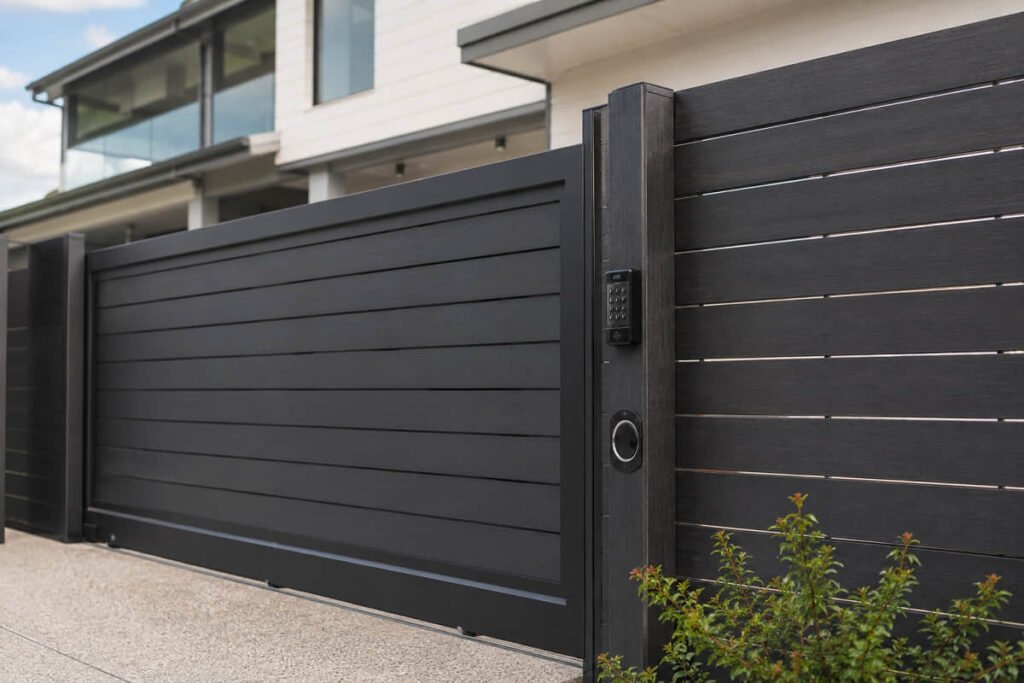
Pedestrian gates typically run 900mm–1.0m wide. Use aluminium alloy or WPC gate frames to match the screening panels. Gate posts need footings 150–200mm deeper than standard fence posts to handle the swing load over time.
Driveway gates require a separate structural frame and deeper footings again, usually 700 mm+, depending on gate weight and soil type. For automated driveway gates, confirm the automation kit specs before you set the posts. Most residential automation systems need 100–150mm clearance between the gate face and the post.
Council requirement: Most Australian councils require clear sight lines within 1.0m either side of a driveway opening. Keep the fence height below 0.9m in that zone — or use open/semi-open panel configurations — to stay compliant without a DA.
Australian Council Regulations for Front Fences
Council rules vary more than most contractors expect. Here’s a quick-reference summary by state — use it as a starting point, then confirm with the relevant local council before work begins.
Height Rules by State
| State | No-permit front fence height | Key notes |
|---|---|---|
| NSW | Up to 1.2m | DA needed above 1.2m; Fair Trading licence for work >$5,000 |
| VIC | 1.2–1.5m (varies by council) | Heritage overlay areas have stricter rules |
| QLD | Up to 1.0–1.2m | QBCC licence required for all work >$3,300 |
| WA | Up to 1.2m | Registered contractor required for work >$1,000 |
| SA | Check local council | No uniform state rule; varies by LGA |
When You Always Need a Permit
Four situations trigger a permit regardless of height:
- Heritage overlay property
- Corner block or arterial road frontage
- Height above the no-permit threshold for your council area
- Fence within the sight-line setback of a driveway opening
This is general guidance only — confirm the local guidelines directly with each council for every project. The NCC sets the national framework, but local planning schemes govern the detail. Non-compliant fences cost real money to fix.
Front Fence Colour Trends for 2026
Deep charcoal is the front fence colour of the moment. It works across contemporary homes and modern architecture with a dark exterior palette — reads sharp from the street and holds its colour well in Australian UV conditions, especially in composite materials with a quality cap layer.
Warm grey-brown and natural timber-grain finishes are the fastest-growing segment. The composite surface texture is convincing at street level, and there’s no maintenance colour drift over time.
Hamptons and coastal projects favour warm white and pale sand. For heritage projects, earthy naturals — deep brown, olive, warm grey — satisfy most local guidelines without requiring a custom order.
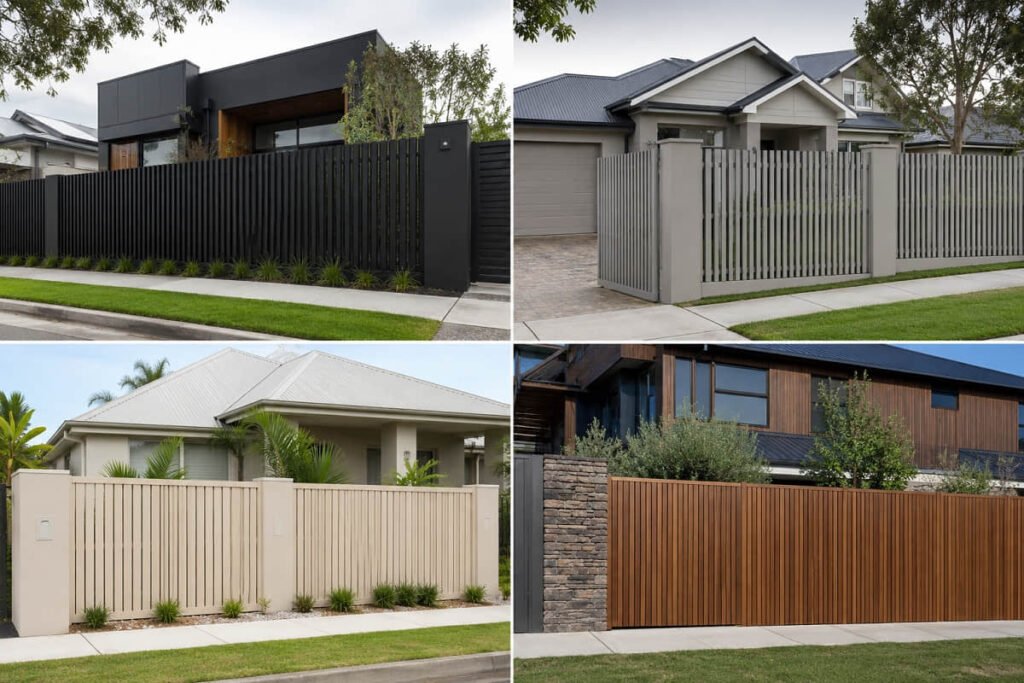
LastElegance composite screening shares a colour palette with our decking range, giving you a consistent look across both products on the same project. Custom colours are available with a sampling lead time of around 15 business days.
Ready to spec composite screening for your next project? Talk to our sales team about trade pricing and lead times.
Building a Full Boundary? Check Backyard Privacy Too
Front fences and backyard privacy screens often use the same composite system — but the brief is different. If the project includes a side or rear boundary, balcony screen, or pool area, see our guide to outdoor privacy screen ideas for material comparisons, DIY install notes, and council height rules for screens set back from the street.
FAQ
What is the most low-maintenance front fence in Australia?
Composite WPC screening is the lowest-maintenance option in Australian conditions — no painting, staining, or sealing required. Quality composite products carry a 15-year warranty and resist UV, moisture, and termites better than treated or untreated timber. Steel panel fencing is a close second but offers far less design flexibility for front-of-home use.
How high can a front fence be without a permit in Australia?
It depends on your state and council. Most councils allow front fences up to 1.0–1.2m without a permit in standard residential zones. Heritage overlay areas, corner blocks, and properties on arterial roads often have lower or stricter limits. Check the local guidelines before you pour a post footing.
Are composite front fence panels suitable for coastal areas?
Yes — composite boards are well-suited to coastal conditions. With a water absorption rate of 0.2% (ASTM D1037) and termite-proof construction, they hold up in salt air and humidity far better than raw timber. No swelling, no rot, and no annual maintenance cycle.
What is blade fencing?
Blade fencing uses wider boards — vertical or horizontal — with deliberate gaps between them. It creates an open, architectural look while clearly defining a property boundary. Composite WPC blade panels are a popular low-maintenance alternative to timber battens, available in open and semi-open layouts to suit different privacy needs.
How long does it take to install a composite front fence?
Two people can typically complete a standard 15m front fence with composite screening panels in a day. The clip-based system — no surface screws, slot-in boards, pre-finished trim — is faster than timber paling and faster than custom-cut Colorbond installs.
Can composite screening panels be used with an automated gate?
Yes. The composite panels fix to a steel or aluminium sub-frame that sits independently of the gate mechanism. Set the gate post and frame first, confirm square and plumb, then install the panels into the adjoining fence run. Most residential automation systems are fully compatible with this approach.
What is the cheapest front fence option in Australia?
Treated pine paling fences start from around $80–$150 per metre installed — the lowest entry point for a front fence. Colorbond runs $100–$180 per metre. Both cost less than a composite upfront. Over a 15-year lifespan, though, composite WPC often comes out ahead when you factor in repainting, restaining, and repair costs.
