

You’re planning a 200-unit multi-family project. The spec calls for composite decking on every balcony, a matching facade, and a perimeter fence. Do you order from a domestic brand’s dealer network — or go straight to the factory that makes the boards?
That decision changes your landed cost, your lead time, your color-matching options, and your margin on the job. Get it right and you save five figures on materials alone. Get it wrong and you’re scrambling for fill-in stock at retail prices two weeks before handover.
This guide compares buying composite decking, fencing, and siding from a manufacturer versus a distributor — with real numbers on cost, MOQs, shipping, customization, and the trade-offs behind each model.
How Each Supply Chain Model Works
There are two paths a composite board takes from the factory to your job site.
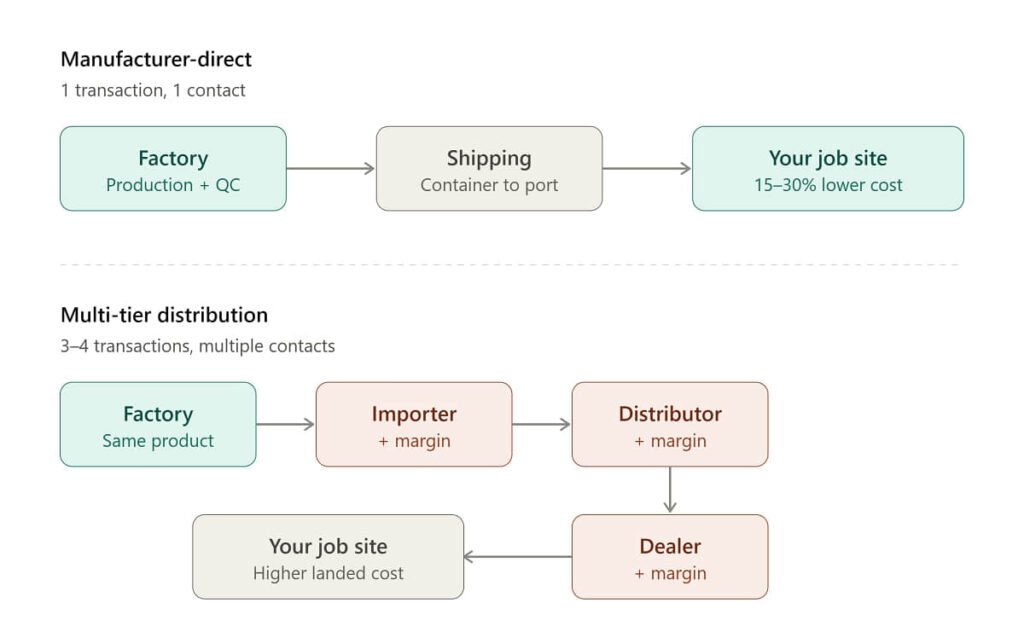
Buying from the manufacturer means you order straight from the company that makes the product. The board goes from the production line to a shipping container to your location. One seller, one transaction, one point of contact. That’s the model behind manufacturers like LastElegance, who ship composite decking, fencing, and siding direct to U.S. builders and distributors.
Multi-tier distribution is how most domestic composite brands reach the market. The board leaves the factory and passes through an importer, then a regional distributor, then a local dealer — and then reaches the builder. Each link in that chain adds handling time and markup.
Most large U.S. composite brands — names you already know — sell through multi-tier distribution. It’s the standard structure in the building products industry. Buying direct from a manufacturer is less common but growing, especially for composite building products sourced from makers with in-house production.
What Buying From the Manufacturer Gets You
Sourcing direct from a manufacturer changes three things: cost, customization, and support.
Lower landed cost per sq ft. When you cut out the middlemen, you cut out their margins. On container-volume orders, buyers typically see 15–30% lower landed costs compared to the same-spec product through multi-tier distribution. The exact savings depend on order size, product mix, and shipping destination — but the mechanism is simple: fewer margin layers between the factory and your job site. We break the cost structure down in detail below.
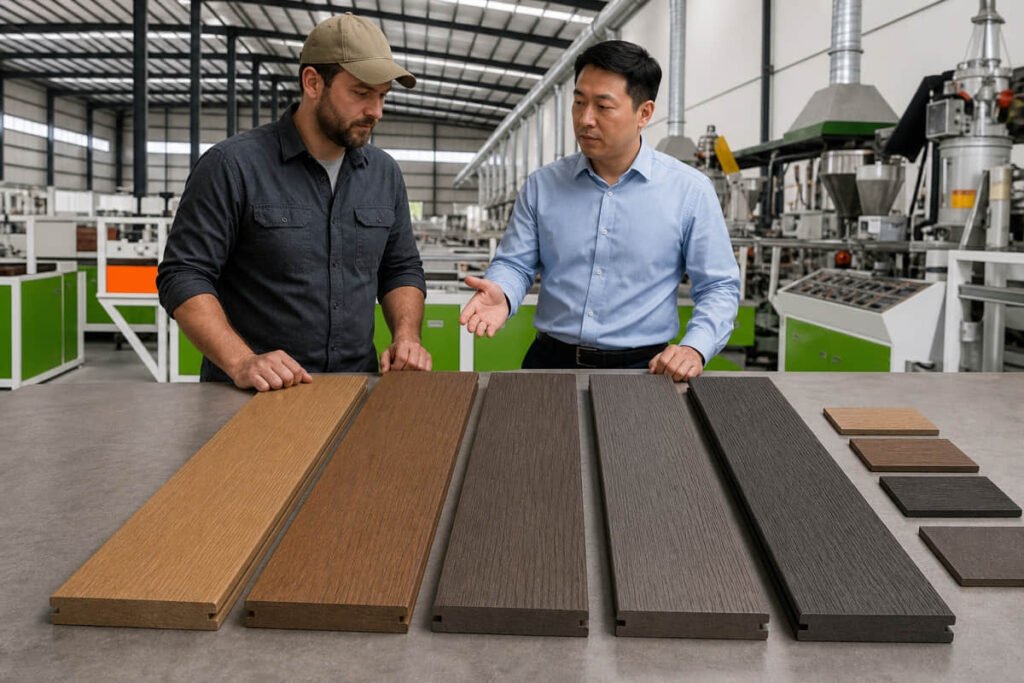
Full customization. A manufacturer like LastElegance controls the production line. That means custom colors, textures, board profiles, and lengths — options that fixed domestic product lines can’t offer. Their co-extruded cap layer is 0.8 mm thick across all three product lines (decking, fencing, and siding), and the boards use 60% recycled content in the HDPE/wood fiber core.
One point of contact — with none of the hassle. This is where many buyers hesitate. They assume ordering from a manufacturer means complex paperwork, slow replies, and no support after the container ships. That’s not how it works with the right partner. At LastElegance, each client gets a dedicated account manager who handles everything — product selection, specs, order tracking, shipping updates, and after-sales service. One person, one phone call, one email thread. No runaround. It’s the pricing of a manufacturer with the convenience of a distributor.
Want to see how manufacturer-direct pricing works for your next project? Contact our sales team for a project-specific quote.
Custom Orders Most Distributors Can’t Fill
Most domestic brands sell fixed product lines. You pick from set colors, set sizes, and set textures. If the project calls for something outside that catalog, you’re out of luck.
A manufacturer like LastElegance works differently. They offer multiple decking profiles from 5.4″ to 5.9″ wide, in several thicknesses. Their siding boards share the same color palette as the decking range, so you can color-match a deck and a facade from a single source. Fencing comes as a complete system — boards, trim strips, post caps, angle brackets, clip fasteners — with custom profiles available.
Here’s where that matters in practice. Say you’re bidding on a hotel project that needs non-standard decking widths, a color-matched exterior facade, and a perimeter fence. With a domestic brand, that’s three separate product lines, three separate orders, and no guarantee the colors align. With a manufacturer, it’s one source, one shipment, and one consistent color match.
For large-volume orders, custom molds are available. Distributors looking to build their own brand can set up private-label or white-label programs — your branding on manufacturer-produced boards.
Request free samples to see colors, textures, and board profiles before you commit.
What Distributors Do Well
Distributors earn their place in the supply chain. Here’s where they add real value.
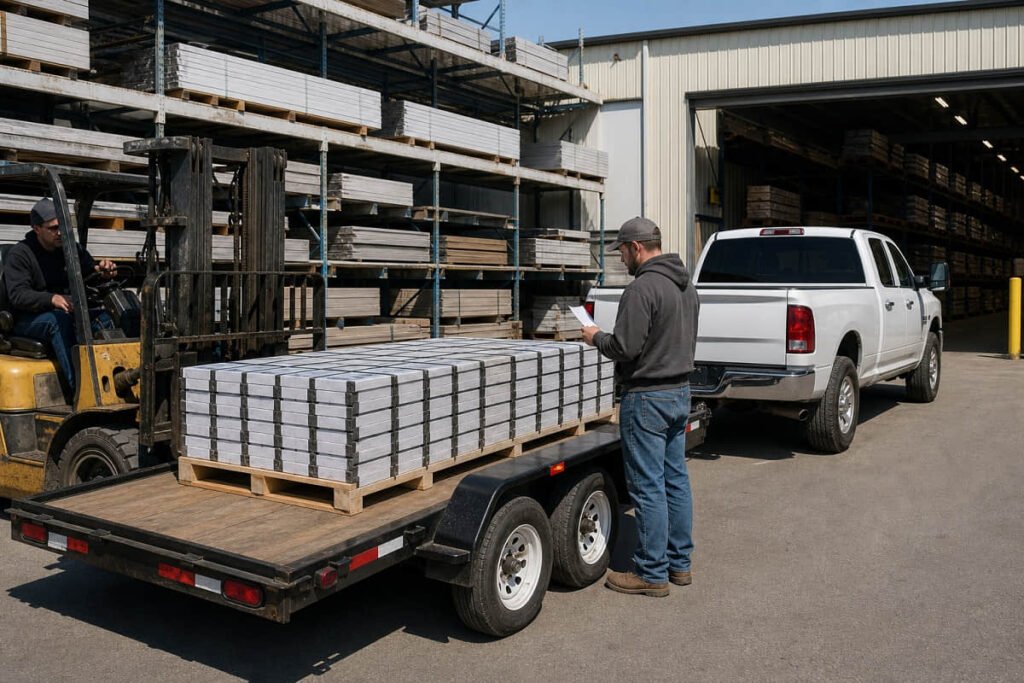
Local stock for fast turnaround. Need 200 sq ft of decking to finish a punch list? A local distributor can have it on your truck the same day. For small reorders and urgent fill-ins, that speed matters.
One-stop purchasing. Many distributors carry composite boards, fasteners, framing lumber, and accessories under one roof. That’s fewer purchase orders, fewer deliveries, and less time spent sourcing.
For a one-off deck repair or a quick fence section swap, a distributor is probably your fastest option. No argument there.
The trade-off is clear: you pay more per sq ft or per linear ft, and you’re limited to whatever the distributor stocks. For planned projects with volume, that trade-off starts to tilt the other way.
The Real Cost Difference
This is the section that matters most. Here’s where the cost gap between buying from a manufacturer and buying through distribution comes from.
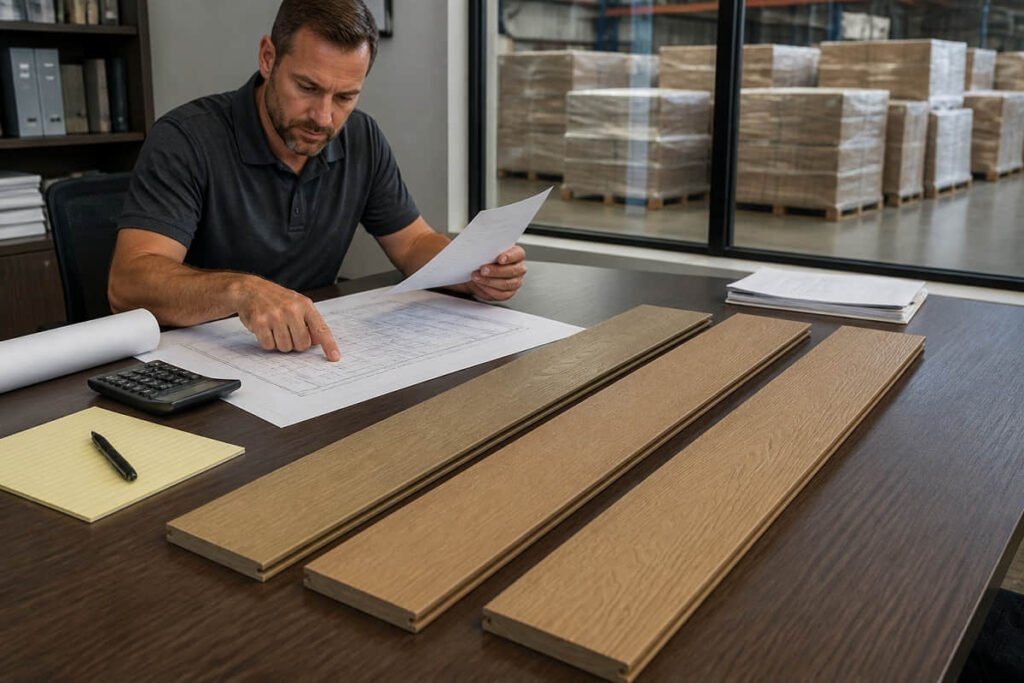
Every link in the distribution chain adds margin. Each handler — importer, regional warehouse, local dealer — needs to cover overhead and turn a profit. Those margins stack.
| Cost Layer | From Manufacturer | Multi-Tier Distribution |
|---|---|---|
| Factory price | ✔ | ✔ |
| Freight / shipping | ✔ | ✔ |
| Importer margin | — | ✔ Added |
| Distributor margin | — | ✔ Added |
| Dealer margin | — | ✔ Added |
| Your landed cost | Lower | Higher |
Take composite decking as an example. Two to three extra margin layers between the factory and your job site mean a higher price on every board. The same stacking applies to fencing (priced per linear ft) and siding.
On a typical container order, those stacked margins add up to 15–30% of the final price. On a 2,000 sq ft decking project, that’s a meaningful difference in your bid — or your margin. The exact gap depends on product mix, volume, and freight distance, which is why we quote per project rather than publishing fixed prices.
LastElegance’s standard MOQ is 100 sq m (about 1,076 sq ft) per product line. That’s achievable for most mid-size decking projects. First-time buyers can discuss flexible trial order quantities to test the product before scaling up.
Request a quote with your project specs — we’ll show you the landed cost for your location.
Lead Times and Shipping: What to Expect
The honest answer: ordering from a manufacturer takes longer than a local distributor pickup. Here are the real numbers.
For LastElegance shipments, production takes 15–20 days depending on container size, plus 2 days packing and 24–42 days sea freight depending on route (West Coast express vs. standard). Total door-to-door: roughly 6–9 weeks.
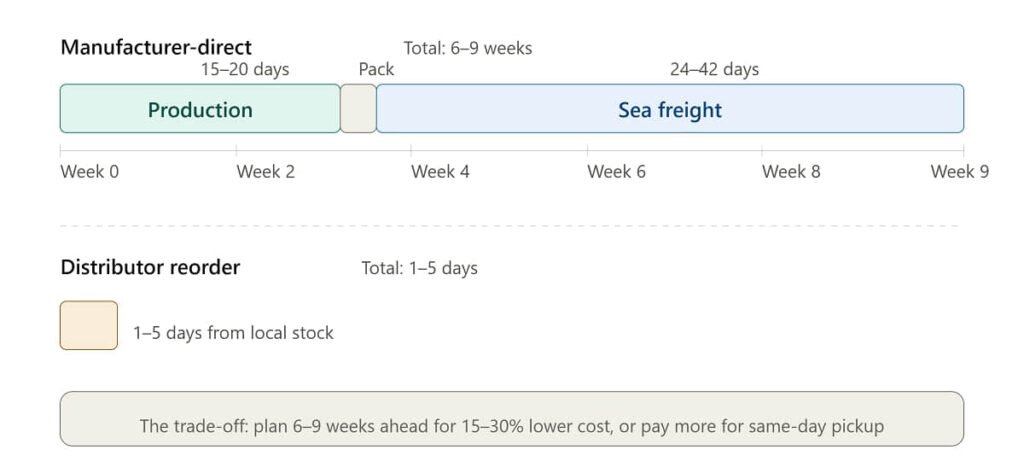
A distributor reorder? One to five days from local stock.
That’s a real gap — if you’re buying last-minute. But manufacturer sourcing isn’t built for last-minute orders. It’s built for planned projects.
If you know your project pipeline 6–8 weeks out, the lead time is a non-issue. You order ahead, the container arrives on schedule, and the per-sq-ft savings more than cover the wait. Builders who plan their season in advance use this model all the time.
One more thing: a single container can hold composite decking, fencing, and siding together. One shipment covers multiple product needs for a multi-scope project. Sample boards and color swatches ship separately so you can evaluate materials up front.
Request free samples — they ship faster than a full container, so you can spec materials while your production order is in progress.
Product Quality: Same Tech, Different Price
Here’s the question behind every manufacturer-sourcing conversation: “Is the product as good as what I get from a name brand?”
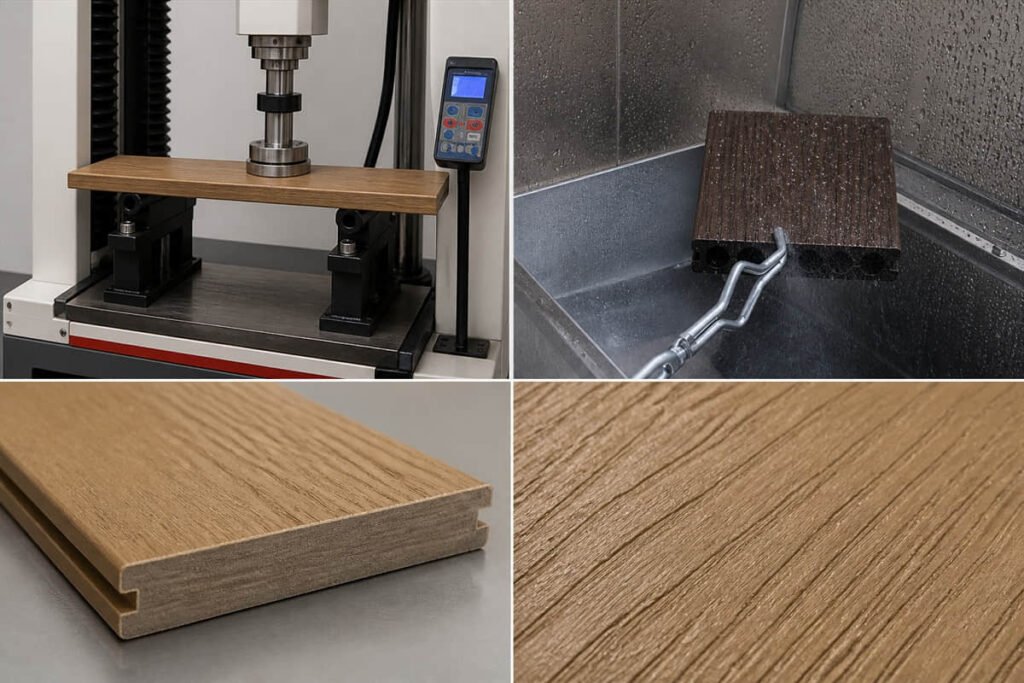
The short answer: the core technology is the same. Co-extrusion, HDPE/wood fiber cores, and HALS + UV stabilizer systems are industry-standard processes used by manufacturers worldwide. What matters is the specs — and whether the data backs them up.
| Spec | LastElegance Decking | Test Standard |
|---|---|---|
| Cap layer thickness | 0.8 mm (31.5 mils), all four sides | Co-extrusion process |
| Flexural strength | 26.2 MPa (about 3,800 psi) | EN 15534 |
| Slip resistance | R11 | DIN 51130 / AS 4586 |
| Water absorption | 0.2% | ASTM D1037 |
| UV color stability | ΔE ≤ 4–5 after 3,000 hours QUV aging | ASTM G154 |
| Fire classification | Class C (FSI 85, SDI 300) | ASTM E84 |
| Recycled content | 60% (recycled HDPE + recycled wood fiber) | — |
| Formaldehyde | Not detected | EN 717-1 |
The same cap layer and core technology applies across fencing and siding lines.
Current certifications include ISO, RoHS, and SGS. U.S.-specific certifications like ICC-ES are in progress — we mention this because transparency matters more than spin. Test reports are available on request so you can verify the numbers yourself.
What to Watch Out For When Buying Direct
Direct sourcing isn’t risk-free. Here are the real concerns — and how to manage them.
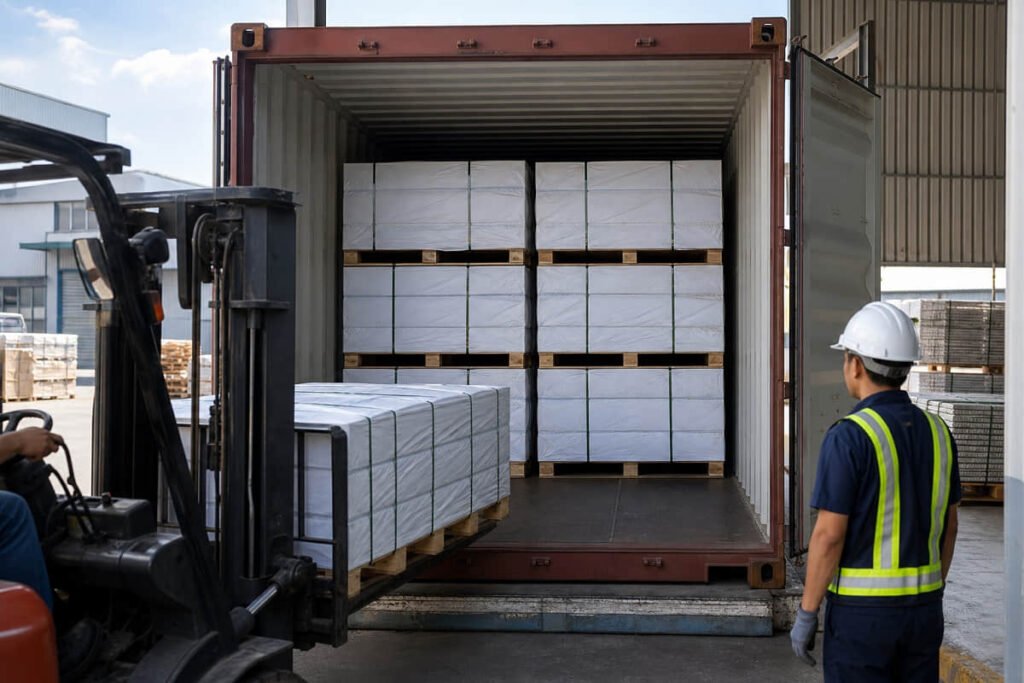
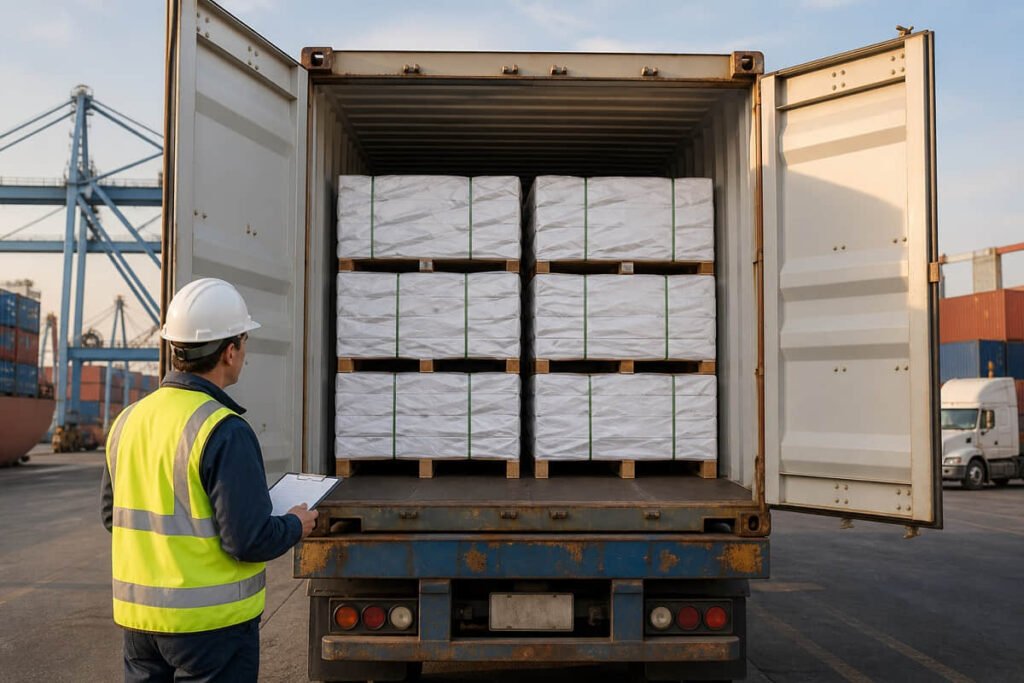
Customs and import logistics. Importing a container means dealing with freight forwarding, customs clearance, and port fees. With LastElegance, your account manager coordinates the full shipping process. You receive tracking updates from production through to delivery.
What if boards arrive damaged? Shipping damage can happen with any freight order. LastElegance inspects and photographs every order before packing. If boards arrive damaged, report it to your account manager with photos — replacement boards or credit are handled case by case under the warranty terms.
No local stock for emergency reorders. If you need 50 extra sq ft to close out a job next week, a manufacturer can’t help with that. This is where many builders keep a distributor relationship for fill-in orders. Plan your main material buy through the manufacturer; keep a local source for last-minute gaps.
Payment terms. Ask your account manager about payment options when you request a quote.
Certification gaps. LastElegance holds ISO, RoHS, and SGS certifications. U.S.-specific certifications like ICC-ES are in progress. If your project requires ICC-ES or specific code compliance documentation, ask us for current test reports and timelines — we’ll tell you where we stand.
The bottom line: direct sourcing works best when you plan ahead and work with a manufacturer that handles logistics, not just production. The savings are real, but so is the need for lead time and communication.
Which Model Fits Your Business?
The best sourcing model depends on how you buy and what you need.
| Factor | From Manufacturer | From Distributor |
|---|---|---|
| Best for | Volume orders, planned projects | Small quantities, urgent fill-ins |
| Cost per sq ft / linear ft | Lower (fewer margin layers) | Higher (margin stacking) |
| Customization | Full: colors, profiles, lengths, textures | Limited to stocked catalog |
| Lead time | 6–9 weeks (production + shipping) | 1–5 days (local stock) |
| MOQ | 100 sq m (~1,076 sq ft) per line | No minimum (buy by the board) |
| Support | Dedicated account rep | Varies by dealer |
| Private label | Available | Rarely offered |
Buying from the manufacturer fits when you:
- Buy 100+ sq m per order across composite decking, fencing, or siding
- Need custom specs or color matching across product lines
- Plan projects weeks ahead and can build lead time into your schedule
- Want to set up a private-label line with your own branding
Distributor buying fits when you:
- Need a small quantity fast — a punch-list finish or a quick repair
- Want same-day pickup from local stock
- Need fasteners, lumber, and composite boards on one invoice
Many builders use both. Manufacturer sourcing for planned projects where volume and customization drive the specs. Distributors for the fill-ins and last-minute needs.
And some buyers want the best of both: manufacturer pricing without the hassle of managing an overseas supply chain. That’s the model LastElegance is built around — you get the cost and customization of a manufacturer, with dedicated account support that handles logistics, paperwork, and after-sales the way a good distributor would.
Distributors themselves can also buy direct from the manufacturer. Stocking composite decking, fencing, and siding at manufacturer pricing improves your shelf margins — or lets you launch a private-label program with custom branding.
Builders: contact our sales team for project pricing. Distributors: ask about our partnership program and private-label options.
FAQs
Is it cheaper to buy composite products direct from a manufacturer?
In most cases, yes. Buyers typically see 15–30% lower landed costs on container orders by cutting out importer, distributor, and dealer margins. The exact savings depend on volume, product mix, and shipping distance.
What is the minimum order when buying from a manufacturer?
LastElegance’s standard MOQ is 100 sq m (about 1,076 sq ft) per product line. Flexible trial quantities are available for first-time buyers who want to test before scaling up.
Can I get warranty coverage when buying from a manufacturer?
Yes. LastElegance offers 15 to 30 years depending on the product line — covering surface cracking, warping, breakage, and color fade beyond contract specs.
Can a distributor buy from the manufacturer too?
Yes — many do. Distributors who source from the manufacturer stock composite decking, fencing, and siding at better margins, or set up private-label programs with custom branding.
How do I make sure the product meets local building codes?
LastElegance provides test reports for fire rating (ASTM E84), slip resistance, flexural strength, and more. If your project needs ICC-ES or other U.S.-specific documentation, ask for current certification status and available test data before you order.