

The cheaper siding can become the costly choice before the job is done. A slow install, broken boards, dust controls, paint touch-ups, or a late code issue can drain the margin from an otherwise solid bid.
That is why composite siding vs fiber cement is not only a question of curb appeal. It is a choice that shapes crew time, wall details, long-term maintenance, and client call-backs.
Composite can bring a lighter, factory-finished option to the right project. Fiber cement brings strengths of its own, especially where fire requirements lead the decision. The sections below break down what each material is made of, how it performs, and where it makes the most sense on a real jobsite.
What Are These Sidings Made Of?
Composite siding blends wood fiber with plastic or resin. A protective cap can shield the core from rain, stains, and sun. The exact mix differs by brand, so compare product data before you buy.
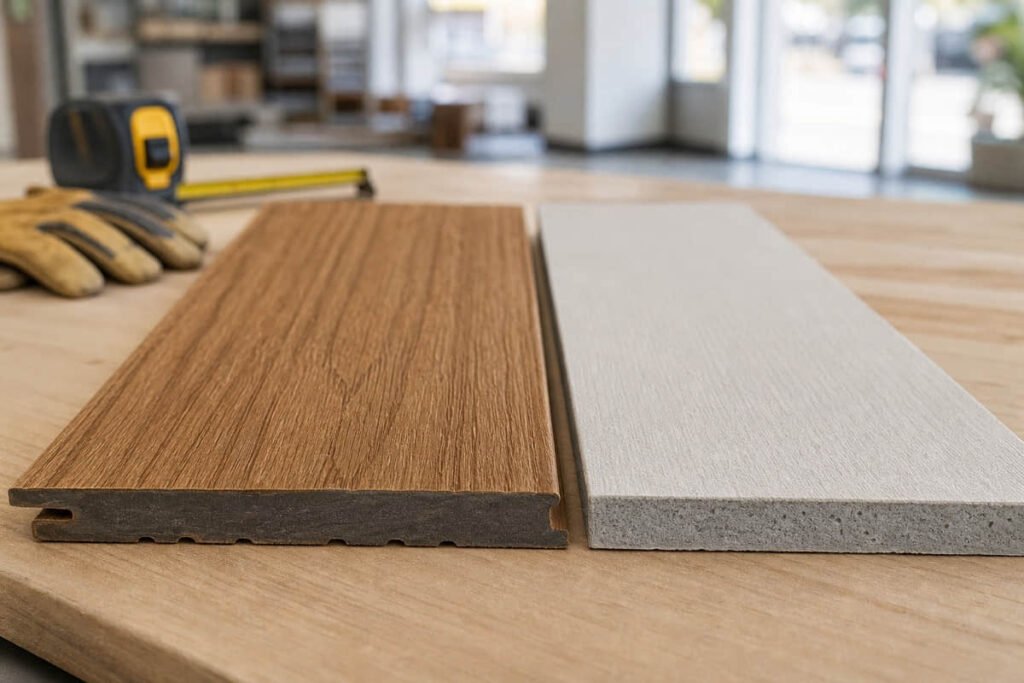
LastElegance composite siding uses a wood-fiber and HDPE core with a co-extruded cap. It also contains 60% recycled content. This build gives the board a wood look without the care needs of wood siding.
Fiber cement combines cement, sand, water, and cellulose fiber. The result feels dense and solid. It also weighs more, which affects lifting, cutting, and crew size.
The material mix matters, but it should not decide the job alone. Start with the wall design, local code, and labor plan.
Which Siding Handles Weather Best?
Composite siding often has the edge in wet or humid areas. Its capped surface sheds water and does not need paint to protect the face. Fiber cement also handles rain well, but cut edges and joints need close care.
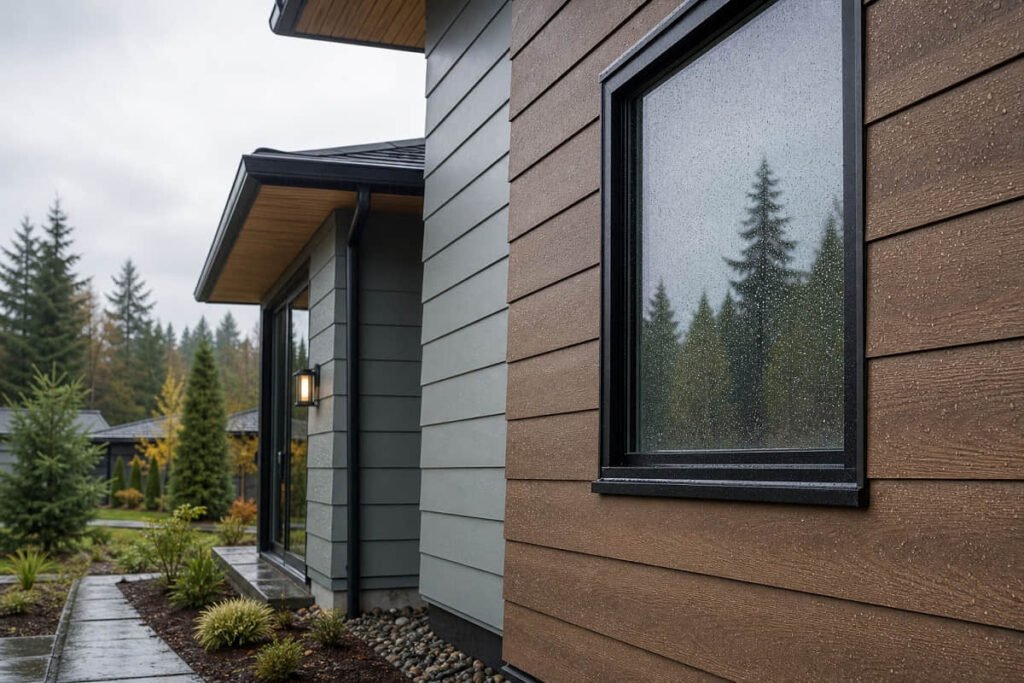
Neither board can save a poor wall. Both need sound flashing, a weather-resistive barrier, and a path for water to drain.
| Weather risk | Composite siding | Fiber cement siding |
|---|---|---|
| Heavy rain | Low water uptake; still needs drainage | Performs well with sealed cuts and sound joints |
| Freeze-thaw | Good fit when installed with proper gaps | Trapped water can stress damaged areas |
| Strong sun | Capped finishes help slow fade | Finish quality and color affect fade |
| High wind | Depends on the full wall system | Depends on the full wall system |
| Termites | Does not feed termites like wood | Also resists termite damage |
Moisture and Freeze-Thaw
Composite boards soak up far less water than most wood-based siding. That helps in rainy regions and on walls with long wet seasons. It can also lower the risk of swelling and surface wear.
Fiber cement does not rot like wood. Yet open cuts, cracked paint, and poor joints can still let water enter. Freezing weather can make that damage worse.
Our teams see one rule hold across wet-climate jobs: drain the wall first. Then choose the board.
Heat, Wind, and Pests
Strong sun will age any exterior finish. Ask each supplier for fade data and a written color warranty. Judge the exact color you plan to order, since dark shades may show heat and fade sooner.
High-wind results depend on more than siding. Fasteners, wall height, battens, sheathing, and stud spacing all play a part. Check the full wall system against local code.
Both products resist termites better than untreated wood. That makes either one a sound option in areas with high pest pressure.
How Do Fire Ratings Compare?
Fiber cement is often the safer starting point for fire-led projects. Many products qualify as noncombustible, though the full wall still needs code review.
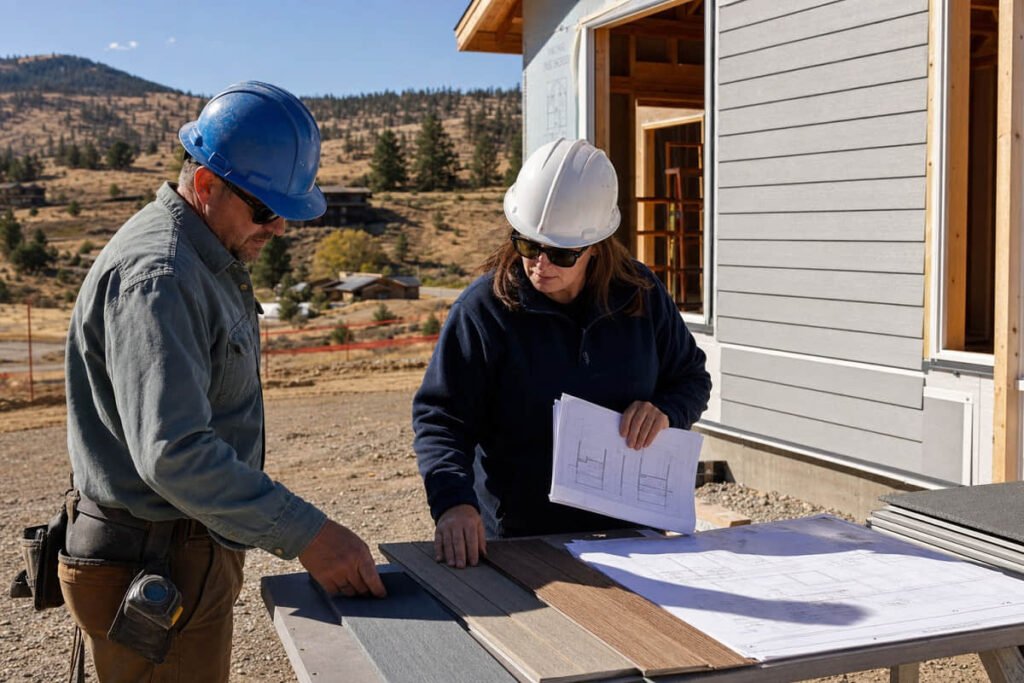
Composite siding is not the same across brands. LastElegance siding has an ASTM E84 Class C rating. This test covers flame spread and smoke on the product surface.
ASTM E84 does not rate the fire risk of the whole wall. Check the adopted IBC, local fire rules, and approved wall assembly before you specify either option.
For wildfire zones or strict commercial work, ask the code official early. That step can prevent a costly product change later.
Which Siding Is Faster to Install?
Composite siding can be faster to handle and finish. Many boards are lighter than fiber cement and arrive with a finished face. Clip systems can also hide fasteners and cut touch-up work.
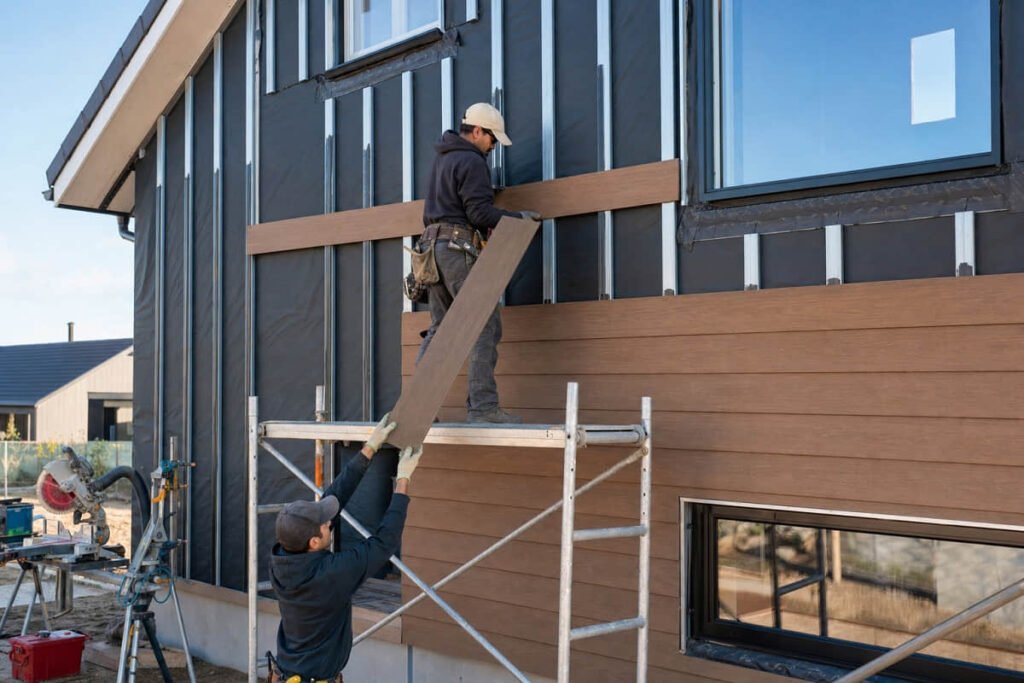
Fiber cement needs a careful lift and cut plan. Boards may chip if crews handle them poorly. Cutting also creates silica dust, so the job needs proper dust controls.
| Jobsite factor | Composite siding | Fiber cement siding |
|---|---|---|
| Handling | Lighter boards can reduce lift strain | Dense boards may need more hands |
| Cutting | Standard tools may work; follow the guide | Needs silica dust controls |
| Fasteners | Hidden clips may speed the finish | Face fastening is common |
| Site finish | Factory finish cuts paint work | Some products need paint and caulk |
Weight, Cutting, and Crew Needs
Board weight matters on lifts, scaffolds, and long walls. A lighter board can help crews move faster and reduce breakage. The gain grows when one worker can place a board without extra help.
Fiber cement can still install at a good pace with a trained crew. Yet dust control, blade choice, and careful handling add steps. OSHA rules apply when cutting creates respirable silica dust.
Do not trust a broad claim about labor savings. Build a small mock-up with the planned trim and openings. Your crew’s time will give you a useful answer.
Fasteners, Battens, and Wall Prep
LastElegance siding uses an interlocking clip system over steel battens. The clips hide fasteners and help form a drained rain-screen gap.
The wall behind the boards still does the hard work. Install the weather-resistive barrier, flashing, and battens to the approved plan. Follow IBC Chapter 14 and local code.
Unauthorized alteration of the clip spacing or fastener type may affect wind resistance performance and warranty coverage.
Which Siding Needs Less Care?
Factory-finished composite siding usually needs less care over time. A wash with mild soap may be enough for dirt and pollen. You should still check flashing, joints, and trim during routine building checks.
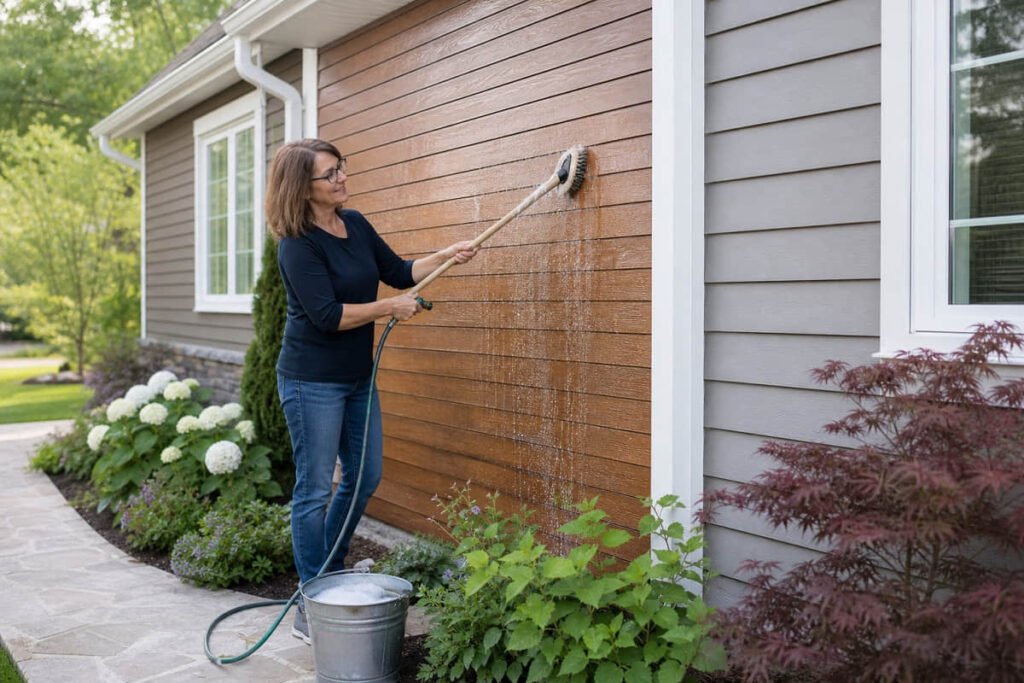
Fiber cement can also be low maintenance. However, painted boards may need new paint, caulk work, or impact repairs. Climate and finish quality set the real care cycle.
| Care task | Composite siding | Fiber cement siding |
|---|---|---|
| Wash dirt and pollen | As needed | As needed |
| Repaint | Usually not needed | May be needed over time |
| Check joints and trim | Yes | Yes |
| Repair damage | Replace by system method | Repair or replace, then refinish |
No exterior siding is maintenance-free. Be wary of any supplier that makes that claim.
How Do Costs Compare Over Time?
Fiber cement may have a lower board price in some markets. Composite can offset a higher first cost through faster handling, factory finishes, and less repainting.

The winning bid depends on the full installed cost. Compare the same scope for both products.
| Cost area | What to include |
|---|---|
| Materials | Boards, trim, clips, fasteners, and waste |
| Freight | Delivery, unloading, and storage |
| Labor | Lifting, cutting, fitting, painting, and cleanup |
| Long-term care | Washing, caulk, paint, repair, and replacement |
Upfront Cost
Start with delivered cost, not the price per sq ft. Trim, clips, freight, tools, and waste can change the final number. Building height and access also affect labor.
Manufacturer-direct supply gives trade buyers more control over color, texture, length, and profile. It can also involve minimum order levels and freight planning. Price those points before you approve the package.
Request a quote; we can help you compare the full package cost.
Life-Cycle Cost
Run a simple cost check at 10, 20, and 30 years. Include paint, caulk, washing, repairs, and replacement boards. Do not assume the cheapest first order stays cheapest.
Composite often gains ground when repainting costs are high. Fiber cement may still win where fire rules or local supply reduce project risk.
LastElegance composite siding carries a 20-year warranty under its written terms. Compare exclusions and finish cover, not just the number of years.
Which Offers More Design Choice?
Both materials cover the main design needs. Fiber cement comes in familiar lap, panel, shingle, and board-and-batten styles. Composite can add deep wood grain and factory-set color without field paint.
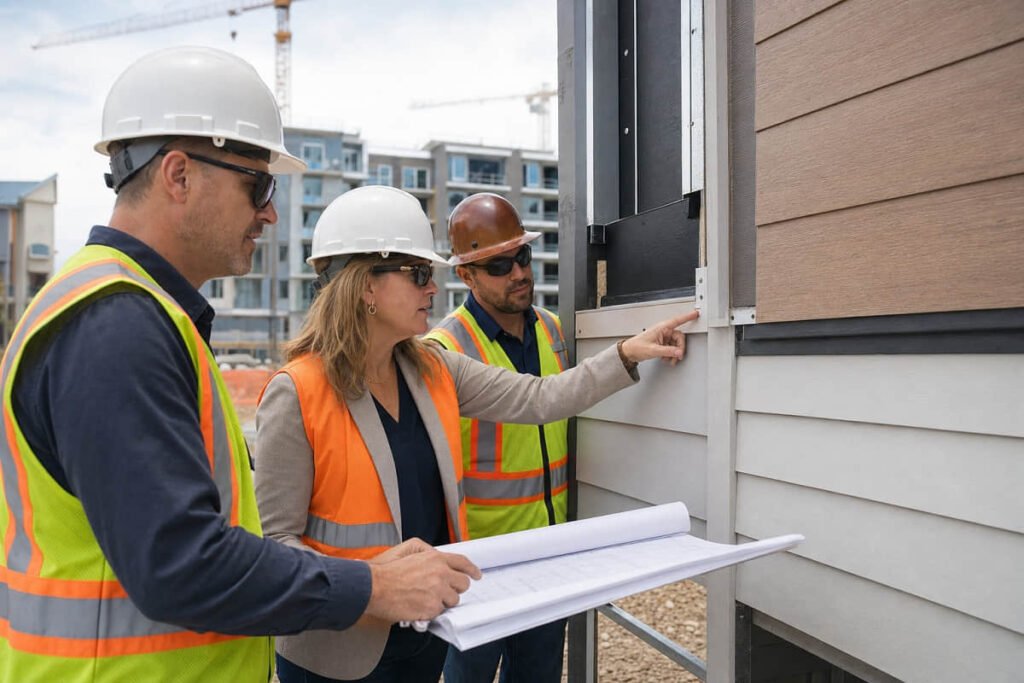
Composite also offers more room for custom production on large orders. That can help distributors build a private-label range or match a commercial design brief.
Stock Colors and Profiles
Do not approve exterior color from a screen. Order samples and place them beside the roof, trim, and masonry. Check them in sun and shade.
Stock ranges tend to offer faster lead times and lower order levels. Ask the supplier which trims and replacement boards stay in stock.
Request free samples before you lock the finish or present it to a client.
Custom Orders and Project Fit
Custom composite siding can support unique colors, textures, lengths, and profiles. It suits large developments, commercial work, and distributor programs.
Custom work needs a clear approval path. Confirm the minimum order, mold cost, sample process, lead time, packing, and freight. Keep an approved sample for site checks.
Which Siding Fits Your Project?
Choose the product that controls the biggest job risk. Code may lead on one site, while labor or moisture leads on another.
Best Fit by Project Type
| Project type | Good starting point | Main reason |
|---|---|---|
| Wet or freeze-prone site | Composite siding | Low water uptake and less finish care |
| Wildfire area | Fiber cement siding | Noncombustible options may fit the fire plan |
| Multifamily build | Compare both | Supply, labor, approvals, and stock decide value |
| Custom commercial facade | Composite siding | Factory custom work supports a set design brief |
For a coastal job, review wind data for the full wall. For a wildfire job, start with code. For a large build, test a wall mock-up before release.
What Should Trade Buyers Check?
Before you buy, check these six points:
- Local code and product approvals.
- Fire data for the full wall.
- Water, wind, and warranty data.
- Crew needs and install steps.
- Stock, lead time, and replacement supply.
- Full delivered and installed cost.
Ask for current U.S. submittal documents for the exact profile. A test from another product line does not prove your chosen board will pass.
Contact our sales team for samples, specs, and a project quote.
FAQs
What are the cons of composite siding?
Composite siding can cost more at the start and may have less local stock. It also expands with heat, so crews must follow gap and fastening rules.
What are the downsides of fiber cement siding?
Fiber cement is heavy and can chip during handling. Cutting creates silica dust, while painted finishes may need caulk and paint work over time.
Can you paint composite siding and fiber cement siding, or are they pre-finished?
Both types can come factory-finished. Some fiber cement boards accept field paint, while composite paint rules vary by brand. Check the coating guide before painting.