

Timber callbacks cost builders time and money. Oiling schedules, board replacements, splinter complaints — they stack up fast over the life of a project. Composite decking was built to cut that cycle out.
This guide covers what composite is made of, how it performs in Australian conditions, real costs over 10 years, and what to check before you spec it.
What Is Composite Decking Made Of?
Composite decking boards blend two materials: wood fibre and HDPE plastic. The wood fibre — sawdust and wood chips — gives the board its timber look and feel. The HDPE plastic binds it together and shields the core from water, UV, and insects.
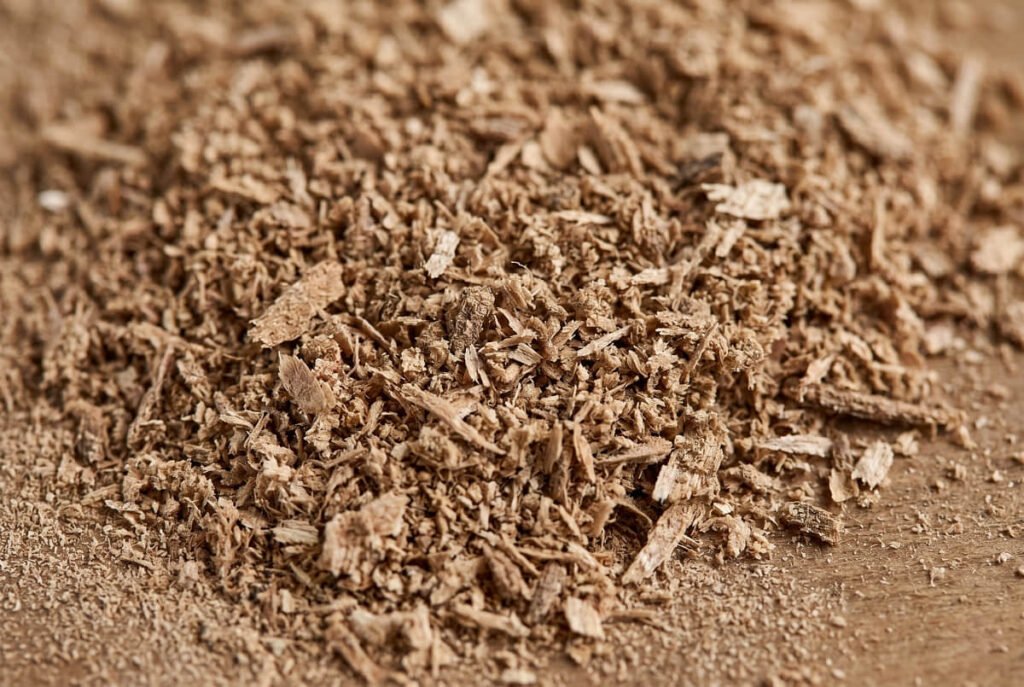
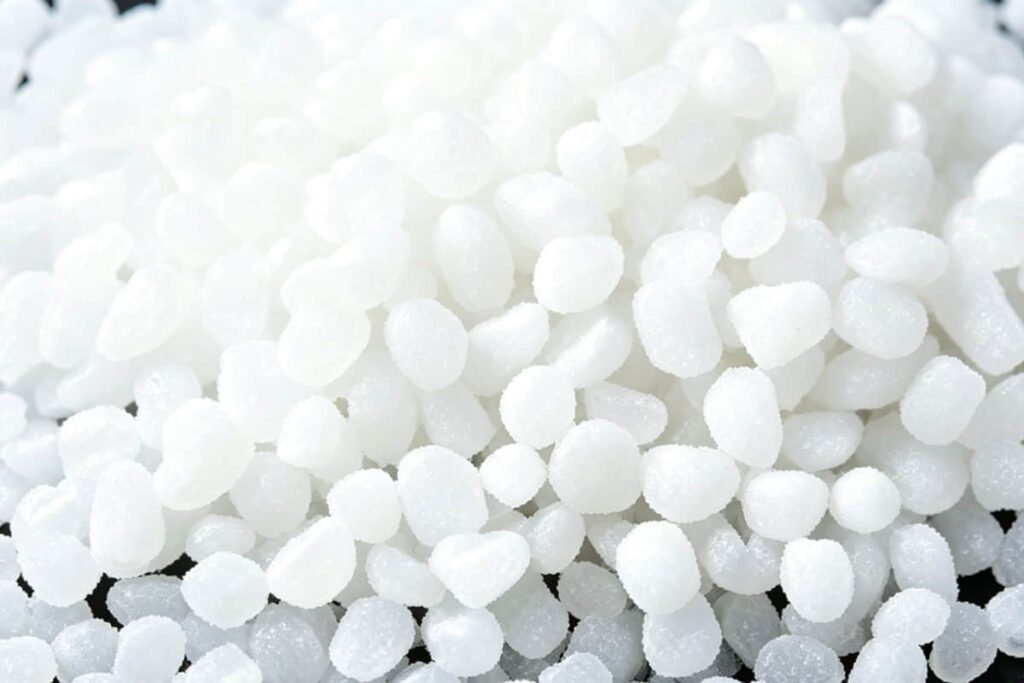
Our boards use hardwood fibre, combined with HDPE at a density of 0.95 g/cm³. About 60% of the material is recycled content. That’s useful for projects with green building or sustainability requirements.
The result: a board that looks and feels like timber — but won’t rot, split, or need oiling.
How the Co-Extrusion Cap Layer Works
Modern capped composite has a protective outer shell bonded around the board core. This is the cap layer. The core gives the board its strength. The cap handles UV, surface scratches, and moisture.
Cap thickness is what separates quality composite from older, first-generation boards. Thinner caps fade and stain faster. LastElegance boards carry a 0.8 mm cap layer — thicker than many comparable products on the market.
After 3,000 hours of QUV accelerated ageing testing, our boards hold colour shift to ΔE ≤ 4–5. In plain terms: the colour stays close to what you spec’d, even after years of Australian sun.
Solid or Hollow — Which Profile Do You Need?
The right profile depends on the project load, joist spacing, and budget. Here’s a practical breakdown across our three decking ranges:
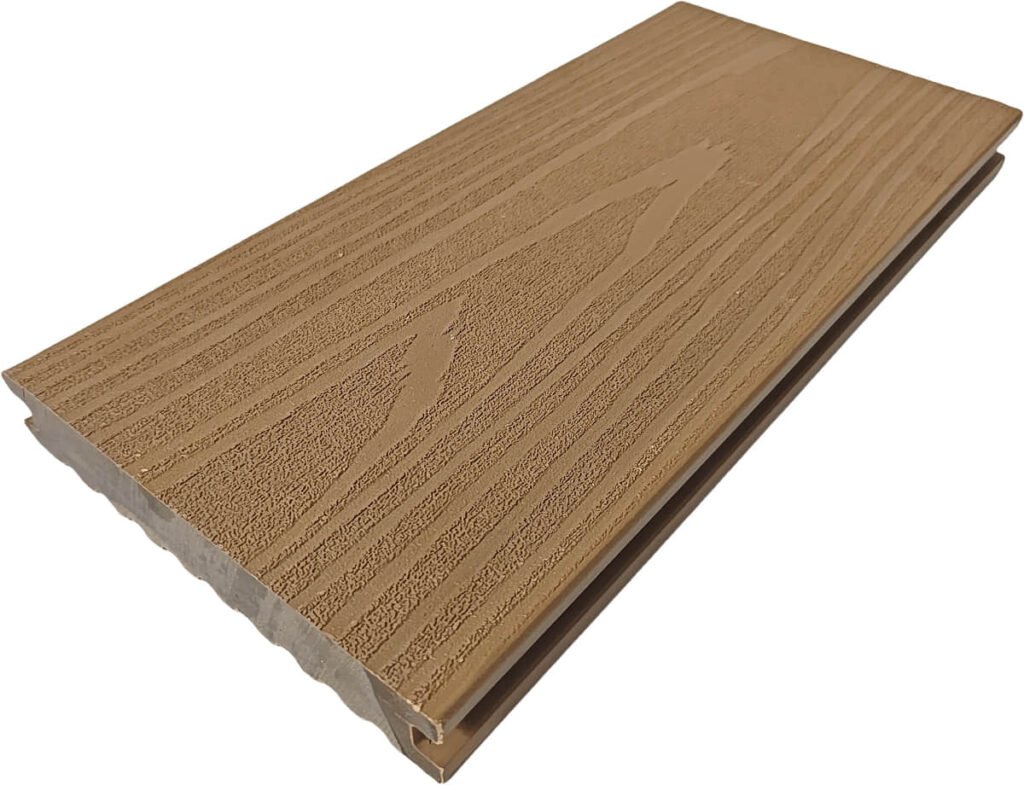
TimberLuxe — Solid profile (140×23 mm / 140×20 mm) Heavier and more rigid underfoot. Suits high-traffic areas, shorter joist spans, and commercial builds where stiffness and underfoot feel matter.
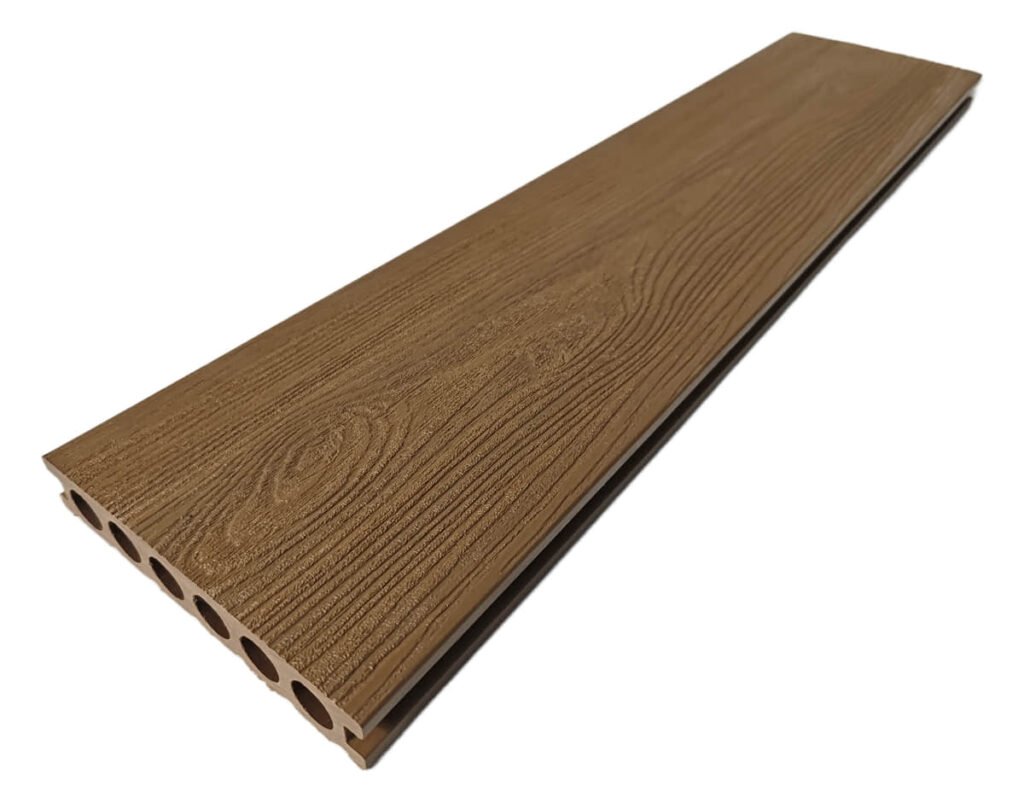
Composite Decking Renew — Hollow profile (150×23 mm / 140×23 mm) Lighter and better value on large-area decks. Wall thickness runs 4–6 mm. Strong enough for most residential work at 300–350 mm joist spacing. Popular for projects where cost-per-m² is the priority.
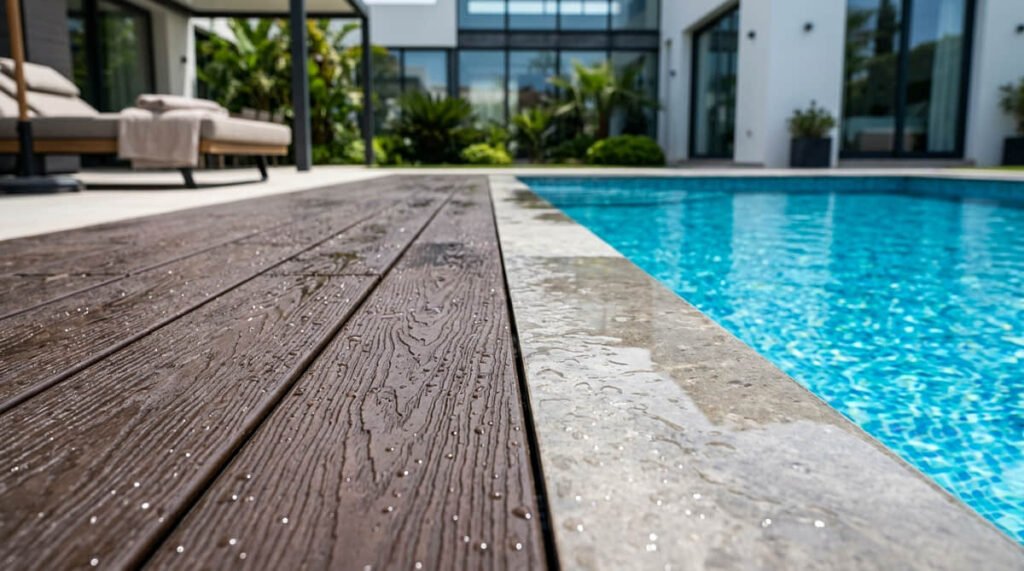
VerdeLife — Grooved solid profile (139×24 mm) Mid-weight board with a deep grain texture. Rated R11 for slip resistance per AS/NZS 4586 — the pick for pool surrounds and commercial outdoor areas with foot traffic.
Not sure which profile suits your project? Browse full board specs →
Composite vs Timber: A Trade-Level Comparison
Most builders already know the basics. Here’s a clean breakdown for project teams, clients, or procurement managers who need it in one place.
| Feature | Composite Decking | Treated Pine | Merbau |
|---|---|---|---|
| Annual upkeep | Soapy wash once or twice a year | Oil or stain every 2–3 years | Regular oiling |
| Expected lifespan | 25+ years | 10–15 years without care | 25+ years with consistent upkeep |
| Upfront cost per m² | Higher than treated pine | Lowest | Mid to high |
| Termite resistance | Yes — no organic food source | Needs treatment | Good natural resistance |
| Water absorption | 0.2% (ASTM D1037) | Moderate to high | Low to moderate |
| Flexural strength | 26.2 MPa (EN 15534) | Varies by grade | Varies by grade |
| Slip resistance | R11 (AS/NZS 4586) | Untreated — varies | Untreated — varies |
| Formaldehyde | Not detected (EN 717-1) | Varies by treatment | Natural |
Composite costs more upfront than treated pine. Factor in oiling, staining, and board replacement over 10–15 years, and the total cost usually levels out — or tips in composite’s favour.
Timber — especially merbau or spotted gum — has a natural warmth some clients prefer. That’s fair. Composite grain texture has improved a lot, but it isn’t identical to real wood. Worth being straight with clients about that.
Why Builders Are Switching to Composite
The most common thing we hear from builders who’ve made the switch: no oiling call-backs. That one change removes a recurring friction point from their post-handover relationship with clients.
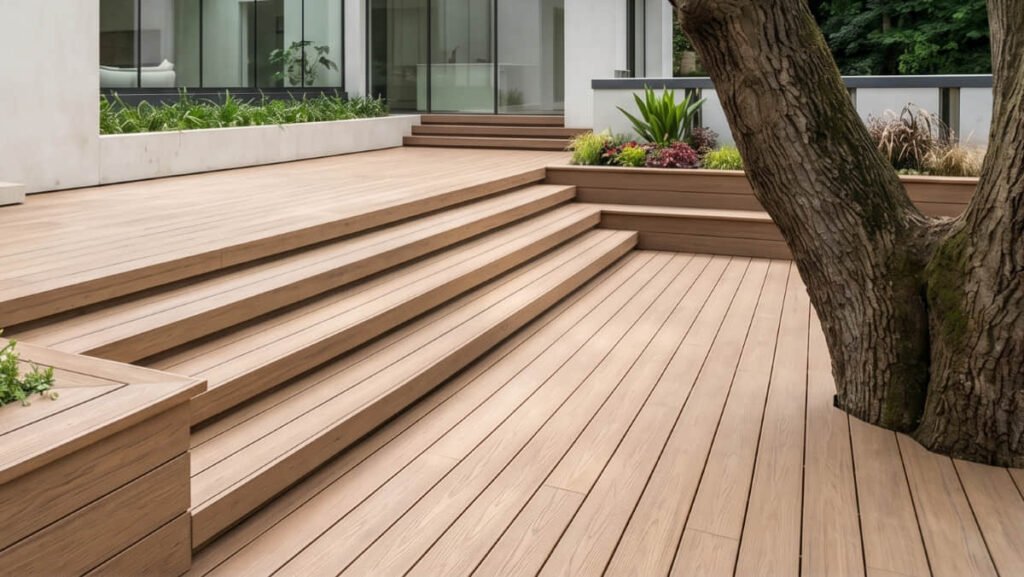
Here’s what else drives the switch:
- Termite resistance. No organic material means nothing for termites to eat. In Queensland, NSW, and WA — where termite pressure is high — this is a real advantage over untreated timber.
- Moisture stability. At 0.2% water absorption, composite won’t swell, cup, or split after heavy rain. Critical for coastal builds and wet zones.
- Slip resistance built in. R11 per AS/NZS 4586 — meets the spec for pool surrounds and most commercial outdoor areas.
- Colour that holds. ΔE ≤ 4–5 after 3,000 hours of QUV testing. Clients don’t call about bleaching, fading, or surface splinters.
- Customisation for larger orders. Sizes, colours, surface textures, and packaging can all be made to spec. Useful for distributors and builders running varied project types.
How It Performs in Australian Conditions
Australia isn’t easy on outdoor materials. Here’s how composite handles the four main challenges:
UV exposure: The cap layer uses a combined HALS and UV absorber system — not a single additive, but a dual-stabiliser approach. Our QUV results show colour shift controlled to ΔE ≤ 4–5 after 3,000 hours. That’s one of the tighter tolerances in the market.
Termites: No organic food source in the plastic-encased core. Builders in high-risk zones across QLD, NSW, and WA tell us this is one of the first things clients ask about — and the answer is simple.
Moisture: 0.2% water absorption (ASTM D1037) means the board stays dimensionally stable in wet conditions. No swelling, no cupping.
Bushfire zones: Our boards are fire-tested to ASTM E84 — Flame Spread Index (FSI): 85, Smoke Developed Index (SDI): 300. If your project sits in a designated bushfire zone, confirm the required BAL rating with your certifier. Composite fire performance varies by board profile and installation method, and the certifier’s assessment governs.
What to Check Before You Spec Composite
A few things that catch builders out on their first composite project:
Joist spacing matters. Composite boards need joists at 300–350 mm centres — tighter than some timber install specs. Check this before you quote or order.
Expansion gaps are non-negotiable. Composite expands with heat. End gaps and board gaps need to be set correctly per the install guide. Skip this and you’ll get buckling in summer.
Not all composite is capped. Uncapped boards leave the wood-fibre core exposed on some faces. They absorb more moisture and fade faster. All LastElegance decking boards are fully capped. If you’re comparing quotes, check what the other supplier is offering.
Hidden fasteners vs face screws. Our boards use a stainless steel clip system — fasteners slot into the board groove and clip onto the joist. No surface screws, no pre-drilling, clean finish. It also speeds up install compared to face-fixing.
How Long Does Composite Decking Last?
Capped composite typically lasts 25 years or more. Treated pine without regular care starts to show real wear in 10–15 years. Merbau can match the composite lifespan, but it needs consistent upkeep to get there.
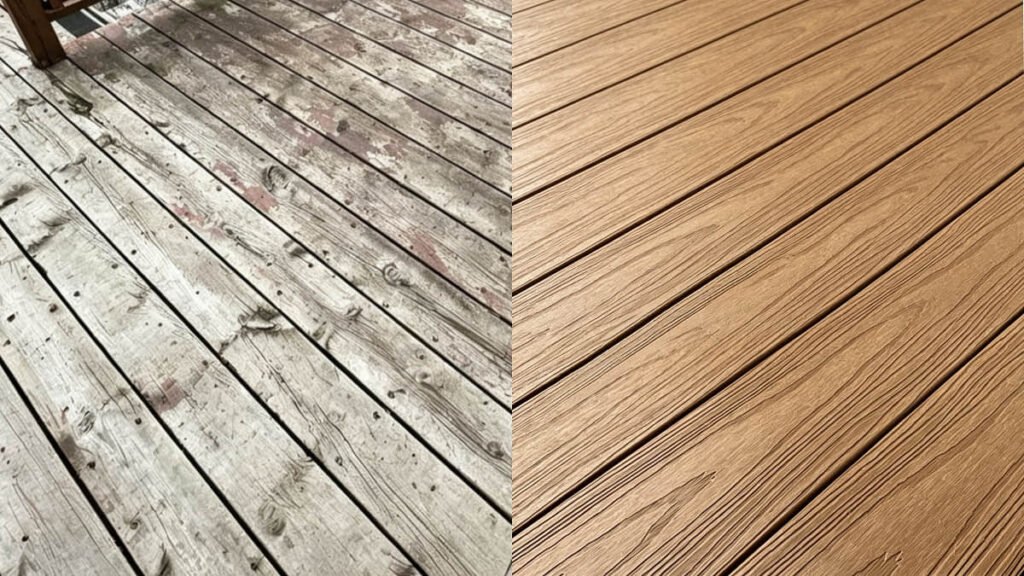
Our composite decking carries a 15-year warranty. What it doesn’t cover: damage from incorrect installation, wrong cleaning products, or misuse.
Brief your clients on the exclusions before handover. It’s a five-minute conversation that prevents problems later. The warranty applies to both residential and commercial projects.
What Does Composite Decking Cost?
Composite costs more per m² than treated pine at the point of purchase. Trade buyers know this. The more useful question is: what does it cost over 10 years?
| Material | Upfront (per m²) | Est. 10-Year Upkeep | Est. 10-Year Total |
|---|---|---|---|
| Composite decking | $80–$120 | $5–$15 (cleaning only) | $85–$135 |
| Treated pine | $30–$60 | $40–$70 (oiling + repairs) | $70–$130 |
| Merbau | $100–$160 | $50–$80 (oiling + staining) | $150–$240 |
Supply and labour costs vary by region, project size, and order volume. These are indicative ranges for comparison purposes. Request a quote for accurate pricing on your project.
The 10-year gap narrows quickly once you price in oiling labour, staining materials, and board replacement. On most long-run projects, composite comes out level with treated pine — or ahead. Against merbau, composite is usually the lower total-cost option.
For trade buyers ordering in volume, supply direct from the manufacturer cuts out importer markups. Our MOQ is 100 m². Contact us to discuss pricing →
FAQ
Is composite decking the same as PVC decking?
No. Composite contains wood fibres and HDPE plastic. PVC is 100% synthetic — no wood content at all. Composite looks and feels closer to timber underfoot. PVC is fully waterproof but tends to look more artificial.
Does composite decking get hot in the sun?
Like any surface, composite warms up in direct sun. It runs cooler than uncoated metal but warmer than shaded timber in peak summer heat. Lighter colours reduce heat build-up — worth flagging for pool surrounds and barefoot commercial areas.
What slip resistance rating do LastElegance boards carry?
R11 per AS/NZS 4586 — the DIN 51130 test confirms the same rating. That meets the requirement for pool surrounds and most commercial outdoor areas. Confirm with your certifier for the specific project spec.
How do you clean composite decking?
Sweep and rinse with soapy water. That handles most dirt and marks. Avoid harsh chemicals or high-pressure washers — they can damage the cap layer. For stubborn stains, use a soft brush and a composite-specific cleaner.
What is the minimum order quantity?
100 m². For custom colours, lengths, surface textures, or packaging, contact our team to discuss your project requirements and lead times.
Is composite decking worth the higher upfront cost?
For most long-term projects, yes. Higher purchase price is offset by lower upkeep and a longer lifespan. For short-term or tight-budget builds, treated pine may still be the practical choice. That’s an honest answer.
Composite isn’t right for every project. But for builders and trade buyers who want a lower-maintenance, longer-lasting board — and fewer post-handover headaches — it’s a strong spec.
Questions about the right board for your project? Contact our sales team →