

Clear views, more privacy, less upkeep or a lower build cost: which matters most? Your answer will shape the fence, materials and layout you choose.
Good pool fencing starts with the site. You need clear views, safe access and a finish that suits the build. Privacy, maintenance and budget will also shape the right design.
The 10 pool fencing ideas below cover glass, composite, metal, timber and mixed designs. You’ll see where each option works and what may affect approval. We’ll also flag details that can help you control cost and avoid rework.
Pool Fence Designs by Material, Privacy and Style
Start with the result you want from the space. That may be a clear view, more privacy or a fence that needs less care.
The ideas below show how colour, layout and mixed materials can change the feel of a pool area. Keep the approved barrier plan in view as you compare them.
1. Mix Composite With Glass
Use glass for an unobstructed view, then add composite pool screening along the neighbour-facing side for privacy.
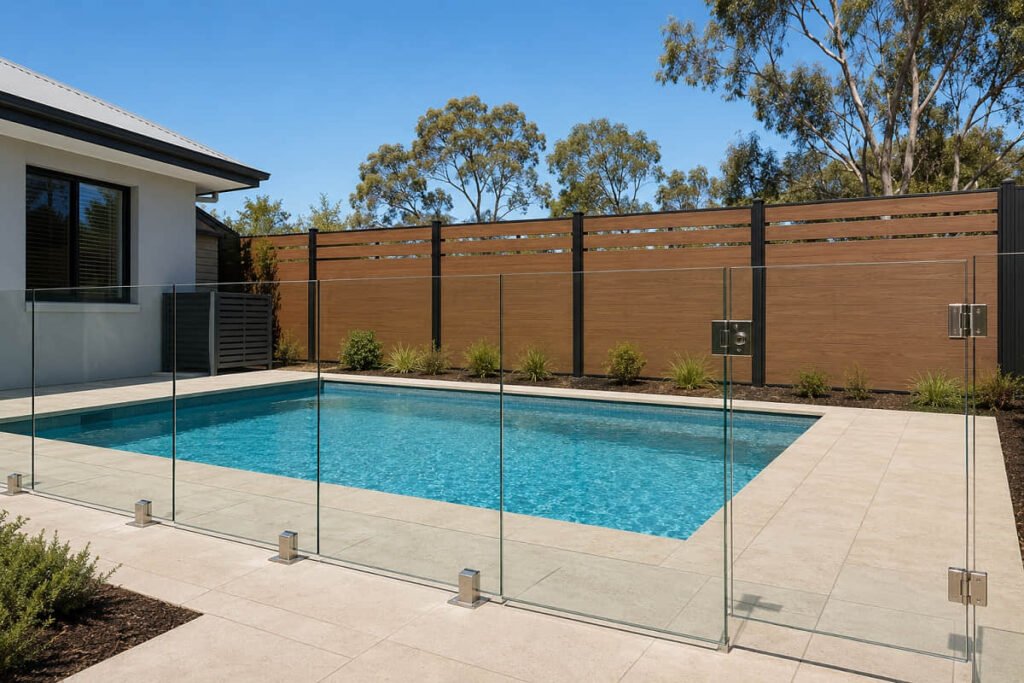
This mix can open the main sightline without exposing the whole yard. Dark posts can link both materials and give the pool fence design clean lines.
The catch is that every part must work together. A certifier needs to assess the glass, screening, posts and gate as one complete barrier. LastElegance screening does not become pool fencing simply because it sits beside a pool.
Compare colours and textures beside your paving with free composite samples.
2. Add a Private Pool Wall
Solid composite fence panels can block views from a road or nearby home. They form a calm backdrop behind bright water and pale paving.
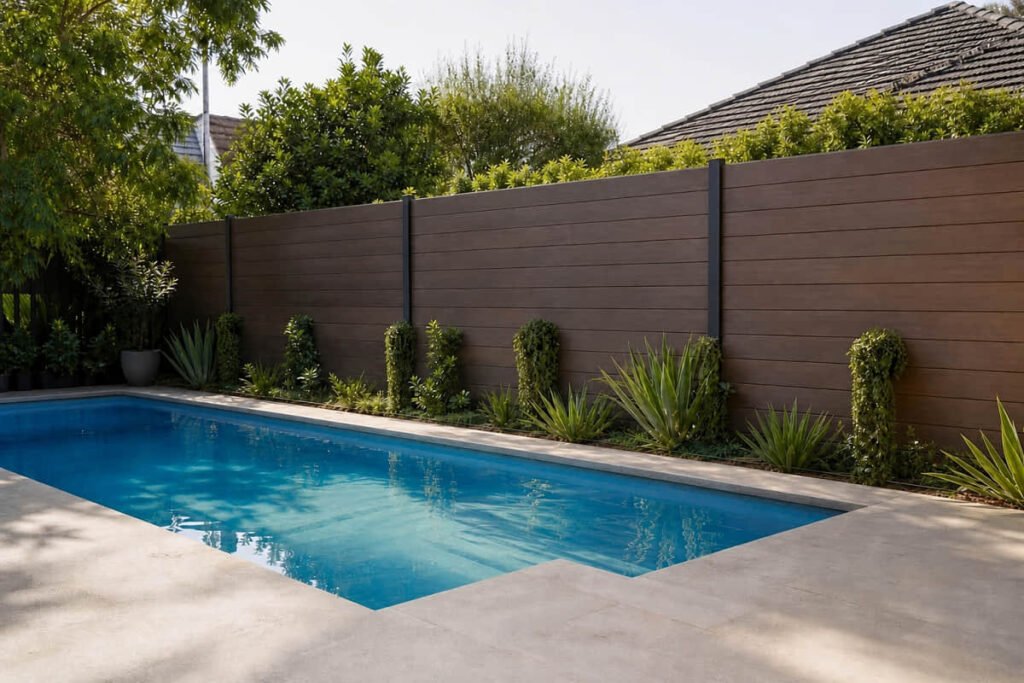
This layout works well along an exposed pool boundary fence. Boundary rules can differ from those for a fence inside the yard.
Wind, slope and old footings may change how the wall must be built. Add the height, posts and supports to the plan, then get it checked before work starts.
3. Try a Vertical Slat Look
Vertical composite battens suit modern pool fencing ideas and narrow sites. Close-set slats add privacy, while wider spacing lets in more light and air.
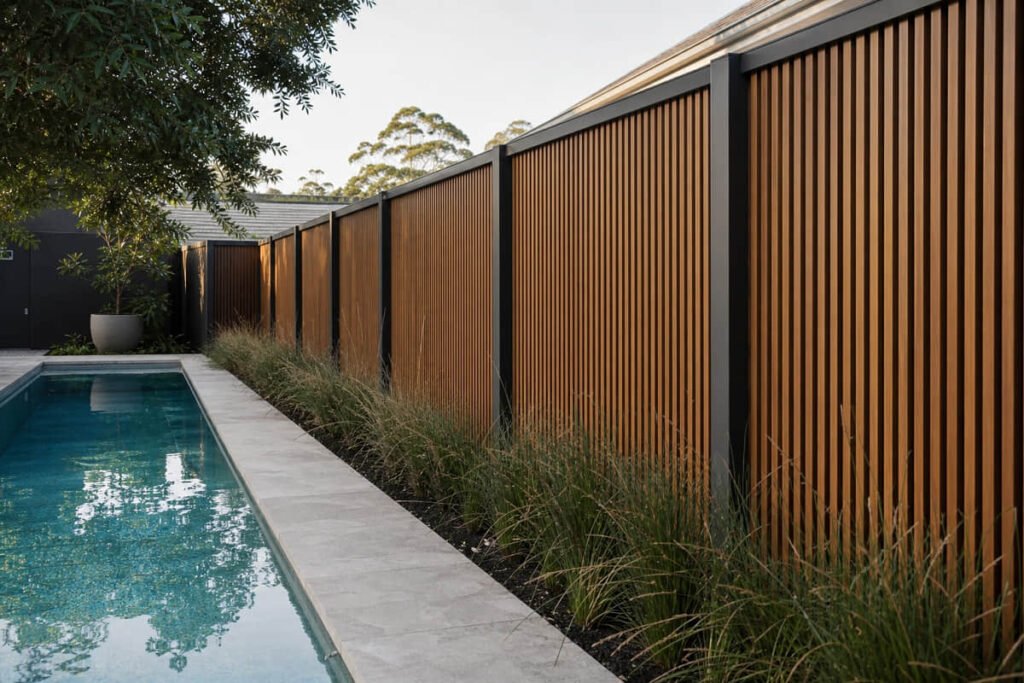
The gap cannot come from looks alone. Rails, fixings and nearby ledges must not give a child a place to climb. Ask your certifier to check the layout against AS 1926.1 and local rules.
For example, Linea comes in 45 × 90 mm and 50 × 50 mm profiles. The right choice still depends on the frame, gap and fixing method. Review the composite screening specifications before you lock in the layout.
4. Get a Timber Look
Composite screening gives a pool area natural warmth without a timber coating schedule. It resists soaking up water and insect attack, but it still needs washing.
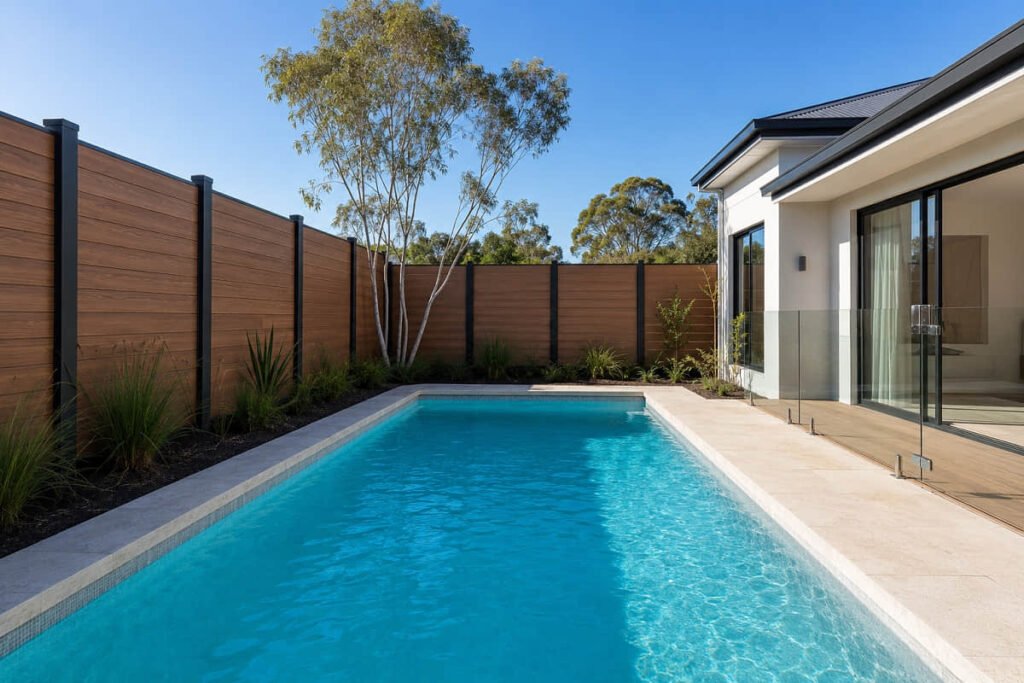
The colour data gives buyers a useful check. LastElegance capped boards have a 0.8 mm cap layer. After 3,000 hours of QUV testing, colour change stayed at ΔE 4 or less. Results vary by colour, and a lab test cannot promise a set outdoor lifespan.
| Care factor | Timber | Capped composite |
|---|---|---|
| Routine cleaning | Wash off dirt and pool residue | Wash off dirt and pool residue |
| Surface coating | Often needs oil, stain or paint | No routine oil or stain |
| Moisture checks | Check splits, rot and movement | Check joins, fixings and drainage |
| Insect risk | Depends on species and treatment | Composite material resists termites |
5. Frame the Pool in Black
Black or charcoal fencing creates a sharp frame around blue water and green plants. It also ties composite panels to black glass hardware or aluminium sections.
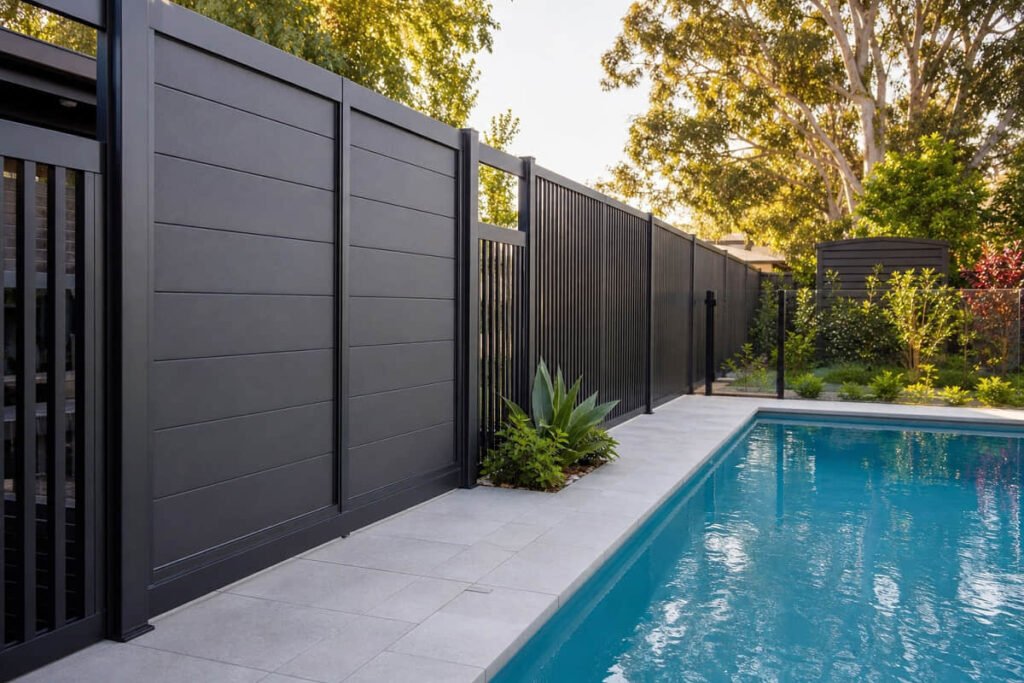
Dark colours can feel hotter in full sun. They may also show dust, salt marks and dried pool water sooner. View a full-size sample in sun and shade before approving the finish.
Our trade partners often find that small colour chips look darker beside pale paving. Test the real board outdoors, not just under showroom lights.
6. Use Soft Coastal Tones
Light grey, sand and pale timber tones suit coastal pool fence ideas. Low contrast can make a small outdoor space feel wider and less enclosed.
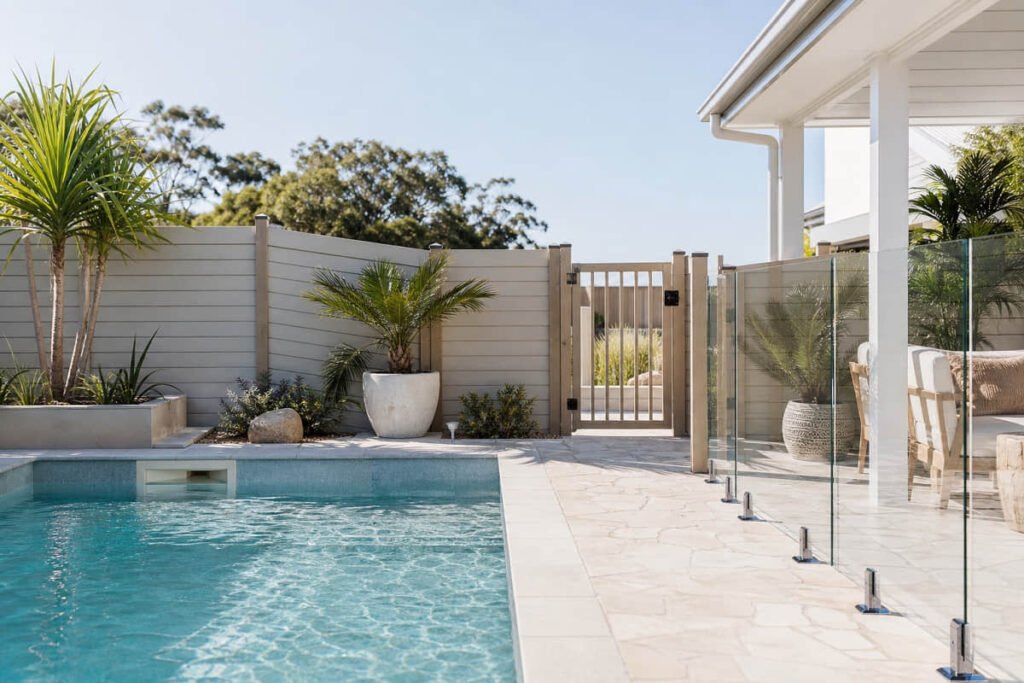
Salt, damp air and pool chemicals still leave marks on any fence. Set a regular cleaning plan and rinse residue before it builds up. Check hardware and fixings as part of the same visit.
Choose plants and paving first, then compare fence colours beside them.
7. Pair Fencing With Plants
Low grasses and small shrubs can soften a hard fence line. Keep the pool-facing side clear enough for fast checks and maintenance.
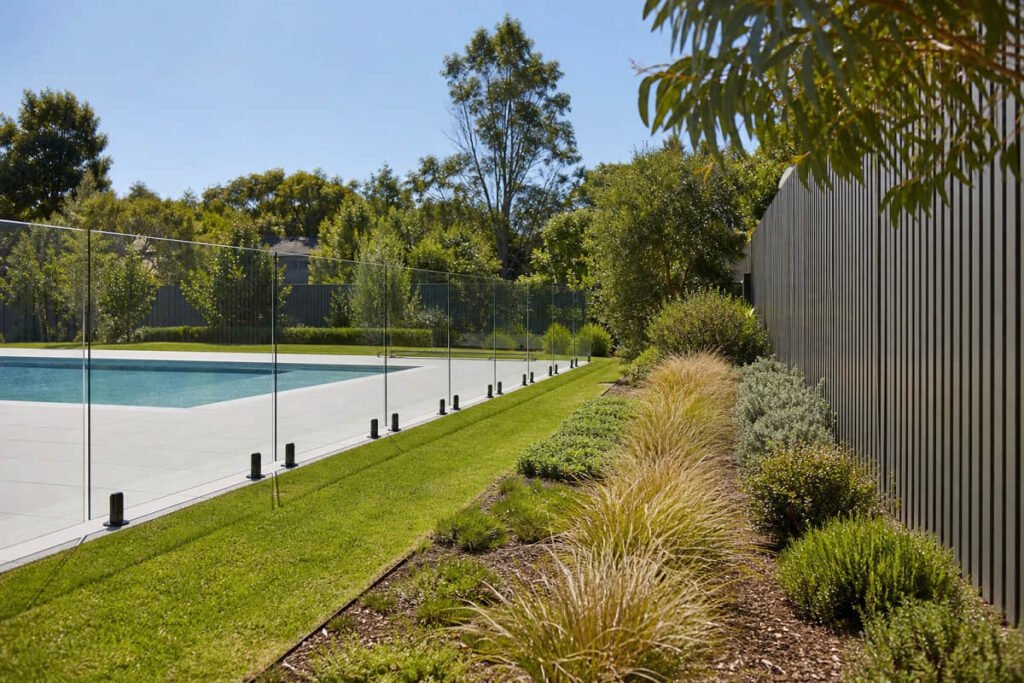
Before planting, review:
- mature plant height and branch spread;
- pots, beds or walls that could aid climbing;
- roots near posts, footings and drains;
- furniture that may move into the non-climbable zone; and
- access for gate and fence checks.
Plants can look harmless when they are small, then grow into the clear zone. Mark their mature size and furniture positions on the plan.
8. Add Safe Fence Lights
Low-glare lights can mark paths and reveal fence texture after dark. Aim fittings away from glass to cut glare across key sightlines.
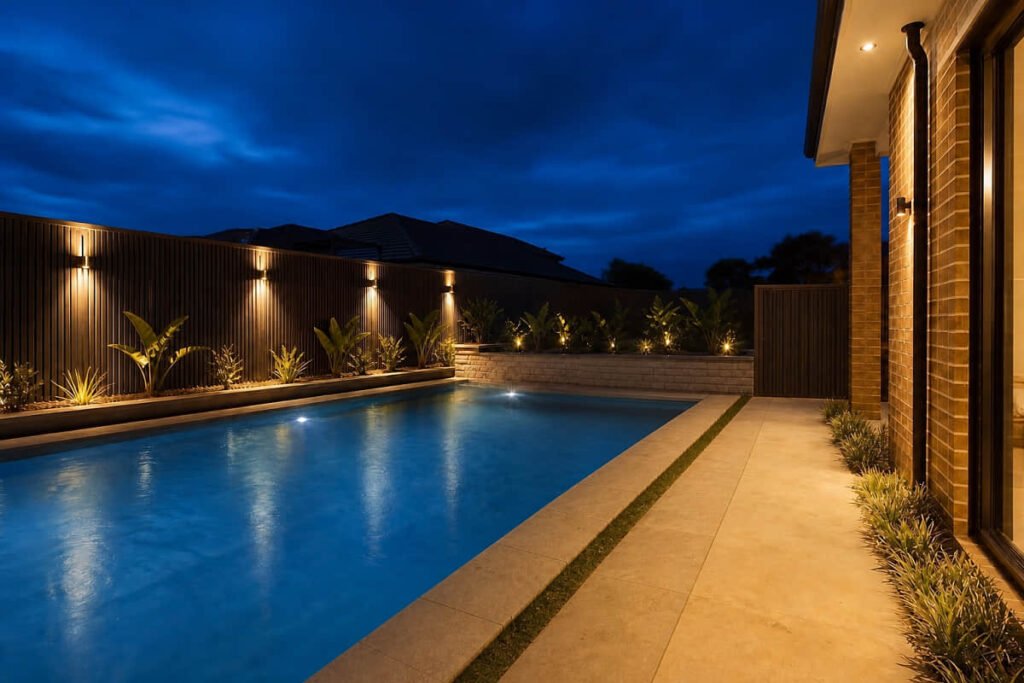
Place each light so it cannot act as a handhold or foothold. Cables and control boxes must also stay clear of the barrier. A licensed electrical contractor should complete outdoor work under the rules for pool zones.
Lighting helps people see the pool enclosure. It never replaces active adult supervision or a compliant barrier.
9. Hide the Pool Gear
Matching composite pool screening can hide pumps, filters and bins. Use the same board colour to keep the pool area calm.
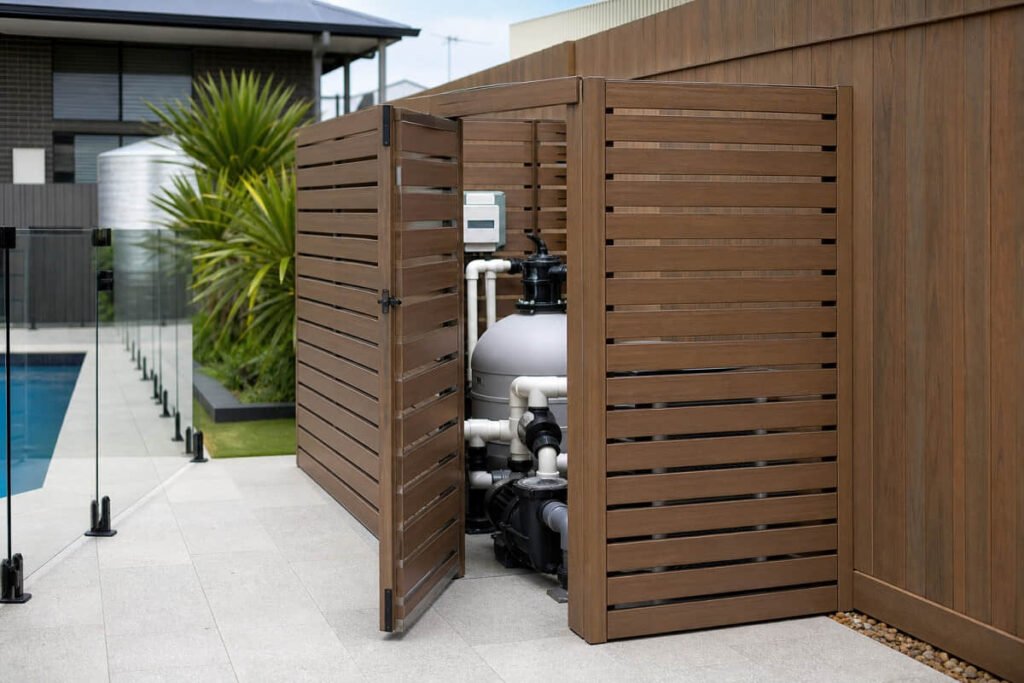
Leave the space required by the equipment manufacturer. Pumps and filters need air, drainage and enough room for a technician to work.
Try to keep service access outside the pool zone. The screen must also stay clear of the barrier if it could help a child climb.
10. Match the Whole Yard
Repeat one colour or grain across the pool screen, deck edge and outdoor walls. Small repeats create a linked look without turning every surface into a match.
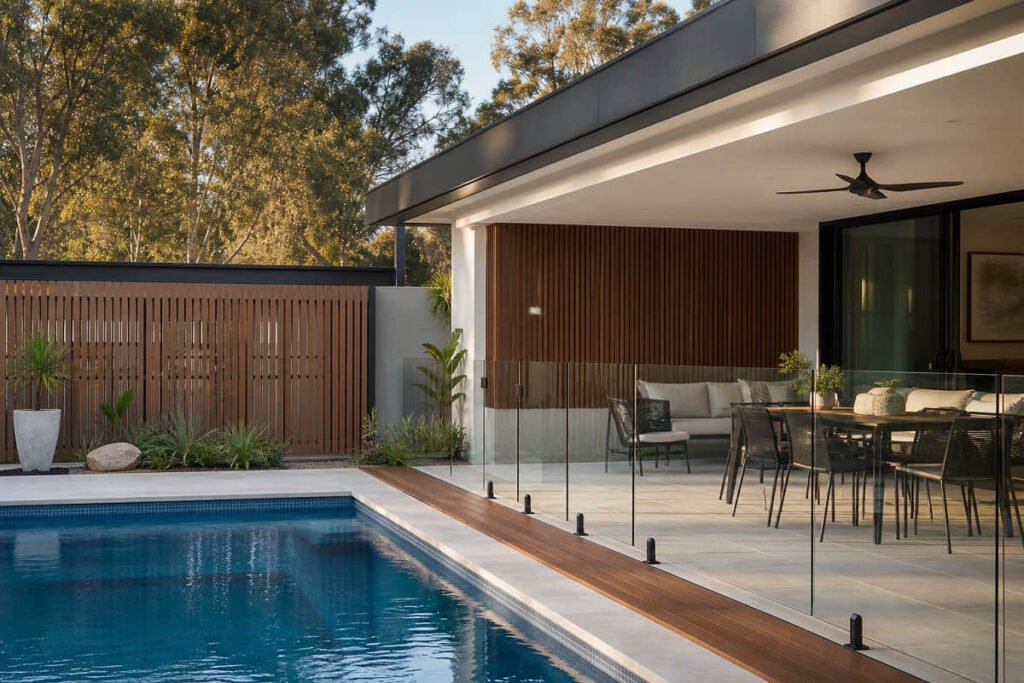
This approach also helps with staged developments. Custom lengths can cut awkward joins, while matched textures keep each stage close to the first build.
LastElegance makes its products in-house, so trade buyers can source samples and custom profiles from one team.
Compare Pool Fence Types
There is no single best pool fence for every yard. Glass protects the view, solid panels add privacy, and metal can keep long runs simple. Approval still depends on the full barrier, not the material name.
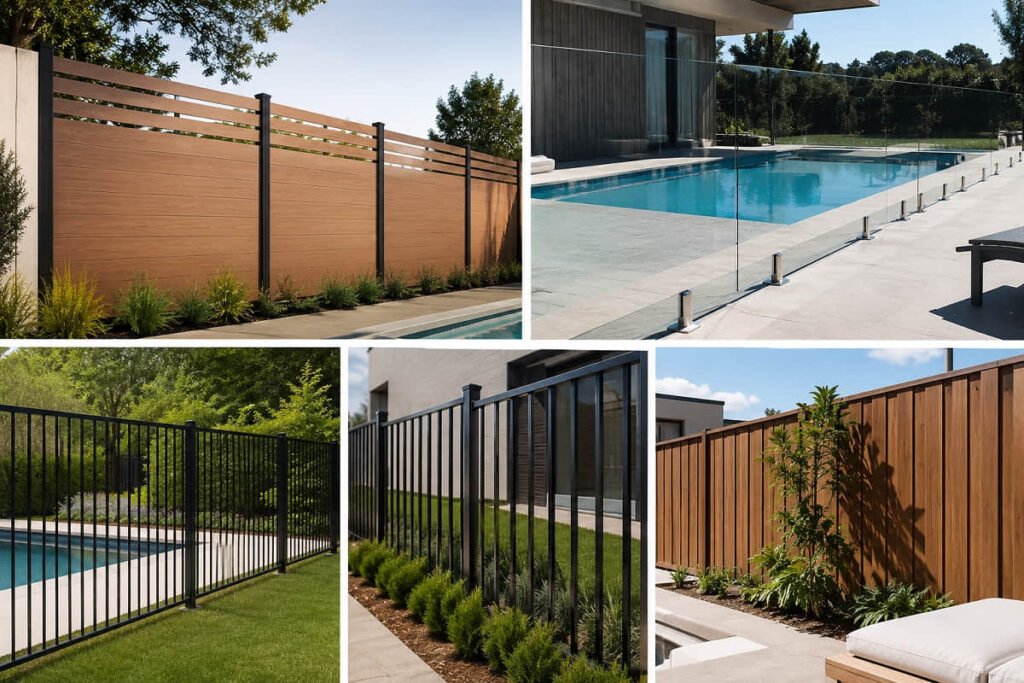
| Pool fence type | Views | Privacy | Upkeep | Broad cost | Best use |
|---|---|---|---|---|---|
| Composite screening | Low to medium | High | Wash and inspect | Medium | Privacy sections and mixed designs |
| Frameless glass | High | Low | Frequent mark removal | High | Clear sightlines and small yards |
| Aluminium | Medium | Low to medium | Wash and inspect coating | Low to medium | Long runs and simple layouts |
| Steel | Medium | Low to medium | Check finish and corrosion | Medium to high | Strong frames and custom details |
| Timber | Low to medium | High | Clean and recoat | Medium | Natural styles and custom builds |
Glass pool fencing offers clear views, yet fingerprints and mineral marks show up fast. Metal suits repeat panels and broad budgets. Timber brings warmth but needs more care. Composite works best where privacy and finish choice matter.
Check Pool Fence Rules
Pool fence rules are not the same for every project. The state, pool age, barrier type and site can all change what applies.
The NCC pool barrier provisions refer to AS 1926.1 and AS 1926.2 for relevant barriers. Before you buy, ask your council, surveyor or pool certifier which rules apply to your site.
Before ordering, check:
- The required barrier and boundary heights.
- Gaps below, between and within panels.
- Gate swing, self-closing action and self-latching hardware.
- Latch height, position and access.
- Non-climbable zones on the required side.
- Nearby trees, pots, furniture, pumps and retaining walls.
- Glass, post, footing and structural requirements.
- Inspection, approval and record needs in your state.
Plan Your Fence Layout
Start with sightlines from the house and main outdoor space. Then map privacy, gate access, slope, services and existing boundary fences.
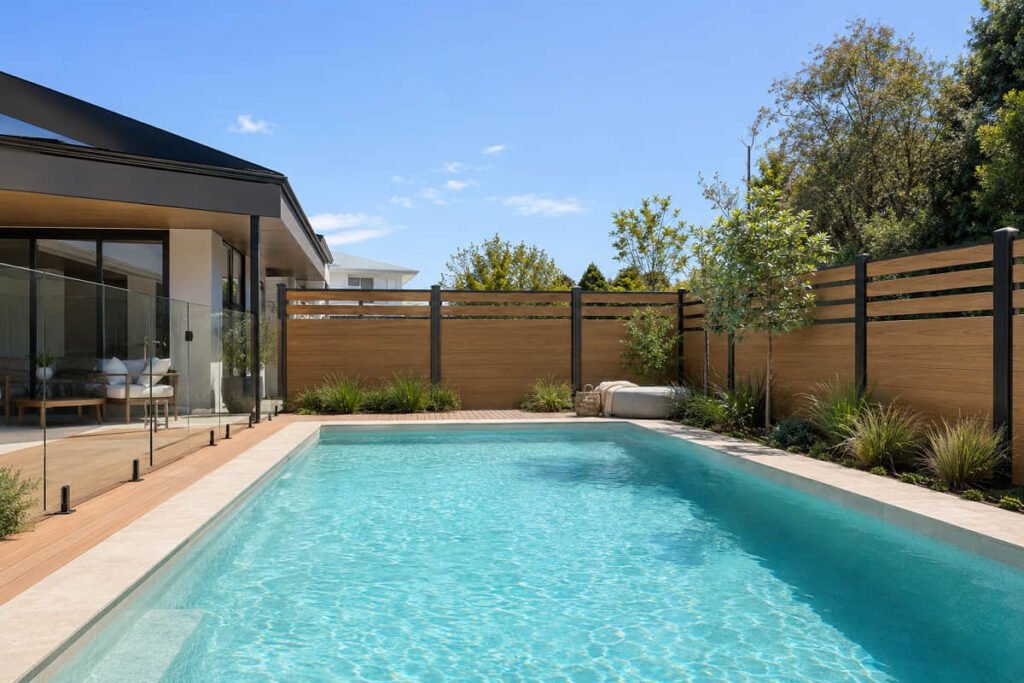
Use this six-step order:
- Measure the site, levels and fixed objects.
- Mark the pool, boundary and required clear zones.
- Set gate access and key sightlines.
- Choose materials, panels, posts and joints.
- Get the full barrier plan checked and approved.
- Order from the approved take-off, then inspect the finished work.
LastElegance screening can slot into place or use clips. You can pair it with aluminium or composite material, plus matching trims, brackets and caps.
Small parts are easy to miss on a large order. We see forgotten trims cause late changes on site, so add every accessory before procurement signs off.
Choose Composite Pool Screening
Composite pool screening makes sense when privacy matters more than a full view. It suits boundary screens, quiet backdrops and mixed designs with glass or aluminium. You can choose a closed, semi-open or open look, subject to approval.
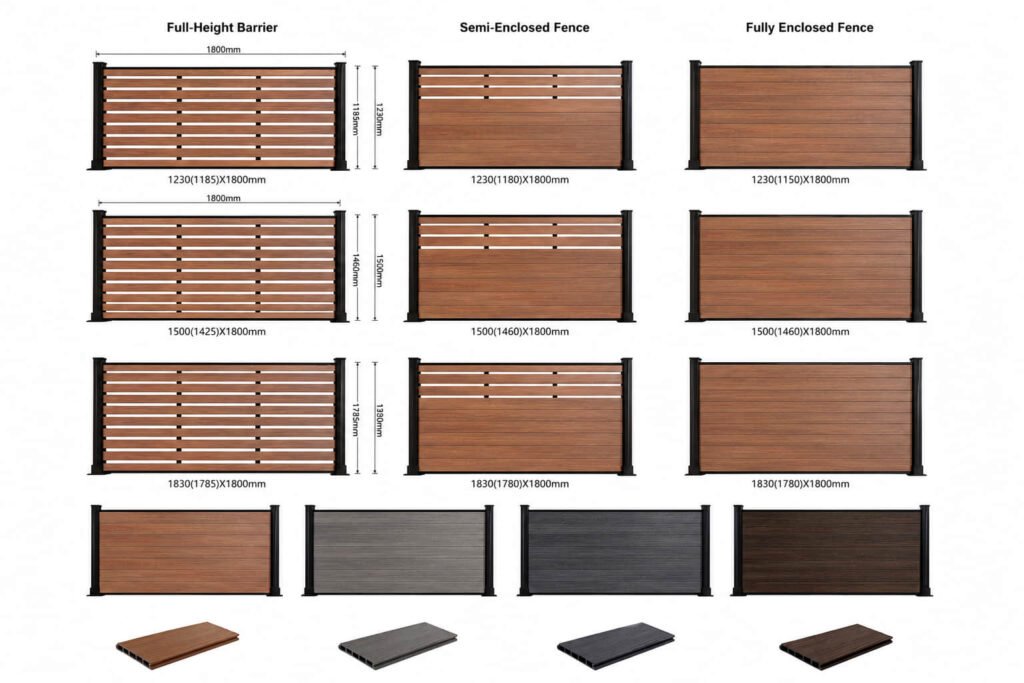
The range gives designers room to work. Linea has 45 × 90 mm and 50 × 50 mm profiles. TwinLine has a 158 × 20 mm panel. Vista offers three widths, all with a 20 mm depth. Custom colours, lengths and textures are also available.
LastElegance makes the range in-house. This gives trade buyers one point of contact for quality, product specs and custom work.
For a compliant-project review and tailored pricing, request a composite screening quote.
FAQs
Can Composite Be a Pool Fence?
Composite screening is not automatically a compliant pool fence. Panels, posts, gaps, gates, fixings and installation must meet the rules and gain approval as one system.
Which Fence Gives Most Privacy?
Solid composite panels or modular walls give the most privacy. Open slats, aluminium and glass preserve more sightlines, so balance privacy with supervision needs.
What Pool Fence Needs Least Care?
No pool fence is maintenance-free. Glass needs mark removal, metal needs finish checks, timber needs coating, and composite needs washing and joint checks.
Can Plants Grow Near Pool Fences?
Yes, if they do not make the barrier easier to climb. Keep plants, pots and garden features outside the required non-climbable zone.
Can I Mix Fence Materials?
Yes. Glass, aluminium and composite can form one linked design, but every junction, panel and gate must match the approved barrier plan.
How Tall Does a Residential Swimming Pool Fence Need to Be?
The required height depends on the barrier type, site, pool age and local law. Confirm the figure with your council or pool certifier before ordering.
