

A cladding choice can look cost-effective at tender, then add labour, delay sign-off or create warranty risk. For builders and procurement teams, the right choice depends on the full wall system—not the board price alone. This guide helps you compare both options and choose the right fit for your project.
What Does Composite Cladding Mean?
Composite cladding means a product made from two or more materials. The term can describe wood-plastic boards or aluminium composite panels. These products differ in structure, use and fire behaviour.
That difference matters at the tender stage because each cladding product needs its own evidence. Ask the supplier to name each layer and provide test reports for the exact product.
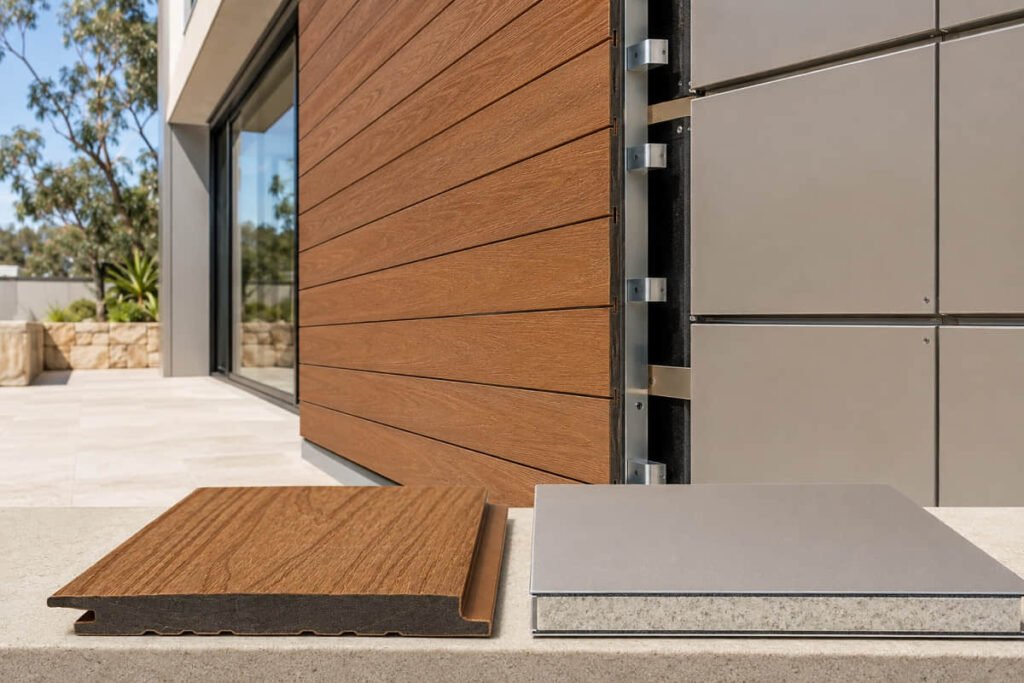
Wood-Plastic Composite
Wood-plastic composite cladding blends wood fibres with plastic and additives. It gives exterior cladding the texture of real wood without regular oiling or staining.
Capped boards add a 0.8 mm outer layer. This cap supports weather resistance against water, stains and UV rays. Results still depend on colour, cap quality and site exposure.
Review our composite cladding specifications before pricing or sign-off.
Aluminium Composite Panels
Aluminium composite panels use two thin aluminium sheets around a bonded core, so do not assess them as solid aluminium.
Ask for the full product name, core type and fire reports for the whole wall. A broad label such as “composite panels” does not prove compliance.
Composite Cladding vs Aluminium Cladding: Which Is Safer in Fire?
Solid aluminium has a clear material-level edge over wood-plastic composite. Wood-plastic composite contains combustible material unless exact evidence proves otherwise. Aluminium composite panels need separate proof for every layer and core.
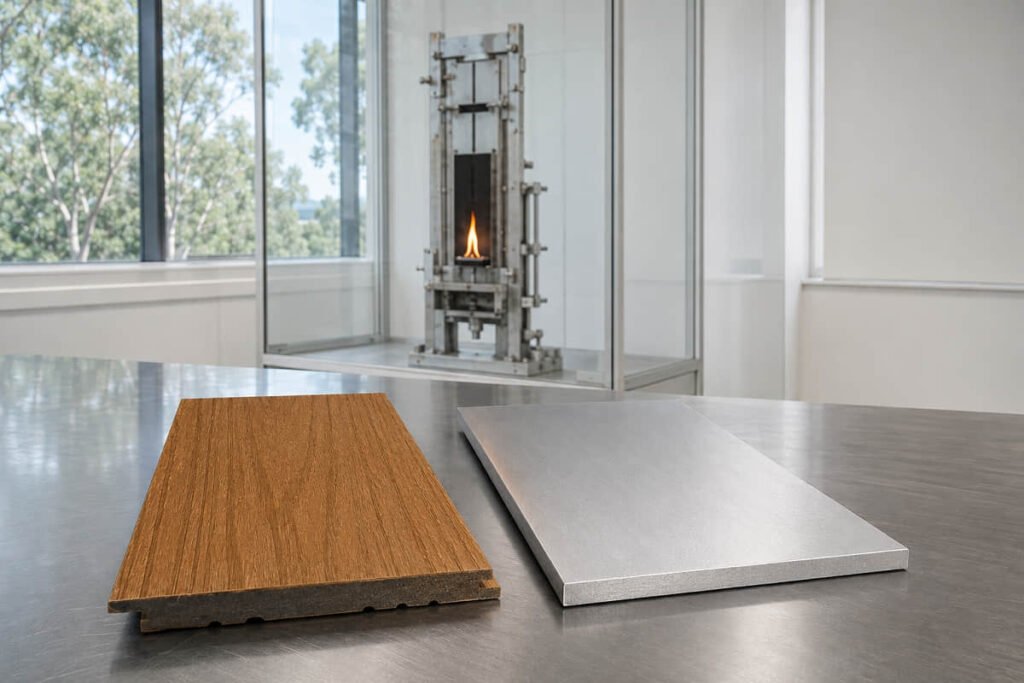
NCC 2022 Amendment 2 clause C2D10(1) requires non-combustible external walls in Type A and Type B construction. The clause also lists limited concessions. Your building surveyor must assess the full wall system and the NCC edition adopted in that state or territory. See NCC Part C2.
Before sign-off, give the product specifications and test reports to the project certifier.
How Do Costs Compare?
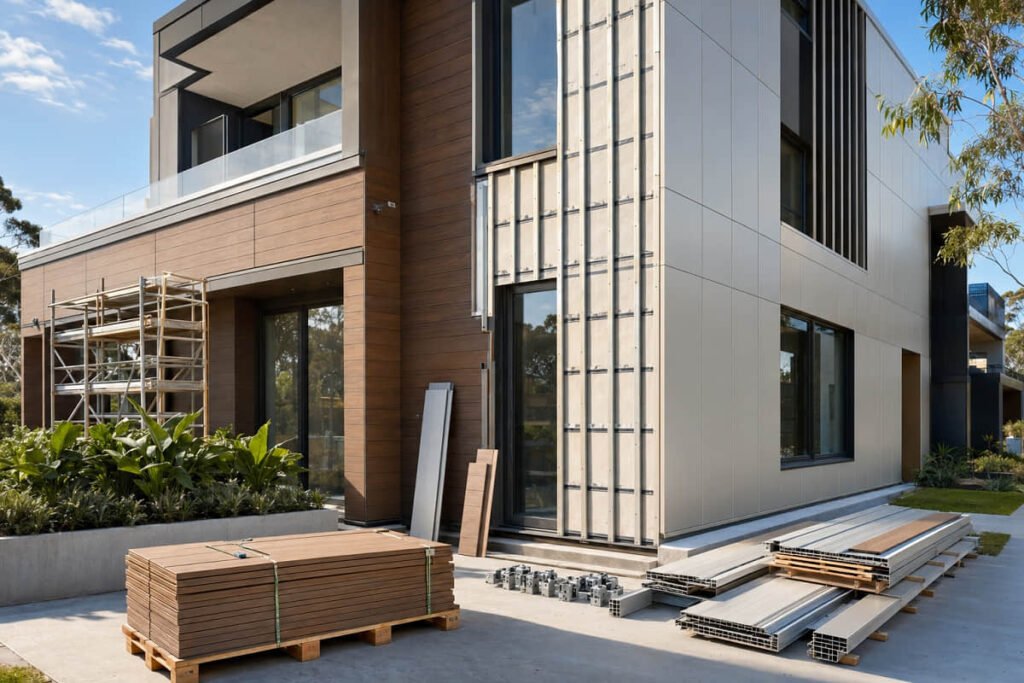
Board price per square metre (m²) tells only part of the story. Compare the full installed cost for the same wall and detail.
| Cost item | What to compare |
|---|---|
| Cladding | Profile, finish, grade, lengths and waste allowance |
| Subframe | Battens, brackets, packers and wall preparation |
| Fixings | Clips, screws, anchors and corrosion grade |
| Finishing | Corners, openings, flashings and trim pieces |
| Labour | Cutting, lifting, access, set-out and install speed |
| Logistics | Freight, storage, lead time and order size |
| Long term | Washing, repairs, access and finish renewal |
Composite may have a lower initial cost on simple, low-rise walls. Solid aluminium may carry a higher upfront cost due to finish or fabrication, though complex corners can change both results.
LastElegance manufactures its composite products in-house, which gives trade buyers control over size, colour, texture and batch needs.
Which Is Faster to Install?
Installation speed depends on the wall, crew and chosen system. Use a trial bay or past project data before pricing a labour saving.
- Check board or panel weight and safe handling needs.
- Price the full subframe, including packers and brackets.
- Count cuts around corners, windows and services.
- Review clips, screws, trims and movement gaps.
- Confirm access, storage and protection on site.
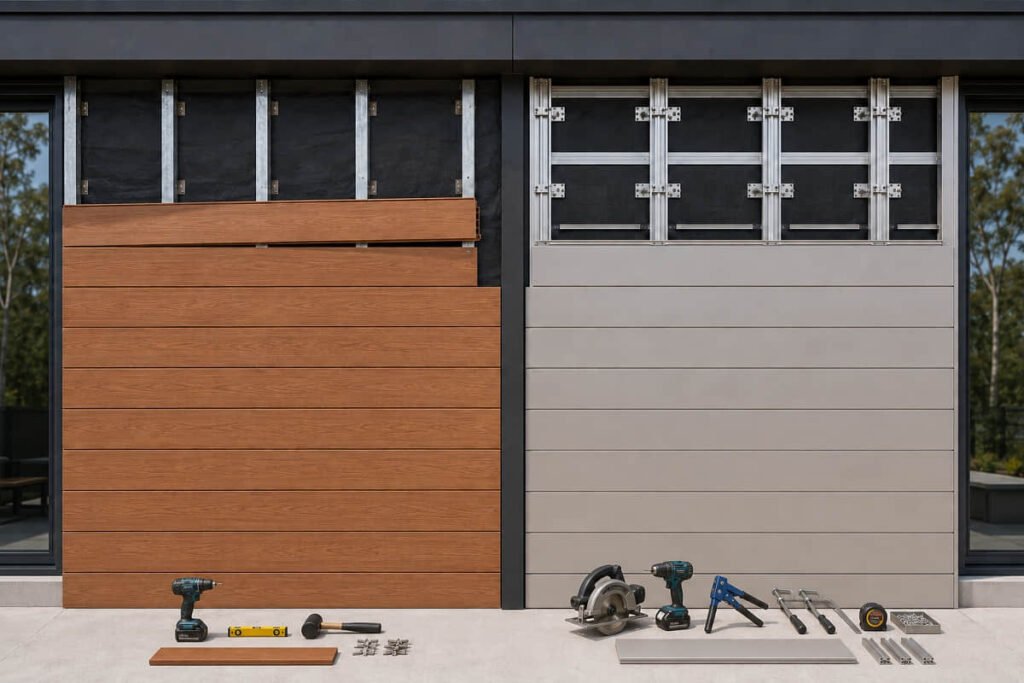
Interlocking composite boards can support easy installation on straight wall runs. Aluminium’s light weight helps with handling, but large custom panels need more planning. A skilled installer also protects the finish and warranty.
Boards, Battens and Fixings
LastElegance cladding uses a male-female interlocking clip system, mainly over steel battens. DecoGroove comes in 219 × 26 mm and 219 × 20 mm profiles, and Oakling measures 140 × 12 mm.
Solid aluminium systems vary from boards to folded panels. Compare exact specifications, trims and mechanical fixings before pricing the ease of installation.
Which Cladding Lasts Longer?
Both can offer a long lifespan when the grade and wall details suit the site. In any composite cladding vs aluminium cladding review, drainage and fixings matter.
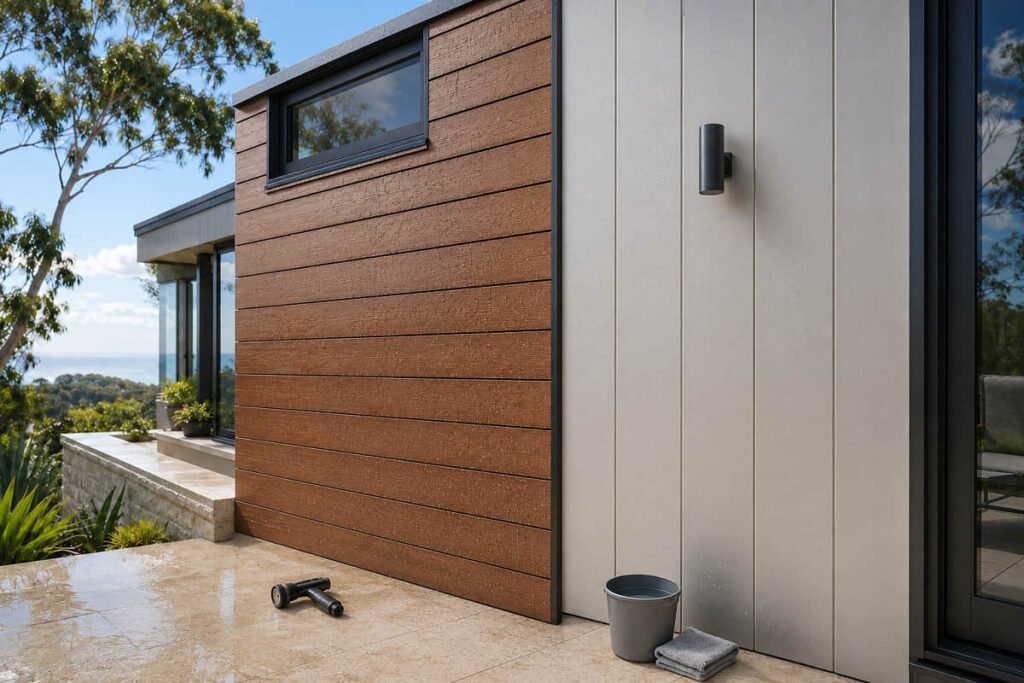
Composite handles water and termites well, but deep scratches can expose its core. It also needs the right movement gaps on long wall runs.
Aluminium will not soak up water or feed termites, but thin profiles can dent, and deep scratches can breach the finish. On coastal sites, the coating, fasteners and drainage often matter more than the base material.
LastElegance offers a 20-year cladding warranty under normal use and care. It covers listed faults within contract limits, while wrong installation, misuse and human damage sit outside that cover.
Sun and Colour
No exposed finish stays unchanged forever under strong UV rays, while dark colours and north-facing walls often show heat and colour change first.
LastElegance reports a colour change of about ΔE ≤ 4 after 3,000 hours of QUV weathering. Results vary by colour, so check the report for your chosen finish.
For aluminium, check the powder coating or anodised finish grade and warranty. Compare samples in direct sun, not just under showroom lights.
Water, Salt and Impact
ASTM D1037 testing reports 0.2% water absorption, which supports water resistance but does not replace sound wall drainage.
Near the coast, match screws and battens to the exposure zone. Wash salt deposits at the rate set by the manufacturer. Seal or treat cut edges where the system requires it.
For loading bays or public paths, test impact resistance as a wall system. Wood-plastic composite can scratch, while thin solid aluminium panels can dent. A tougher profile or guard may suit high-impact areas.
What Care Does Each Need?
Both options are low-maintenance, not carefree. Salt, traffic and dust raise their maintenance requirements.
On a normal urban site, wash either finish with mild soap and water, then treat stains or coating damage before they spread.
Coastal walls need more care. Rinse salt at the rate in the care guide, keep drainage gaps clear and check fasteners each year.
Do not use harsh cleaners before checking the care guide. Keep wash and inspection records where warranty terms require them. Access costs can outweigh the cleaning costs on tall commercial buildings.
Which Look Suits Your Build?
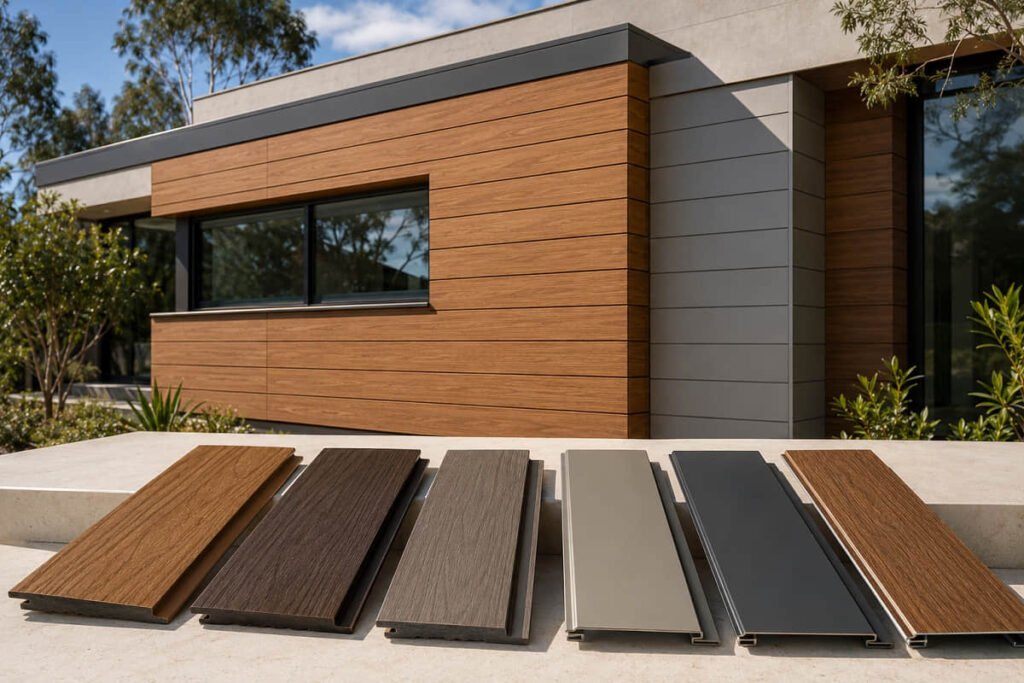
Composite brings grain, depth and the natural look of timber. Aluminium gives clean joints, sharp lines and a broad colour range. Timber-look powder coating can also give aluminium a warm finish.
| Design aim | Better starting point |
|---|---|
| Deep timber texture | Composite cladding |
| Crisp, fine joints | Aluminium cladding |
| Custom grain and mould | Composite from a flexible manufacturer |
| Metallic or flat finish | Powder-coated aluminium |
| Curves or folded shapes | A suitable aluminium system |
| Warm soffit or feature wall | Either, subject to fire and use rules |
Available custom options include length, colour, packaging, surface texture and moulds. That range can help distributors match a design brief.
Colour chips hide scale and glare. Request free cladding samples, then view them outside beside the other facade materials.
Which Is Better for Green Builds?
No material earns the green label from one claim because the product, factory and end-of-life plan all count.
Composite can use waste wood and recycled plastic, while aluminium has strong recycling routes. That does not make either product green by default.
Ask for an EPD and a recycled-content record for the exact product. Also check expected life, repair options and what happens when the facade comes down.
LastElegance states 60% recycled content for its composite mix. Confirm that figure for the chosen cladding product and batch.
Named ISO certifications and RoHS test reports can support specific claims. An SGS report identifies the testing body, so check the test method and result. None replaces a life-cycle study or product EPD.
Where Does Each Work Best?
Match the system to the building and exposure, not just the material name.
| Project | Practical starting point | Main check |
|---|---|---|
| Low-rise residential buildings | Composite or aluminium | Fire rules, look and budget |
| Soffits and feature walls | Composite or aluminium | Internal or external fire needs |
| Office buildings | Solid aluminium often leads | Type of construction and access |
| Shopping malls | Tested aluminium systems often lead | Fire, impact and maintenance access |
| Coastal homes | Either with suitable grade | Coating, fixings, drainage and wash plan |
| High-impact zones | Heavier profile or guarded system | Tested wall impact performance |
Composite works well where timber-like aesthetic appeal and custom profiles carry weight. Solid aluminium suits many commercial projects that need sharp forms or non-combustible walls.
What Should You Check Before Sign-Off?
Use this order for your next project:
- Confirm building class, construction type and fire safety standards.
- Map sun, salt, rain, wind and impact exposure.
- Set the required colour, grain, profile and joint style.
- Compare supplied-and-installed costs for the same wall area.
- Check cleaning access, repair steps and warranty duties.
- Review the full installation process with the builder.
- Confirm test reports, lead time, MOQ and batch control.
Ask the architect to confirm the design intent. The builder should review set-out and buildability. The building surveyor checks compliance, while the supplier confirms product evidence and supply terms.
Choose the tested system that fits the full wall design and project risk. This reduces approval, rework and warranty risk.
For custom profiles or trade supply, talk to our sales team about your drawings, evidence needs and order plan.
FAQs
Is composite cladding cheaper than aluminium?
It may cost less for the boards or installation. Compare total quotes that include the subframe, labour, trims, freight, waste and order size.
Which cladding has better fire resistance?
Solid aluminium usually has the material-level edge over wood-plastic composite. The full wall system and NCC requirements still govern use, while aluminium composite panels need separate core evidence.
Does composite fade in Australian sun?
All exposed finishes can change over time. Cap quality, UV stabilisers, colour, aspect and care affect the rate.
Which cladding works best near the coast?
Both can work when the product, finish and fixings suit marine exposure. Check salt-wash needs, drainage details and coastal warranty limits.
Can composite cladding be used indoors?
Some boards suit internal walls and ceilings. Check fire, smoke, VOC and formaldehyde reports for the exact product and room use.