

The outside of a building works harder than most people give it credit for. It takes the weather, holds its color, and shapes first impressions — year after year. Composite siding has become one of the most popular choices for getting all three right. But “composite” means different things depending on who’s selling it. This guide breaks down the key differences. Whether you’re a homeowner planning a renovation or a contractor specifying materials at volume, you’ll know exactly what you’re looking at.
What Is Composite Siding?
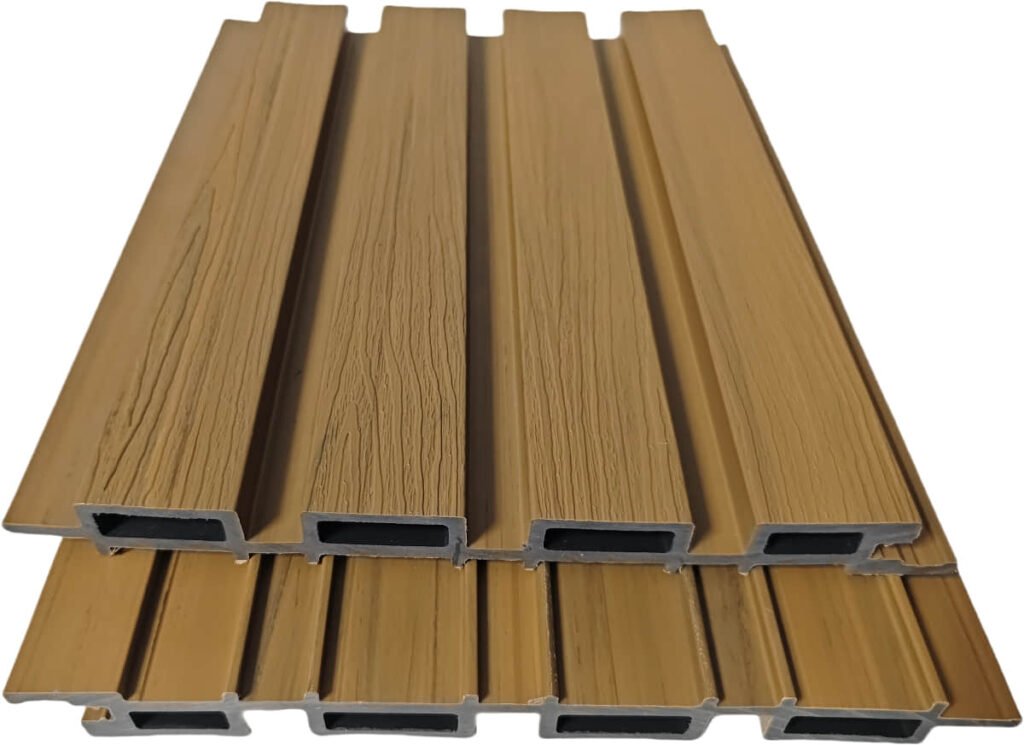
Composite siding is an exterior cladding made by combining wood fibers, plastic resin, and binders into a single engineered board. It’s designed to look like natural wood — without the rot, warping, and upkeep that come with it. Most composite siding resists moisture, insect damage, and weather that would wear down real wood in a few years.
The idea behind it is simple: take what people love about wood siding and engineer out the problems.
What Is Composite Siding Made Of?
Composite siding — uses four core materials:
- Recycled HDPE: The plastic binder. It makes the board waterproof and structurally stable.
- Wood fibers or cellulose fibers: Provide the natural wood look and texture.
- UV stabilizers (HALS + UV absorbers): Protect color from fading under long-term sun exposure.
- Pigments and bonding agents: Control color consistency across production batches.
Premium boards go further with co-extrusion. In this process, a protective cap layer is fused over the core board during production. That cap layer is where UV resistance and color retention live — the thicker it is, the better the protection. Quality products use at least 0.8 mm.
What Are the Benefits of Composite Siding?
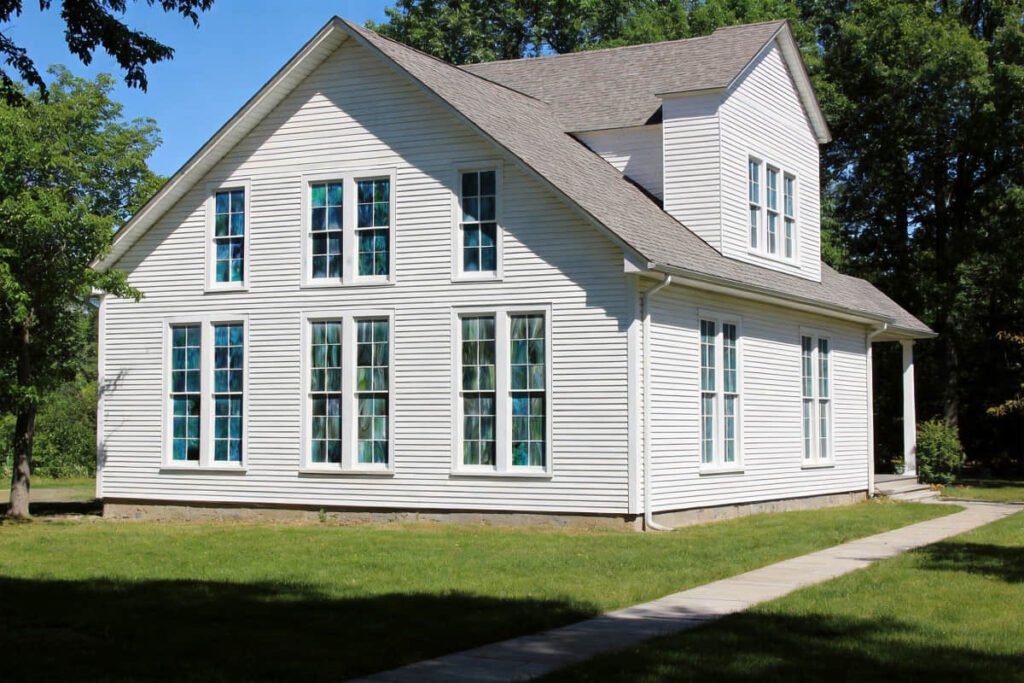
Here are the benefits that matter most to trade buyers:
- No painting, staining, or sealing. The cap layer bonds color and texture into the board surface during production. Routine care is washing — nothing more. That cuts maintenance costs over a building’s life.
- Rot and insect resistant. No exposed wood core means no rot risk and no termite damage. Our boards test at 0.2% water absorption — close to zero.
- Strong color stability. After 3,000 hours of QUV accelerated aging per ASTM G154, color change stays within ΔE ≤ 4–5. That holds up in Florida, Arizona, and along the Gulf Coast.
- Wide range of colors and textures. Woodgrain, brushed, and smooth finishes are standard. Custom color matching is available for volume orders.
- Curb appeal without the upkeep. It looks like natural wood. It doesn’t act like it.
- Design continuity across the facade. Our siding range shares the same color palette as our decking range — match the deck and building exterior from one supplier.
Co-extruded capped boards outperform uncapped profiles on all these points. The cap layer is where the performance is built in. If a supplier can’t tell you the cap thickness, that’s worth noting.
What Are the Drawbacks of Composite Siding?
Here’s the honest picture:
- Higher upfront cost than vinyl. Composite siding costs more per square foot at purchase. The gap closes over time through lower maintenance costs — but the initial spend is real.
- Wide quality variation. “Composite siding” covers everything from cheap uncapped boards to co-extruded premium products. Buyers who don’t ask the right questions can end up with a product that fades or swells under harsh climates.
- Water damage risk with poor installation. A well-made composite board handles water well. But if the install skips the weather-resistive barrier or leaves gaps at trim joints, water gets behind the cladding. Proper installation is not optional.
- Fire ratings vary by product. Not all composite siding achieves Class A or B under ASTM E84. Our current products are rated Class C (FSI 85, SDI 300). Buyers on commercial or high-density projects should check local building codes before specifying.
The category is only as good as the specific product you source. Vague “composite siding” specs aren’t enough. Ask for cap layer thickness, co-extrusion details, and ASTM E84 ratings every time.
How Does Composite Siding Compare to Other Siding Materials?
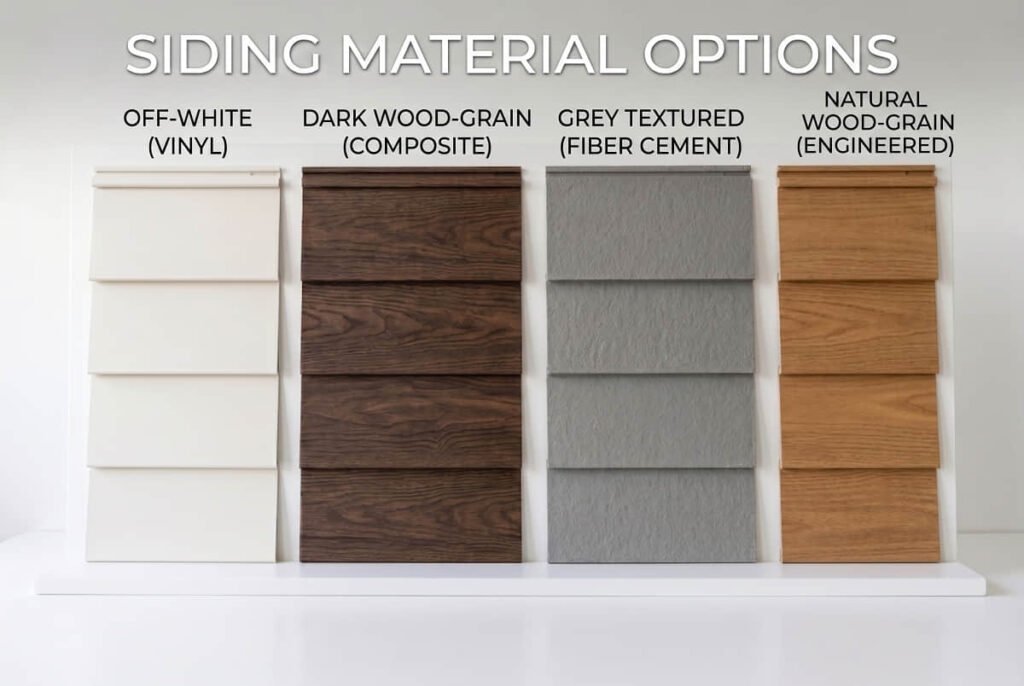
Composite siding is newer to the US market than vinyl, fiber cement, or engineered wood. Each material has a different cost profile, install process, and long-term performance record. The comparisons below cover the factors that matter most to contractors and distributors: install speed, moisture resistance, maintenance, and total cost over time.
Composite Siding vs. Engineered Siding
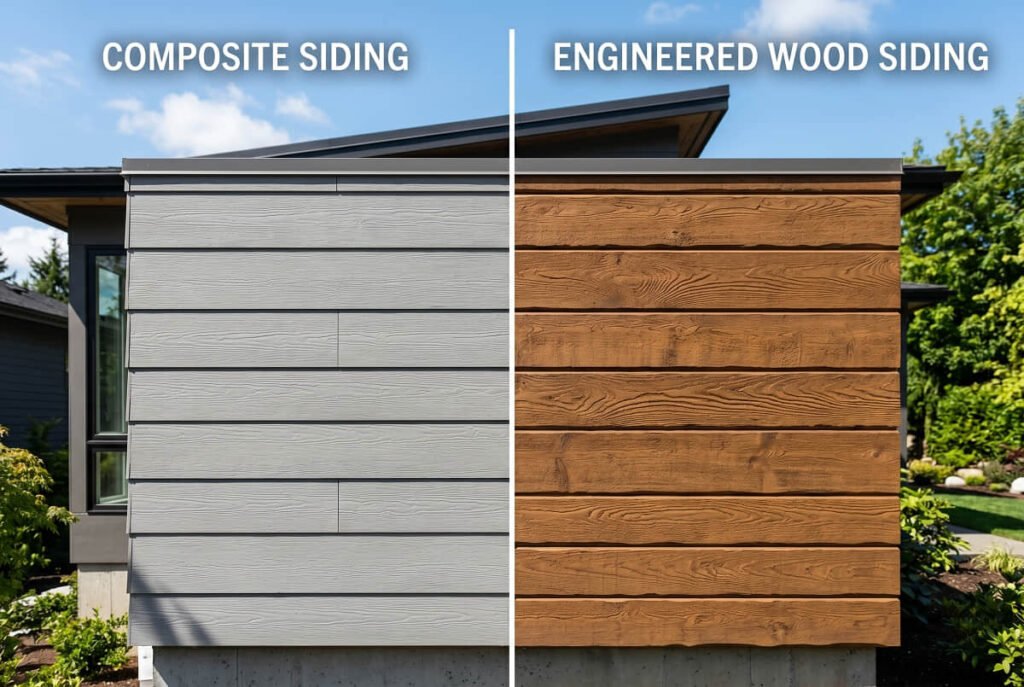
Engineered wood siding has grown fast in the US market. It looks better than vinyl and costs less than fiber cement. But it has a real weakness: moisture. Here’s how it compares to wood-fiber composite:
| Criteria | Composite Siding | Engineered Wood Siding |
|---|---|---|
| Moisture resistance | Fully waterproof (0.2% absorption) | Can swell or delaminate if coating is damaged |
| Insect resistance | Inherent — no chemical treatment needed | Relies on zinc borate treatment |
| Fungal / rot risk | None | Risk increases when moisture barrier is compromised |
| Field painting | Not required — pre-finished | Required; must be repainted on schedule |
| Weight | Light (1.19–1.97 lb/ft) | Moderate (approx. 1.5–2.5 lb/ft by profile) |
| Install speed | Faster — clip system, no face nailing | Face-nail or staple; slower on large facades |
| Formaldehyde | Not detected (EN 717-1) | Binders present; varies by product |
The core issue with engineered wood is paint dependency. The zinc borate treatment handles insects. But moisture protection relies on the coating staying intact. On a large commercial facade, that coating takes hits — caulking joints, penetrations, cut edges. When it fails, the board can swell or delaminate.
Composite siding doesn’t have that dependency. The material itself is waterproof. Cut ends, drilled holes, and fastener points — none of them create a moisture entry risk.
For contractors doing multi-family or light commercial work in humid climates — the Gulf Coast, the Southeast, the Pacific Northwest — this is a meaningful difference in long-term call-back risk.
Composite Siding vs. Vinyl Siding
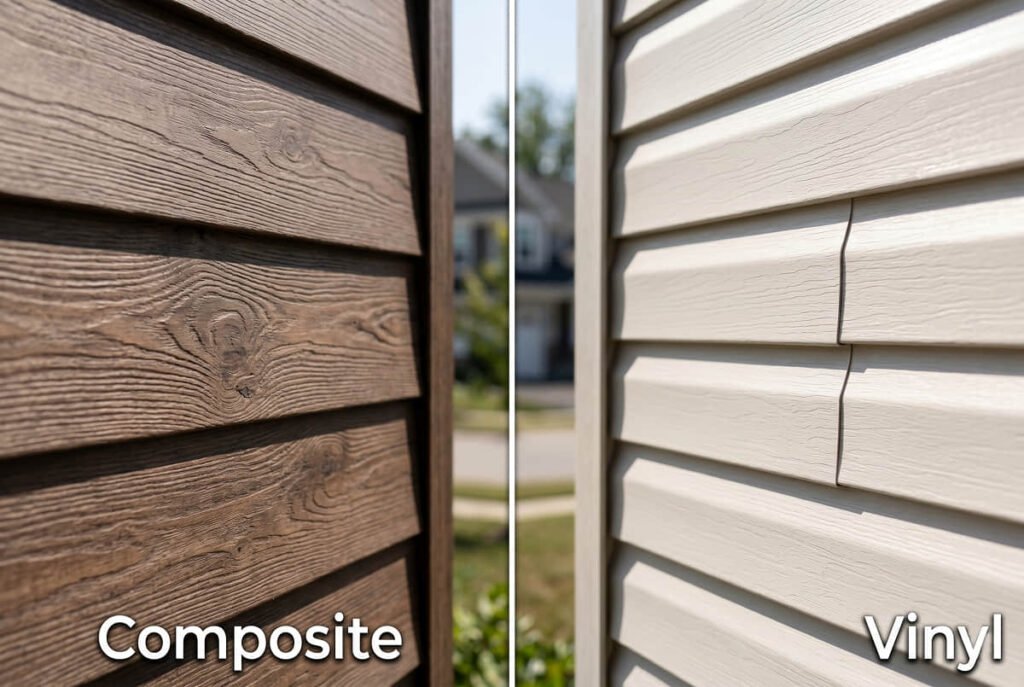
Vinyl siding (polyvinyl chloride / PVC) and wood-fiber composite are different material classes. Here’s how they compare:
| Criteria | Composite Siding | Vinyl Siding |
|---|---|---|
| Appearance | Wood grain and texture; natural look | Smooth or lightly textured; plastic look |
| Structural rigidity | Rigid; handles impact and wind load | Less rigid; can flex, buckle, or warp |
| Cold weather | Stable in freezing temps | Can become brittle in very cold climates |
| Color retention | Strong — cap layer locks in color | Can fade over time; limited range of colors |
| Maintenance | Low — no painting or sealing needed | Very low — wipe clean; can’t repaint |
| Upfront cost | Higher | Lower |
Composite wins on curb appeal and rigidity — both count on commercial projects. Vinyl wins on upfront cost and fast availability. For multi-family or commercial facades, the gap in appearance and structural performance is usually the deciding factor.
Composite Siding vs. Fiber Cement Siding
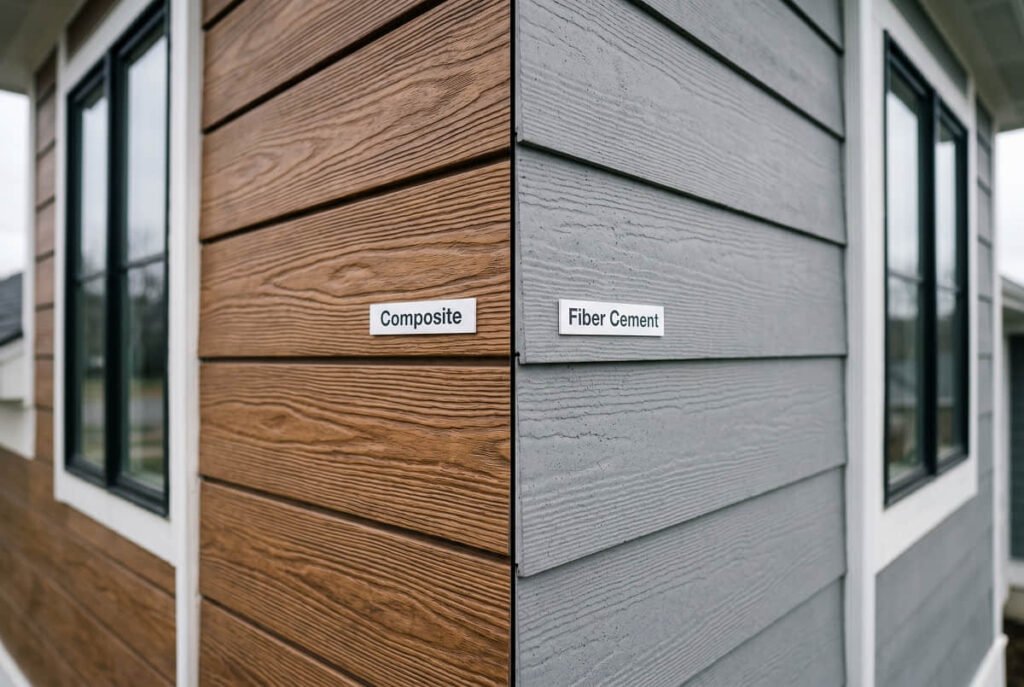
Fiber cement siding dominates the US market. James Hardie alone holds a large share, so it’s the benchmark most buyers compare against. Here’s how wood-fiber composite stacks up:
| Criteria | Composite Siding | Fiber Cement Siding |
|---|---|---|
| Weight | Light (1.19–1.97 lb/ft) | Heavy (approx. 2.5–3.5 lb/ft) |
| Field painting | Not required — pre-finished | Required at install; must be repainted periodically |
| Cutting tools | Standard saw — no special tools needed | Fiber cement shears or saw required |
| Silica dust risk | None | Yes — OSHA guidelines apply |
| Moisture resistance | Fully waterproof (0.2% absorption) | Can absorb moisture if paint layer is damaged |
| Install speed | Faster — clip system, no face nailing | Slower — face-nail or hidden fastener |
| Formaldehyde | Not detected (EN 717-1) | Not applicable (cement-based) |
One thing many contractors overlook: cutting fiber cement produces respirable silica dust. OSHA has clear guidelines on this, and it adds PPE requirements and setup time to every job. Composite siding cuts with a standard circular saw — no silica risk, no extra steps.
Our distributors tell us this is a real labor cost differentiator on large commercial jobs, where crews move between boards all day.
The clip-based install for composite siding goes over steel battens set 12″–16″ on center. No face-nailing, no field painting. Experienced crews move fast on this system.
How Does Composite Siding Hold Up in Tough Weather?
Hot and sunny climates (Florida, Texas, Arizona, California)
UV exposure is the main threat to siding color in the South and Southwest. Our co-extruded products use a HALS + UV absorber system, tested to 3,000 hours under QUV accelerated aging per ASTM G154. Color change stays within ΔE ≤ 4–5. That’s a real number — ask any supplier for the same before you spec their board in a high-UV zone.
Hot and humid climates (Gulf Coast, Southeast)
Moisture resistance comes down to water absorption. Our tests at 0.2%. There’s no exposed wood core soaking up humidity, and no rot or mold risk. In humid climates, that’s a practical advantage over wood siding and most engineered wood products.
Cold climates (Midwest, Northeast)
Composite boards don’t get brittle in cold weather. The HDPE and wood-fiber core stays stable across wide temperature swings. Vinyl/PVC can crack in hard freezes. Composite doesn’t have that problem.
Co-extruded boards outperform uncapped profiles in all these weather conditions. In harsh climates, the cap layer is doing real work.
Is Composite Siding Right for Your Project?
Composite siding fits best where design, durability, and low upkeep all matter together. The strongest use cases are multi-family residential builds, commercial facades, and hospitality exteriors — projects where appearance needs to stay consistent across many units, and where maintenance at scale adds up fast.
If a project includes both exterior siding and a deck or outdoor area, sourcing both from the same range means matching colors and textures from one supplier — no coordination headaches.
For volume buyers and distributors, factory-direct sourcing changes the cost math. No middlemen means a lower landed cost — and full customization is available for qualifying orders. Custom colors, profiles, textures, and OEM packaging are all on the table. That’s something domestic brands don’t offer at scale.
Ready to spec it? Talk to our sales team.
Frequently Asked Questions
How long does composite siding last?
Lifespan depends on product quality, installation, and climate exposure. Co-extruded composite products from reputable suppliers typically carry 15-year warranties covering structural integrity and color fade. A properly installed capped board in a moderate climate will outlast that — installation quality is often the bigger variable, not the material itself.
What is the difference between composite and engineered wood siding?
The key difference is moisture behavior. Engineered wood siding uses compressed wood strands bonded with resin — it still contains real wood and can swell or develop mold if moisture gets past the surface coating. Wood-fiber composite binds wood fibers with HDPE, making it fully waterproof with a water absorption rate as low as 0.2%. In wet or humid climates, that difference matters.
How much does composite siding cost per sq ft?
Costs vary by product type, profile, and supplier. Composite siding generally falls between vinyl (lower) and fiber cement (comparable or slightly lower) in price per square foot. Factory-direct sourcing eliminates distributor markups and can reduce landed cost for volume orders.
How do I tell what type of siding I have?
Tap the board and check the weight — fiber cement is dense and heavy; composite siding is lighter, sometimes with a slight hollow sound on hollow profiles. Look at the edge: fiber cement shows a cement-grey core, while composite boards reveal a wood-fiber core, usually brown or tan. A building inspector or the original contractor can confirm the material type from installation records.
Does composite siding need to be painted or sealed?
No — quality co-extruded composite siding arrives pre-finished and needs no painting, staining, or sealing. The cap layer bonds color and texture into the board surface during production, so it won’t peel or chip the way painted wood or fiber cement can. Routine care is occasional cleaning with water and a soft brush.