

Cladding is a wall covering fixed to the outside of a building — or inside. It finishes the surface, adds a layer of protection, and shapes how the whole structure looks.
Timber has been the go-to for decades. But composite cladding is taking over more and more projects. It’s engineered to give you the look of natural timber without the upkeep that comes with it.
If you’re new to composite or weighing it up against timber for the first time, this guide covers everything you need: what it’s made from, how it performs in Australian conditions, how it installs, and whether it’s worth the cost.
Understanding Composite Cladding
Composite cladding is an exterior wall material made from a blend of wood fibres and HDPE. It protects and finishes exterior walls — replicating the look of natural wood, without the rot, pest damage, and ongoing upkeep.
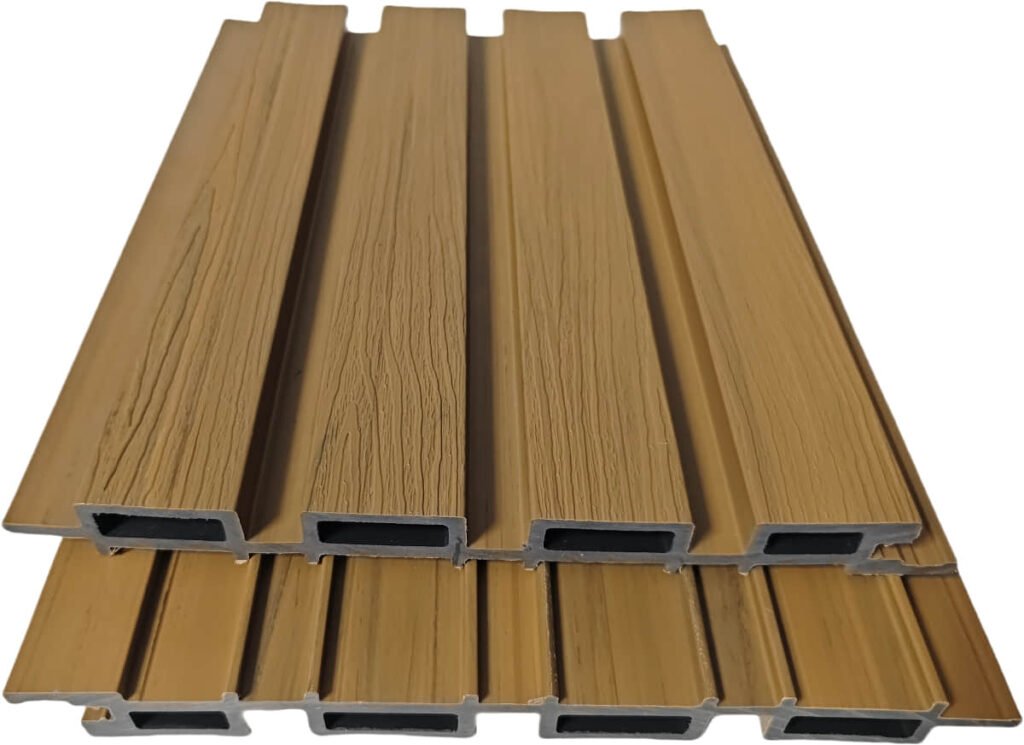
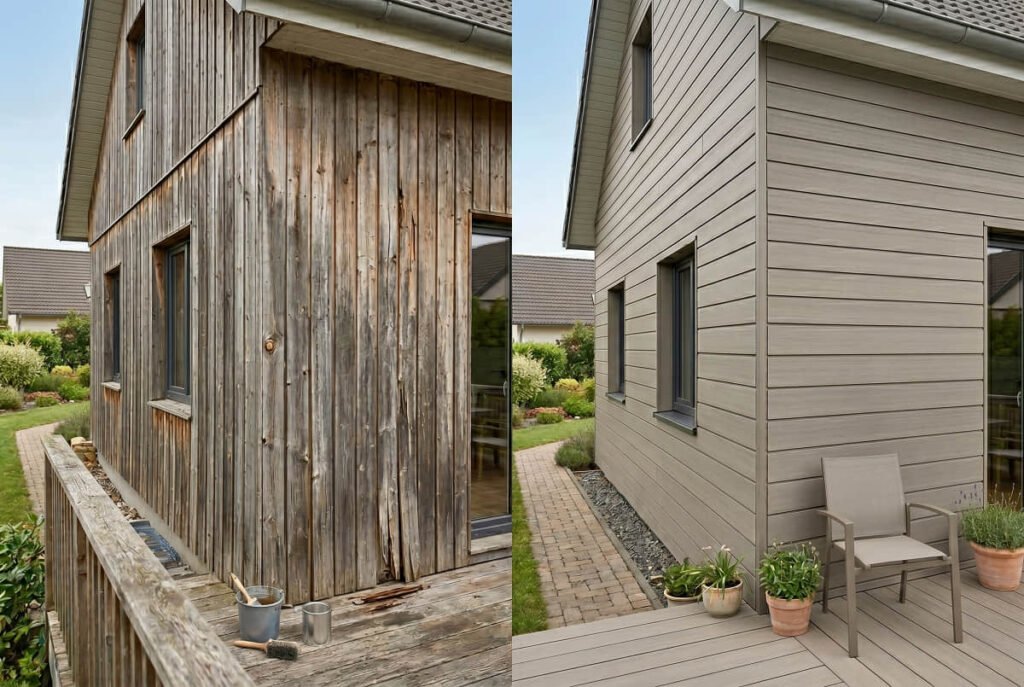
Traditional timber cladding cracks, bleaches, and warps. It needs sanding and restaining every few years to stay in shape. That cycle of upkeep drove demand for a better option. Composite cladding was the answer.
What Is Composite Cladding Made From?
Three materials work together in a quality composite board:
- Wood fibres — give the board its natural grain, warmth, and structural body
- HDPE core — provides moisture resistance, pest resistance, and dimensional stability
- Co-extruded cap layer — wraps the outside of the board to block UV and weather
The cap layer is what separates quality composite from cheaper alternatives. A thicker cap means better UV protection and colour retention over time. Our boards carry a 0.8 mm cap — thicker than many comparable products — with an HDPE density of 0.95 g/cm³.
These specs vary widely across the market. Always ask a supplier for their cap layer thickness before you buy.
The Main Benefits of Composite Cladding
No building material is perfect. But for most Australian projects, composite genuinely outperforms timber in the areas that matter most.
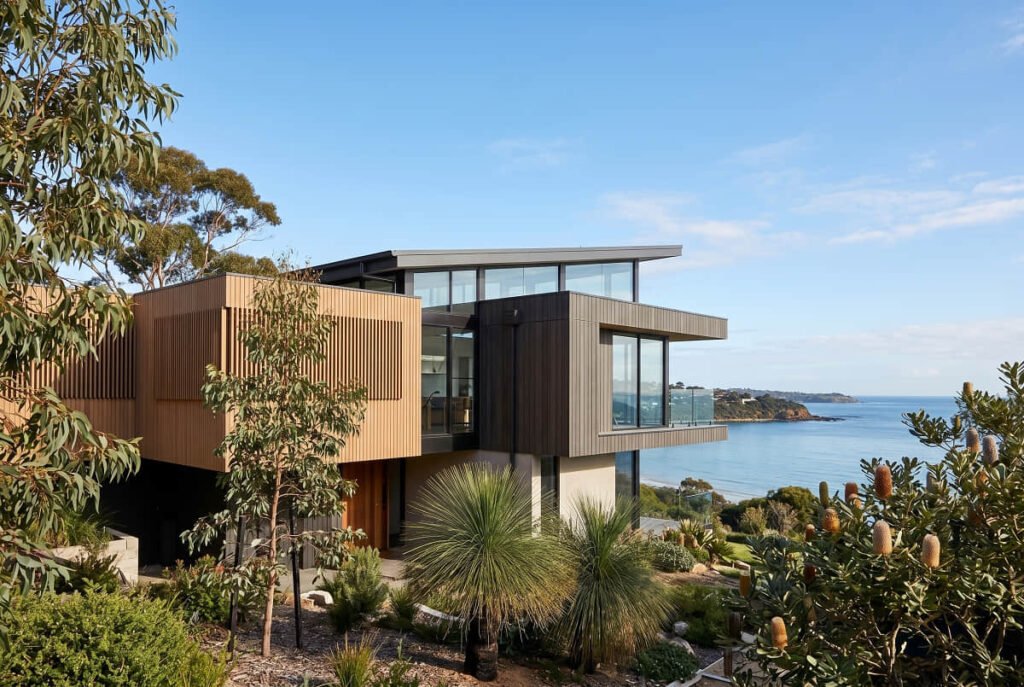
The key benefits:
- Handles Australian UV, coastal humidity, and temperature swings
- No painting, oiling, or restaining — ever
- Looks like natural timber and holds colour for years
- Suits both outdoor facades and interior wall applications
- Resists termites and moisture without chemical treatment
Built for Australian Weather
Australia has one of the world’s highest UV indexes. Most exterior materials — especially natural timber — show it within a few years.
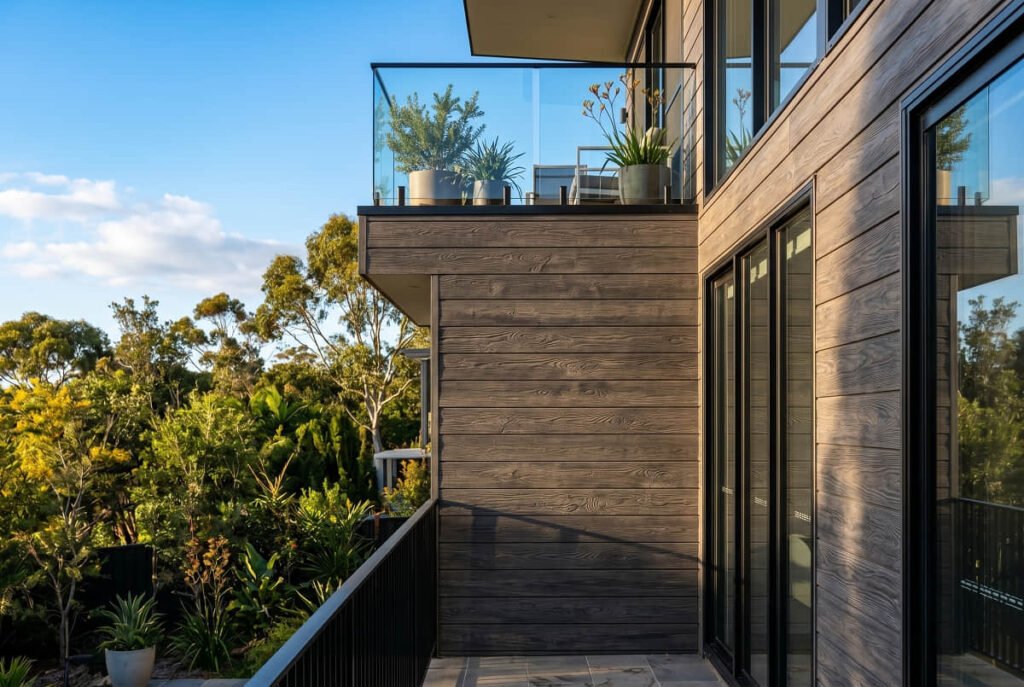
Composite cladding uses a combined HALS and UV absorber system to fight colour fade. In 3,000-hour QUV accelerated aging tests, colour shift stays within ΔE ≤ 4–5. In plain terms, after the equivalent of years of direct sun, the boards still look nearly the same.
Beyond UV, composite handles heavy rain, salt air, and temperature changes without warping or swelling. The HDPE core doesn’t soak up water — moisture absorption is just 0.2%.
For coastal and high-UV projects across Queensland, WA, and the NT, weather resistance is the main reason builders choose composite over wood.
Low Maintenance — What It Means Day-to-Day
“Low maintenance” is a claim every cladding supplier makes. Here’s what it actually looks like in practice.
Timber cladding needs sanding and restaining roughly every 2–3 years to stay in good shape. On a commercial building facade, that’s a real cost — labour, materials, and access equipment, repeated across hundreds of square metres.
Composite needs none of that. No painting. No oiling. No sanding. A simple wash with water keeps the boards clean. That’s the full maintenance cycle.
For building managers running upkeep across multiple properties, this isn’t just convenience. It’s a measurable saving per m², every year.
The Look of Timber Without the Upkeep
Composite cladding replicates the grain and warmth of natural wood. But it holds its colour where timber fades, bleaches, and checks.
Our cladding range shares the same colour palette and surface textures as our composite decking. That means a consistent look across the facade and outdoor deck in one project — no separate colour matching, no mismatched finishes. Specifiers ask about this often, and it’s a practical advantage worth knowing.
See the product pages for full colour and texture options →
The Drawbacks — What to Know First
Composite cladding has two real drawbacks. Both are worth knowing before you specify.
Higher upfront cost. Composite costs more per m² than timber at purchase. That gap closes over time — once you remove the repainting and restaining cycle — but the initial outlay is higher. For tight-budget projects, this matters.
Heat absorption in full sun. Dark-coloured boards get warm in direct sunlight. It’s not unique to composite, but it’s worth factoring into colour choice for north-facing facades. Higher-quality products — thicker cap layers, better UV stabilisers — tend to handle heat better over the long term.
Neither drawback makes composite the wrong choice for most projects. But you should weigh both before you commit.
Composite Cladding vs Timber — Side by Side
| Feature | Composite Cladding | Natural Timber |
|---|---|---|
| Upfront cost | Higher | Lower |
| Maintenance | Wash only | Sand & restain every 2–3 years |
| Lifespan | 15–20+ years | 10–15 years (if maintained) |
| Termite resistance | Yes — no treatment needed | No — requires ongoing treatment |
| Weather resistance | Excellent | Moderate |
| Colour stability | Holds colour for years | Fades and bleaches |
| Installation | Clip system, no surface screws | Nail or screw fixed |
| Indoor/outdoor use | Both | Typically outdoor only |
| Environmental impact | 60% recycled content | Virgin timber |
Timber still has real advantages: lower cost upfront and a natural look that some buyers genuinely prefer. For smaller jobs with short ownership periods, it may still win on budget.
But for commercial projects and large residential builds, the numbers shift. Maintenance costs multiply across hundreds of square metres — and the total cost of ownership usually favours composite.
Fibre cement is another common comparison. It’s durable and low-maintenance, but heavier to handle, harder to cut on-site, and less flexible on colour and texture. For projects where aesthetics matter, composite tends to be the trade preference.
Where Can You Use Composite Cladding?
Composite cladding works across a wide range of project types — more than most buyers expect.
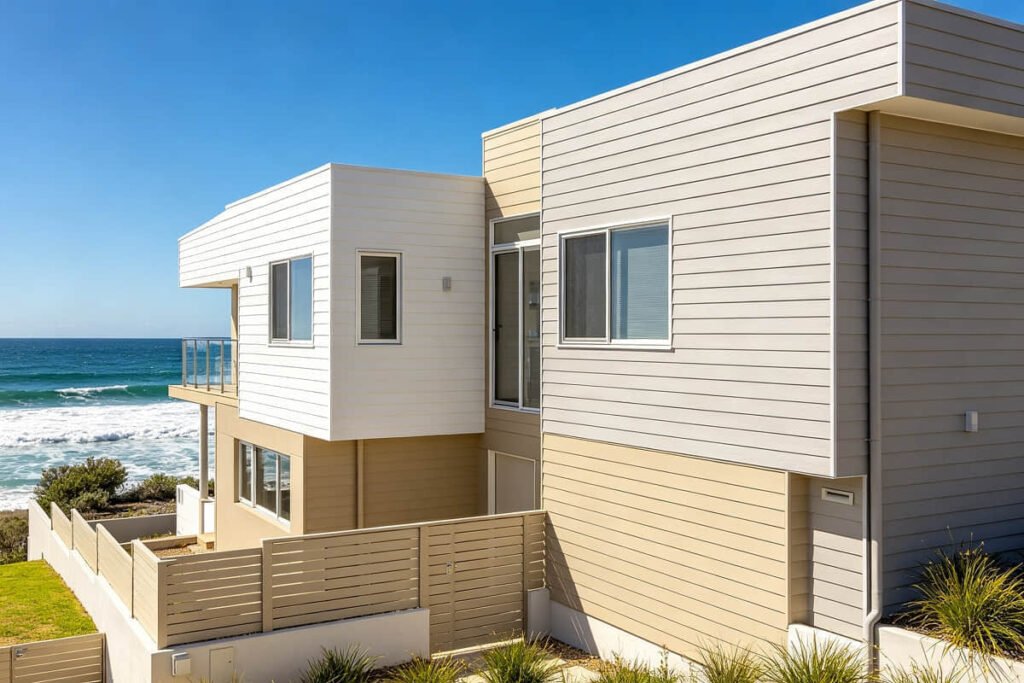
External building facades — residential homes and commercial buildings alike. The boards hold up in full sun and direct rain.
Exterior wall cladding — Our composite boards offer exceptional weather resistance and durability. They suit exterior applications without concerns about UV degradation or moisture damage.
Feature walls — The range of textures and colours gives design teams real flexibility in modern architecture and renovation projects.
Ceiling panels — the lightweight design makes composite practical for overhead use. The Oakling Cladding (140 × 12 mm) is our lightest board, well-suited to ceiling and wall applications.
Larger facade projects — our DecoGroove boards (219 × 20 mm and 219 × 26 mm) suit projects where a wider profile works better.
How Is Composite Cladding Installed?
You don’t need specialist skills to install composite cladding. Two people can handle most residential and mid-scale commercial jobs.
The process:
- Fix the subframe — steel battens at 300–400 mm centres, vertical or horizontal depending on the board direction
- Start from the base — fix the first board at the bottom of the wall
- Clip and lock — the male-female interlocking system connects each board to the last; no surface screws needed
- Work up the wall — boards clip in row by row, keeping the face clean and consistent
- Trim the edges — finish the perimeter with trim strips to seal the installation
No screws break through the face of the boards. The wall stays clean-lined throughout, which matters on facade-forward projects.
Is Composite Cladding Worth the Cost?
Composite costs more upfront than timber. That’s the straight answer. But the cost question doesn’t end at the purchase price.
Timber cladding on a commercial building typically needs repainting or restaining every 2–3 years. Over a 15-year window, that maintenance cycle adds high cost — and that’s before pest treatment, board replacement, or access scaffolding on taller buildings.
Composite removes that whole cost category. No staining. No painting. No termite treatment.
For large-scale projects — apartment facades, commercial fit-outs, multi-site residential developments — the saving per m² per year is a genuine number. The longer the building is held, the stronger the composite case.
We supply factory-direct. That cuts out the importer and reseller margins that push composite prices higher through traditional supply chains. It’s how we keep pricing competitive without cutting corners on quality.
Request a quote for your next project →
Frequently Asked Questions
How long does composite cladding last?
LastElegance composite cladding carries a 15-year warranty — that’s the floor, not the ceiling. High-quality composite, properly installed and cared for, commonly lasts 25 years or more. Lifespan varies by product quality, installation standard, and local conditions.
What is WPC cladding?
WPC stands for Wood Plastic Composite — it’s the same material as composite cladding. The two terms are interchangeable. WPC is the technical label; composite cladding is the more common term used in the Australian trade market.
Which is better — PVC or composite cladding?
Composite looks closer to real timber and tends to be more rigid — better for facades where appearance matters. PVC is fully waterproof and lighter, but it can look more plastic in finish. For most exterior wall cladding projects, composite is the trade preference.
Is composite cladding eco-friendly?
Quality composite uses recycled wood fibres and recycled HDPE — reducing demand for virgin timber and virgin plastic. Our boards are 60% recycled content by composition. It’s not a zero-impact material, but it’s a better environmental trade-off than virgin timber for most buyers.
Is cladding a fire risk?
Cladding materials vary widely in fire performance. Our composite cladding carries an ASTM E84 fire rating — Flame Spread Index of 85. For bushfire-prone areas, check your BAL rating requirement under the NCC before specifying. Not all composite products suit all BAL zones, so confirm with your supplier first.
Is rendering cheaper than cladding?
Rendering is generally cheaper upfront for large, flat surfaces — but it cracks over time and needs periodic repair. Composite cladding costs more initially, but carries lower lifetime upkeep. The right choice depends on your project’s budget, the look you’re after, and how long the building will be held.