

Timber cladding has a proven track record and a look that sells. But for many Australian projects, the real question isn’t which one looks better — it’s which one costs less over the life of the build.
Composite cladding blends wood fibres with recycled HDPE, protected by a co-extruded cap layer that shields the board from UV, moisture, and wear. New to composite cladding? Our what is composite cladding guide covers the basics before you dig into the comparison.
This article covers what matters most to trade buyers: lifespan, maintenance, cost, fire safety, and how each material handles Australian conditions.
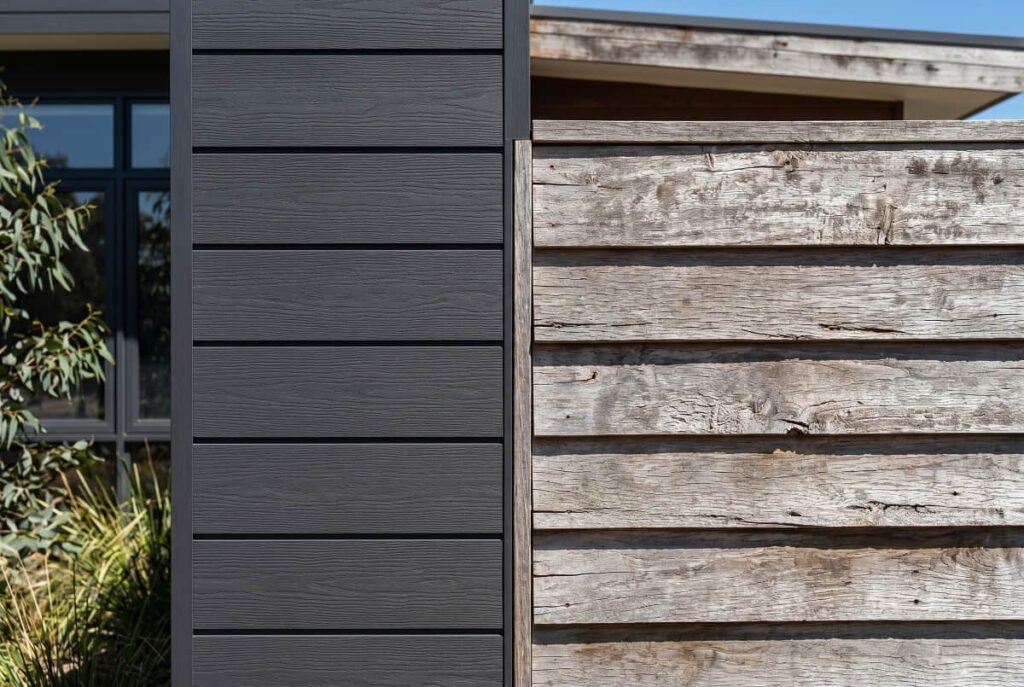
Composite vs Timber at a Glance
The table below covers the main decision factors for both cladding materials. Timber data varies by species — that’s flagged where it applies.
| Factor | Composite Cladding | Timber Cladding |
|---|---|---|
| Lifespan | 15+ years (warranted) | 10–15 years (varies by species and upkeep) |
| Moisture absorption | 0.2% (ASTM D1037) | High — varies by species; untreated pine absorbs readily |
| Fire rating | ASTM E84: FSI 85, SDI 300 | Untreated timber has no inherent fire resistance class |
| Maintenance | Low — clean only, no recoating | High — paint or oil every 2–5 years; retreat cut edges |
| Upfront cost | Higher than treated pine | Lower for pine; hardwood costs vary |
| Install ease | Clip system, no surface screws | Requires sealing, cut-edge treatment, post-install coating |
Composite has the edge on upkeep and long-term consistency. Timber holds an advantage in purchase price and natural aesthetics. Those two gaps are what this comparison comes down to.
Which One Lasts Longer?
Composite cladding typically lasts 15 years or more under normal conditions. That’s the warranty baseline — real-world performance often exceeds it. The boards are moisture-resistant, termite-resistant, and UV-stabilised with a combined HALS and UV absorber system. After 3,000 hours of QUV accelerated aging, colour shift is controlled to ΔE ≤ 4–5. For Australian UV levels, that’s a solid result.
Timber lifespan depends heavily on species and upkeep. Hardwood timber species like spotted gum or merbau can last 25 years or more with regular care. Western red cedar performs well when oiled consistently. Treated pine — the budget option — is more vulnerable. It breaks down faster when coatings lapse or moisture gets in.
The key difference is the driver of failure. Traditional timber fails through UV breakdown, rot, moisture cycling, and insect attack. Composite addresses each of those points directly. It doesn’t rot. It doesn’t attract termites. The 0.8mm co-extruded cap layer holds colour and surface texture in place — without annual treatment.
For commercial facades or large residential projects, that lifespan gap matters.
How Do Maintenance Needs Compare?
Timber needs painting or oiling every 2–5 years. Miss a cycle, and the coating fails. After that, moisture gets in — and repairs follow.
Composite needs none of that. Regular maintenance means a wash with warm soapy water — nothing more. No painting, no resealing, no annual treatment. That’s minimal maintenance compared to any traditional timber cladding.
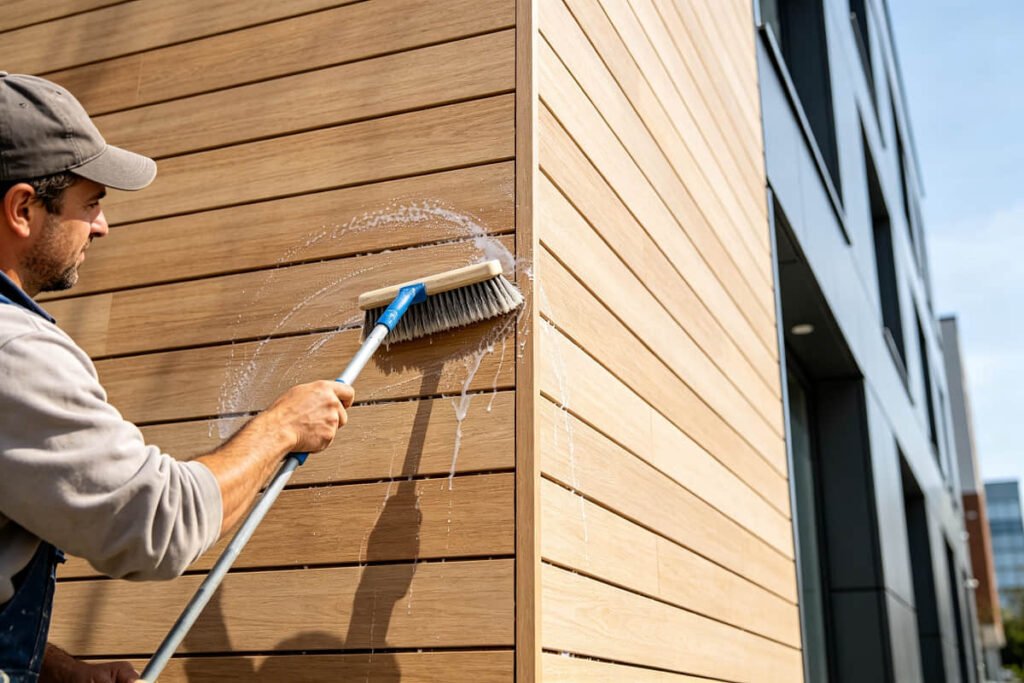
For commercial facades or multi-dwelling buildings, this difference compounds quickly. Upkeep on hundreds of square metres of wall cladding adds up — labour, materials, and access equipment. Composite removes that cost entirely for at least 15 years.
How to maintain composite cladding:
- Wash with warm water and mild detergent
- Use a soft brush on shaded areas prone to mould or surface marks
- Rinse thoroughly and allow to dry
- No sealing, painting, or chemical treatment needed
One honest note: composite can show surface marks in areas with poor airflow or persistent shade. It’s worth flagging to clients spec’ing north-facing walls in dense urban builds. Regular cleaning handles it — but it’s not zero effort.
What Does Each Option Cost?
Timber is cheaper to buy. That’s the honest answer. But the purchase price is only part of the number that matters.
For procurement-level buyers, the full cost picture includes recoating cycles, repairs, pest treatment in termite-prone areas, and the labour that comes with each. Spread over 10 years, those maintenance costs can flip the comparison.
Factory-direct supply narrows the upfront gap. LastElegance ships composite cladding direct from our factory to Australian trade partners — no importers, no resellers. That keeps landed costs more competitive than the upfront price difference suggests.
Want a factory-direct price for your next project? Request a Quote →
Upfront Cost vs Long-Term Value
| Cost Item | Composite Cladding | Timber Cladding |
|---|---|---|
| Purchase price | Higher (especially vs treated pine) | Lower |
| Install cost | Comparable — clip system speeds up labour | Comparable — more site prep required |
| Year 2–5 upkeep | Near zero — clean only | Repaint or reoil: labour + materials |
| Year 6–10 upkeep | Near zero | Repeat cycle; possible repairs |
| Pest treatment | Not required | Required in high-risk zones |
| 10-year total | Lower in most scenarios | Higher — upkeep costs compound |
One caveat worth making: not all composite options deliver on that long-term promise. Cheap, non-capped composite performs poorly over time — the surface degrades without a proper cap layer. Always check cap layer thickness before spec’ing. Our boards carry a 0.8mm co-extruded cap — thicker than many comparable products on the market.
How Each Handles Australian Weather
Australia is hard on external cladding. High UV, coastal salt air, tropical humidity in the north, wide temperature swings almost everywhere — materials take a real beating here.
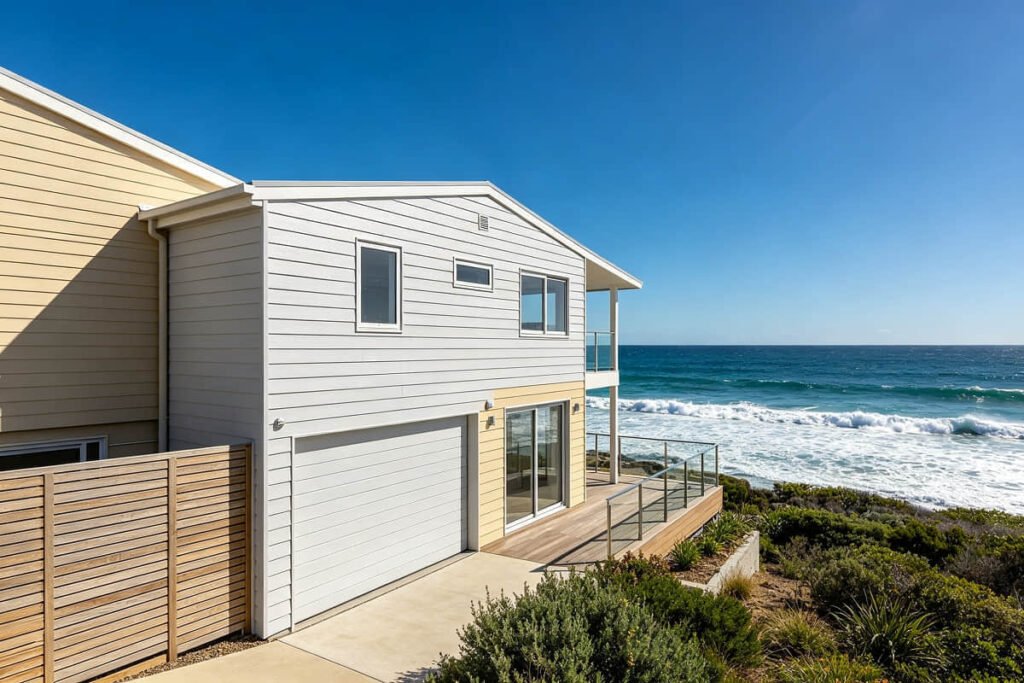
Timber handles this through regular treatment. Without it, UV rays bleach the surface, moisture gets into splits, and thermal cycling widens any gaps. In high-humidity climates, warping is a real risk. In coastal zones, salt air strips paint and penetrant finishes off exposed timber faster than most clients expect.
Composite holds up better across these conditions. Moisture absorption is 0.2% — it doesn’t soak up water, which means no swelling, no rot, and no splits from moisture cycling. The cap layer keeps colour stable without retreatment, delivering consistent weather resistance year-round.
How composite performs across Australian climate zones:
| Climate Zone | Composite Performance | Timber Risk |
|---|---|---|
| Coastal / salt air | Strong — no paint failure, no surface stripping | Salt air degrades coatings fast; frequent repainting is needed |
| Tropical/high humidity | Strong — 0.2% moisture absorption; no swelling or rot | Swelling, mould, and fibre softening without treatment |
| Inland / high UV | Strong — UV-stabilised cap holds colour; no retreatment needed | UV bleaching and surface cracking without regular coating |
| Bushfire zones (BAL-rated) | Documented ASTM E84 fire test data available for certifiers | Species-dependent; some need additional treatment to meet BAL requirements |
For coastal builds, composite is one of the strongest specifications you can make. No salt-air degradation. No paint failure. No moisture is working under the coating.
Fire Safety: Which Option Is Safer?
Fire rating is a fixed spec on many Australian projects — particularly in BAL-rated bushfire zones and multi-storey buildings under the NCC.
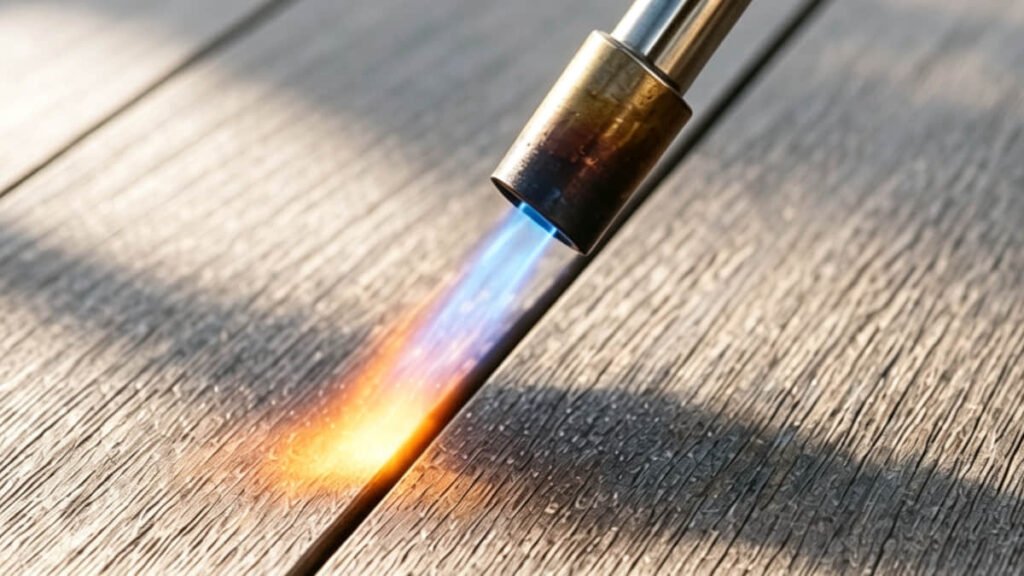
Our composite cladding is tested to ASTM E84. Results: Flame Spread Index (FSI): 85 and Smoke Developed Index (SDI): 300. FSI measures how fast a flame travels across a surface — lower is safer. SDI measures smoke output. Both figures are documented and available for your certifier.
Untreated timber has no inherent fire resistance class. Some treated timber products improve that rating through the use of flame retardants, but treatment adds cost and has its own service life.
Composite is not non-combustible — no polymer-based product is. But it’s tested and rated. That matters when you’re spec’ing for a BAL zone or a project where the building certifier needs documented performance data.
Always confirm the specific fire safety requirements for your project zone with your local authority before spec’ing any cladding material. The NCC sets the framework — your certifier applies it to your site.
Does Composite Look Like Real Timber?
Modern composite boards replicate natural wood grain closely. Surface textures are pressed into the cap layer during production — the finish is built in, not applied on top, where it could wear away.
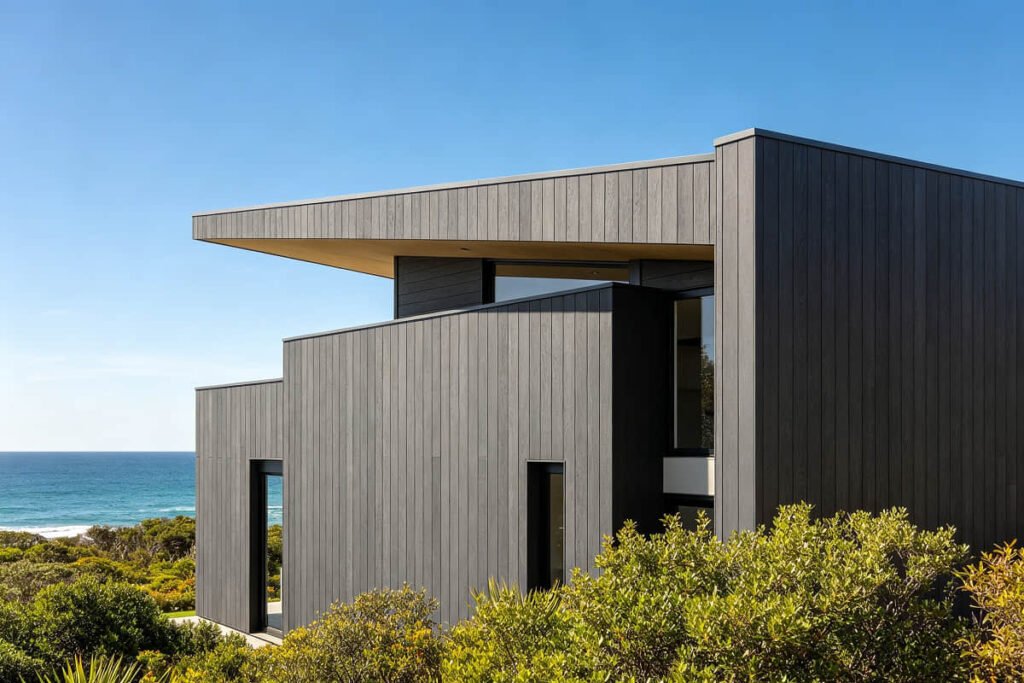
The honest gap: real timber has a natural beauty that’s hard to match. Unique grain patterns, character marks, and a patina that develops over time — that’s what you get with a natural material, and composite can’t fully replicate it. But composite offers something timber can’t — uniform appearance and consistent colour across a large facade. For commercial projects and multi-dwelling facades, that consistency is often the preferred spec, not the compromise.
Our Oakling Cladding (140×12mm) delivers a slim, timber-look profile with natural grain texture — well suited to residential and hospitality projects. The DecoGroove Cladding (219×26mm and 219×20mm) suits contemporary facades where a wider, more architectural panel fits the brief. Both carry the same co-extruded cap, which locks in colour and texture for the long term.
Want to see how they look in person? A physical sample closes a gap no photo can.
What Colour and Profile Options Are Available?
Composite cladding shares the same colour palette and surface textures as our decking range. That means colours stay consistent across a project if you’re running composite on both the facade and the deck.
Profiles currently include:
- Oakling Cladding — 140×12mm, slim timber-look board
- DecoGroove Cladding — 219×20mm and 219×26mm, wider contemporary panel
Custom colours are available for large-volume and OEM orders. Visit the product pages for the full range to share with your client or design team.
How Easy Is It to Install?
For contractors, install time is a direct labour cost. Composite cladding uses a male-female interlocking clip system — boards clip into place with no surface screws, no exposed fixings, and a clean finish straight off the install.
How to install composite cladding:
- Fix steel battens to the wall structure at 300–400mm centres
- Clip boards into the interlocking system from bottom to top
- No painting, sealing, or cut-edge treatment is needed after fixing
- Trim and finish as required
Timber needs cut-edge sealing on site, careful handling to prevent moisture uptake before installation, and often a top coat after fixing. Each of those steps adds time — and time is your margin.
Composite boards also come lighter. Oakling Cladding weighs 1.77 kg per lineal metre. On multi-storey or large-area projects, lighter boards mean faster handling and fewer hands on site.
One installation note: like all cladding materials, composite boards expand slightly with heat. Allow for thermal movement at board ends — the installation guide covers exact tolerances. The clip system is designed to handle this. It’s standard practice and doesn’t add complexity to the job.
Installation guides are available. Ask when you request your quote.
What Contractors Should Know Before Quoting
A few things worth noting before you price a composite cladding job:
- Subframe: Steel battens are preferred. Space them at 300–400mm centres.
- No post-install treatment: Boards arrive ready to fix. No painting or sealing needed on site.
- No cut-edge treatment: Cut ends don’t need sealing — one less step.
- Ventilation: Allow adequate airflow behind the boards. Standard best practice for all cladding types, and it supports long-term performance.
What Are the Downsides of Composite Cladding?
Disadvantages of composite cladding:
- Higher upfront cost than treated pine. For budget-driven projects, that gap is real.
- Can’t be re-stained after installation. Once you’ve chosen a colour, you’re locked in. Composite can’t be re-stained the way timber can.
- Surface warmth in direct sun. On very hot days, darker boards can feel warm to the touch. This rarely affects vertical facades but is worth flagging for horizontal applications.
- No natural patina. Aged timber develops a silver-grey character that some designers specify deliberately. Composite doesn’t do that.
- Localised repair is harder. If a single board is damaged, you’ll need a replacement in the matching colour and batch. Timber can be patched or re-stained more flexibly. For large commercial facades, it’s worth ordering a small buffer stock at install time.
- Product quality varies widely. Non-capped or thin-capped composite performs poorly over time. Always ask about the cap layer thickness. Ours is 0.8mm — thicker than many products at a similar price point.
These are real trade-offs. For the right project, none of them outweighs the long-term benefits. But buyers should know them going in.
Which Is Better for the Environment?
Both materials have a genuine sustainability case — it’s worth being straight about that.
Composite uses 60% recycled HDPE and wood fibres. That diverts plastic from landfill and reduces demand for virgin timber. Our boards carry CE, RoHS, and SGS certifications. They’re built to last decades without chemical treatments — and that lower upkeep load reduces total environmental impact over the product’s life.
Timber’s case is strongest where it’s FSC-certified and responsibly sourced. It’s a renewable natural material — carbon-storing, and easier to dispose of at the end of life. Those are genuine advantages.
The honest weakness of composite is the end of life. Polymer-based products are harder to recycle than timber. That’s a real factor — and part of the environmental case for buying quality composite that lasts. A product that runs 20+ years without replacement beats a cheap product replaced twice, every time.
For procurement buyers assessing sustainability credentials, the 60% recycled content and chemical-free maintenance profile are the strongest talking points.
Which Should You Choose?
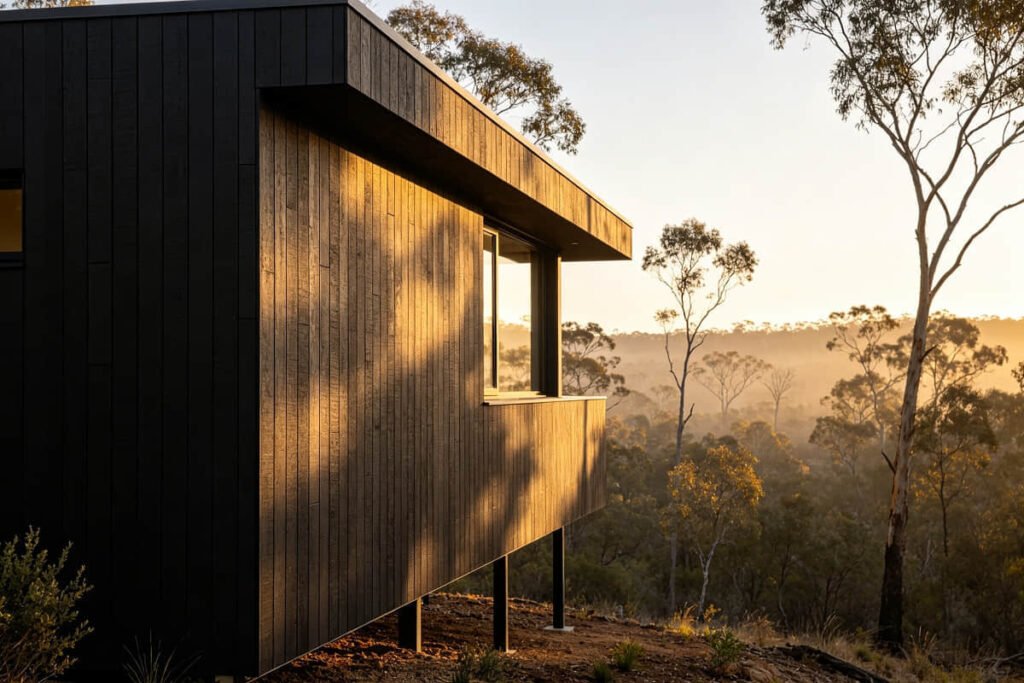
Composite cladding is typically the stronger spec for:
- Commercial and multi-dwelling facades where ongoing maintenance is a client liability
- Coastal, tropical, and high-UV projects where weather resistance is the primary concern
- Large-area facades where uniform appearance and consistent colour across the building is part of the brief
- BAL-rated zones where documented fire performance data is required by the certifier
- Any project where you’re weighing the full 10-year cost, not just the purchase price
Timber is the right call for:
- Heritage or character-driven projects where natural patina is part of the design intent
- Projects where initial spend is the primary constraint and the client commits to regular maintenance
- Briefs where FSC-certified timber fits the sustainability spec
Neither cladding material is right for every project. For most Australian commercial and coastal builds, composite is the stronger long-term specification. Timber stays on the list for the right brief.
If you’re deciding on a specific project, our team can help you work through the specs, fire ratings, and cost comparisons with your site in mind.
FAQ
Is composite cladding better than timber cladding?
It depends on the project. Composite wins on durability, low maintenance, and weather resistance — especially in coastal and high-UV locations. Timber has the edge on price and natural aesthetics for the right brief. Neither is universally better.
Does composite cladding need to be painted?
No. Composite arrives pre-finished and needs no painting, oiling, or sealing. Routine cleaning with warm soapy water is all it takes.
How long does composite cladding last in Australia?
Quality composite is warranted for 15 years, and real-world performance often exceeds that. But proper installation matters just as much. Both determine how long the boards actually last on site.
Are there building code requirements for cladding in Australia?
Yes. The NCC sets requirements for exterior cladding, including fire performance in BAL-rated bushfire zones. Always confirm the specific fire rating required for your project zone with your local authority before spec’ing.
Which cladding adds more value to a property?
Composite is increasingly specified on premium residential and commercial buildings for its durability and low upkeep profile. For heritage or character-driven builds, natural timber may carry more aesthetic appeal — it depends on the buyer profile and project brief.
Is composite cladding good for coastal areas?
Yes — it’s one of the strongest use cases. It doesn’t soak up water, won’t rot, and holds its colour under high UV without the salt-air degradation that strips paint and finishes from timber.
Can you mix timber and composite cladding on the same build?
Yes — many architects do. A common approach is composite for the main facade and timber for feature or accent sections, where natural character is the goal. Confirm that colour tones and profiles are compatible before spec’ing.