

Spotted gum or merbau — the two most compared decking timbers in Australia- and the question comes up on almost every residential quote. They differ in hardness, cost, install speed, and sourcing. Those gaps change how you price a job and what you tell the client about upkeep.
This comparison covers the real numbers: durability ratings, 10-year cost breakdowns, and on-site install differences. We also look at composite decking as a third option — because for some project briefs, it changes the maths on lifetime cost and maintenance.
What’s the Difference Between Spotted Gum and Merbau?
These are Australia’s two most compared timber decking species, and for good reason. Both are durable hardwoods built for outdoor use. But they come from very different places and suit different project needs. Here’s what sets each one apart.
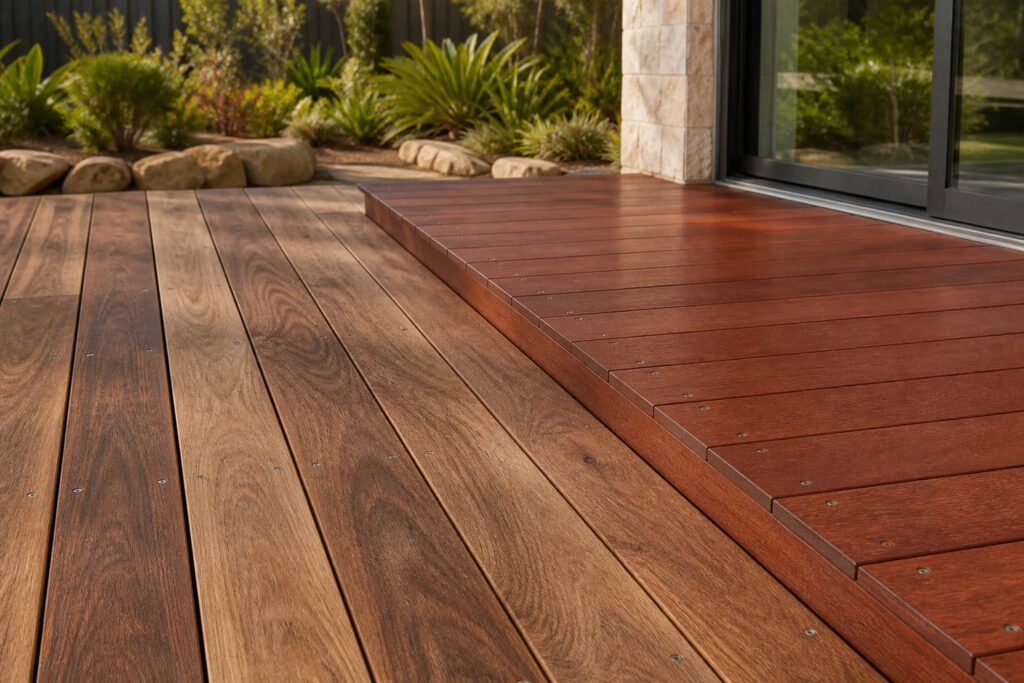
Spotted Gum: Australia’s Native Hardwood
Spotted gum decking is made from Corymbia maculata, a native Australian hardwood grown along the east coast from Victoria through NSW and into Queensland. It’s a popular choice for outdoor decking across eastern Australia — and one of the hardest boards you can specify.
The colour range runs from pale browns and light brown tones through to deeper shades of chocolate. Each board has a wavy, interlocked grain pattern that gives the deck a natural beauty no two boards share. That’s part of the appeal for designers and clients who want character.
Spotted gum timber has a density of around 950–1,010 kg/m³, making it one of the densest timber decking options on the market. Its natural oils help resist moisture and pests right out of the box.
Merbau: The Imported Hardwood
Merbau decking comes from Intsia bijuga, a tropical hardwood sourced from Southeast Asia — mainly Indonesia, Malaysia, and PNG. It’s been the go-to decking timber for many Australian builders for decades, and it’s still one of the most widely specified hardwoods in the country.
Merbau timber has a rich reddish-brown colour and a more uniform grain than spotted gum. Its density sits around 830 kg/m³ — solid, but noticeably softer. It’s often the more affordable hardwood option, which keeps it a popular choice on budget-conscious projects.
One thing to flag early: merbau contains natural tannins that leach out when exposed to rain. Tannin leaching can stain concrete, pool coping, and other light surfaces. It’s worst in the first year and eases over time — but it’s a real issue you need to plan for on site.
How Long Does Spotted Gum Last Compared to Merbau?
Durability class rates how well a timber resists rot and decay without chemical treatment. It’s defined under AS 5604, and it’s the first spec a procurement manager should check.
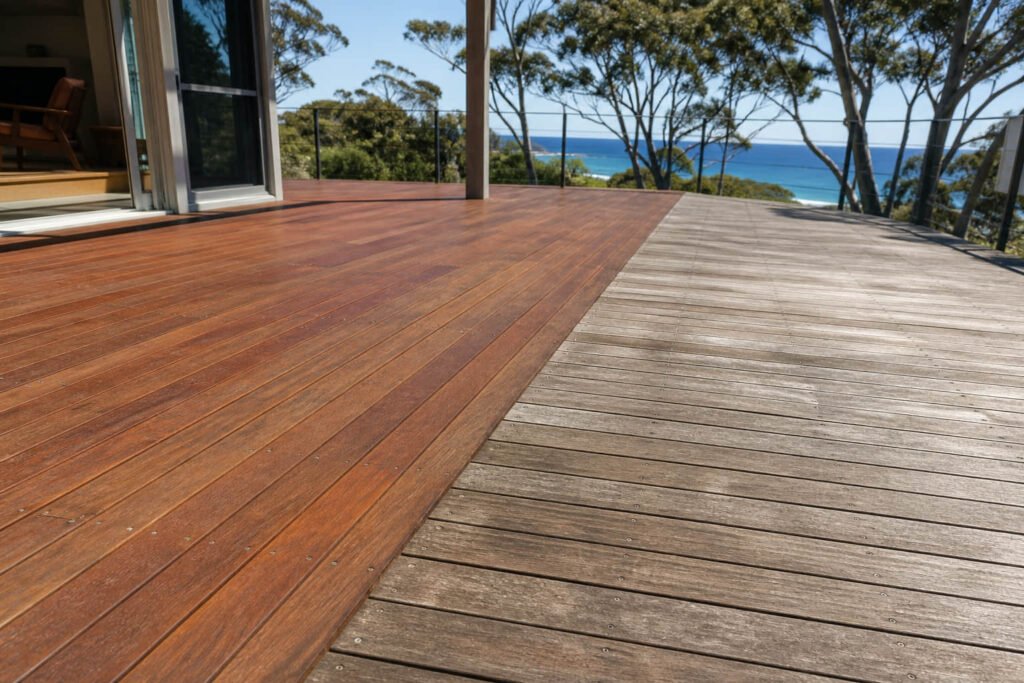
Spotted gum is rated Durability Class 1 — the highest rating. In above-ground use, you can expect a lifespan of 40+ years. Its high density gives it natural resistance to termites too — something we see holding up across coastal Queensland and northern NSW projects where softer timbers break down in termite-prone areas.
Merbau typically sits at Class 1–2, with an expected life of 20–25 years above ground. It’s still one of the more durable hardwoods available. Its natural oil content gives it good dimensional stability, so it’s less likely to warp or cup than some other species. That’s a real plus in areas with big seasonal swings.
Both timbers meet BAL-29 for bushfire compliance — so either works in bushfire-prone areas.
For heavy foot traffic zones like commercial walkways or pool surrounds, spotted gum’s density gives it better structural integrity and dent resistance. But both are strong enough for standard home decks and will stand the test of time with proper care.
Spotted Gum vs Merbau: Colour, Grain, and Weathering
Timber choice drives the visual appeal of a deck — and this matters when you’re pitching to a client or matching a design brief.
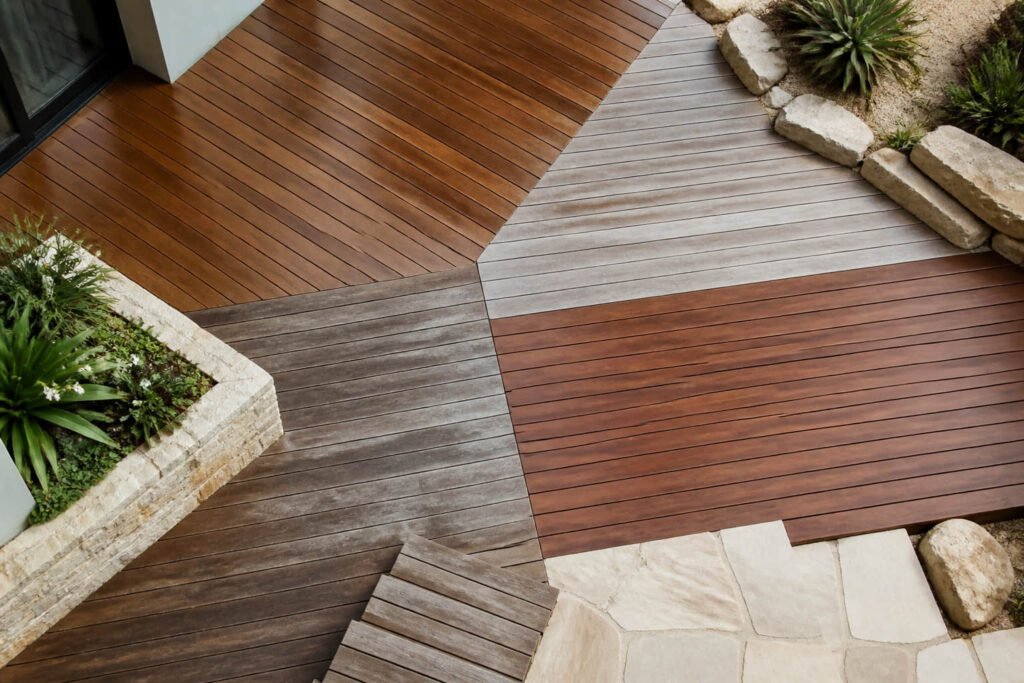
Spotted gum offers wide colour variation. Boards range from pale browns through to rich chocolate, with wavy grain patterns that create a natural look with real depth. Each board is different. That’s ideal for projects where aesthetic appeal and character are the brief.
Merbau gives you the opposite: a more consistent reddish-brown with a tighter grain pattern. If the design calls for a uniform, classic finish, merbau delivers. It also oils up well, which gives it a warm look straight after installation.
Here’s what happens over time. Left untreated, spotted gum silvers to a soft grey — and it does so evenly. Many builders and designers like that look. Merbau also greys, but tends to look patchy without regular oiling.
Worth noting for install planning: merbau’s tannin leaching stains nearby light-coloured surfaces — concrete paths, rendered walls, pool coping. If you’re installing next to pale finishes, plan for run-off protection in the first 6–12 months.
Maintenance: What Does Each Timber Need?
Both timbers need annual oiling and regular cleaning to hold their colour. That’s standard with hardwood timber decking.
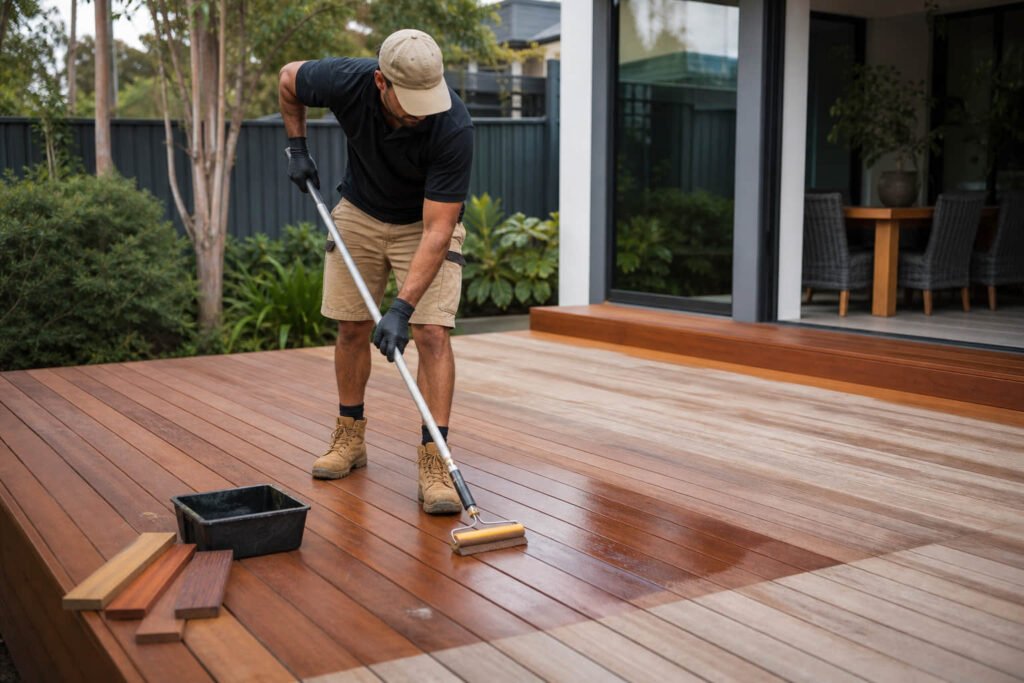
The typical routine: wash the surface, sand any rough spots or surface checking, then apply one to two coats of quality decking oil. Budget a weekend each year.
Spotted gum holds its colour better between oil cycles. You can push it to 18 months in sheltered spots, and it still looks sharp. The dense grain resists surface checking better than most species.
Merbau needs closer attention — especially in the first year, when you’ll likely oil twice. After that, annual oiling keeps the colour rich. Skip a year, and it fades fast.
The real maintenance requirements add up over time. Oil, tools, and a day’s labour each year may not feel like much — but over a 20–30 year lifespan, that’s a cost worth factoring into every quote. The table below puts a number on it.
How Much Does Spotted Gum and Merbau Decking Cost?
The upfront price difference between spotted gum and merbau is real. But the full picture only comes into focus when you add years of oiling and the expected lifespan of each timber.
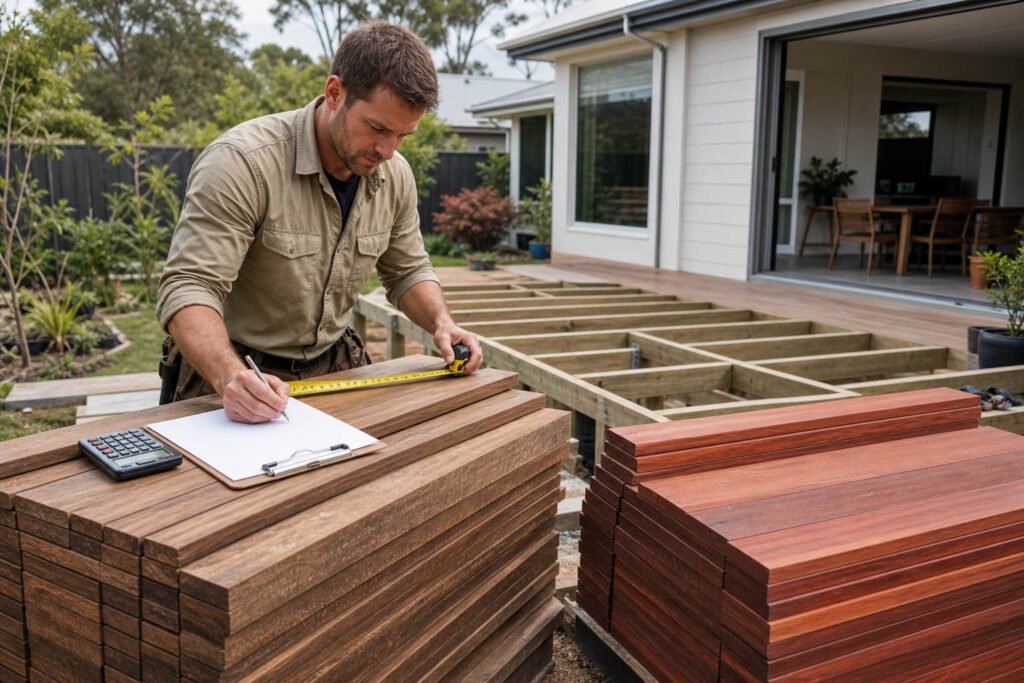
Based on 2026 Australian market data sources and industry cost guides:
| Cost Item (25 m² deck) | Merbau | Spotted Gum |
|---|---|---|
| Supply only (per m²) | $100–$160 | $120–$180 |
| Installed (per m²) | $280–$400 | $320–$450 |
| Installed total | $7,000–$10,000 | $8,000–$11,250 |
| Annual upkeep (oil + labour) | ~$300–$400 | ~$250–$350 |
| 10-year upkeep total | ~$3,000–$4,000 | ~$2,500–$3,500 |
| 10-year total cost | $10,000–$14,000 | $10,500–$14,750 |
| Expected lifespan | 20–25 years | 40+ years |
Over 10 years, the two options are close. Merbau saves you $500–$1,000 upfront, but its higher annual oiling cost starts to eat into that gap.
The real difference shows at year 20–25. Merbau hits end-of-life, and you’re looking at a rebuild — another $7,000–$10,000. Spotted gum still has 15–20 years of service left. Over a 30-year window, spotted gum can cost less overall. The numbers speak for themselves.
Is Spotted Gum Harder to Install Than Merbau?
For builders quoting jobs, install speed is a direct cost factor. These two timbers handle very differently on site.
Merbau is the easier timber to work. It’s softer, more forgiving with standard tooling, and doesn’t always demand pre-drilling. Most builders can cut and fix merbau at a steady pace with standard gear.
Spotted gum is a different story. With a Janka hardness of 11 kN, pre-drilling is essential for every fixing. It chews through saw blades faster, and installation takes longer per square metre. For builders pricing work, that adds roughly $20–$40/m² in extra labour compared to merbau.
Both timbers typically run at 450 mm joist spacing for standard home decks — though site conditions and board width can change that. Always check the supplier’s specs for proper installation guidance.
Is Merbau Sustainable? Sourcing Compared to Spotted Gum
Sourcing matters — especially on larger projects where specifiers and procurement managers need to justify material choices.
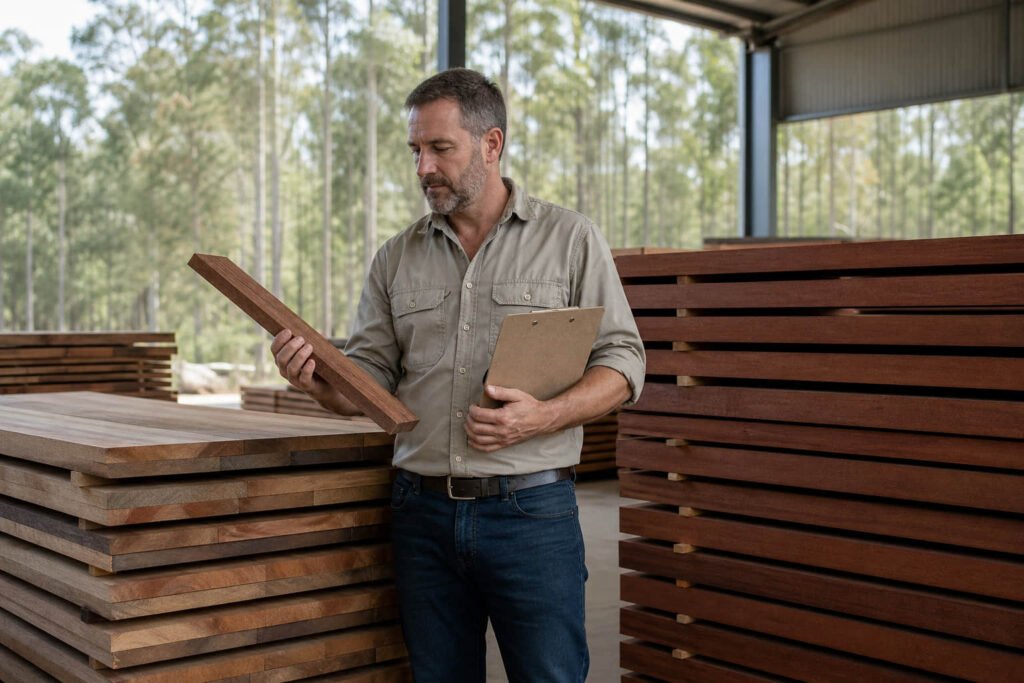
Spotted gum is Australian timber, grown along the east coast under strict state forestry rules. Supply chains are short, regulated, and traceable. It’s generally the more straightforward choice for outdoor applications on sustainability grounds.
Merbau is imported timber from tropical forests in Southeast Asia. There are real concerns about illegal logging in some supply chains. Not all merbau is equal — and the price gap between suppliers can tell you something about the sourcing.
If you’re specifying merbau, insist on FSC or PEFC certification. Certified merbau decking gives you a paper trail. Uncertified merbau is a risk — for the project, the client, and the environment. The certified merbau market is well-established, and reputable suppliers make it easy to verify.
How Does Composite Decking Compare to Spotted Gum and Merbau?
After weighing spotted gum against merbau, it’s worth looking at composite decking. More builders are now specifying it — not as a like-for-like timber replacement, but as a different value proposition for the right project.
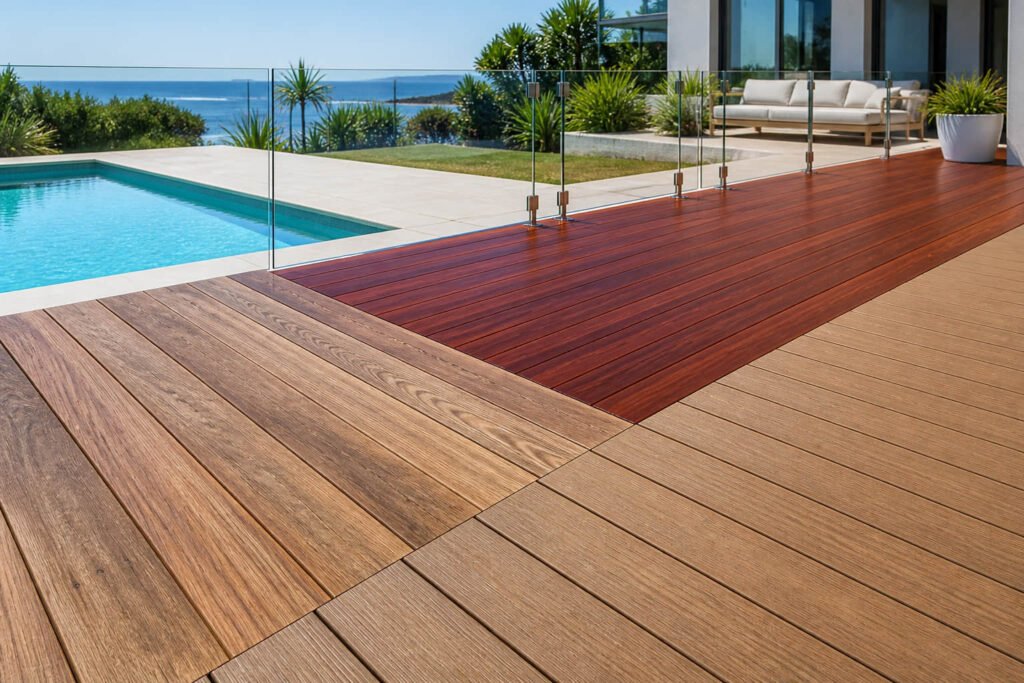
The core appeal is simple: no oiling, no tannin bleed, no termite risk, and consistent colour across every board. For poolside decks, coastal jobs, and high-traffic outdoor areas, those traits solve the biggest pain points both timbers share. Warranty periods are typically longer too — ranging from 15 to 30 years depending on the product line.
But composite isn’t timber, and it doesn’t pretend to be. The feel underfoot is different. The look is consistent rather than varied — which suits some design briefs and not others. And upfront material cost is higher than merbau, though it sits in a similar band to spotted gum once you factor in faster install times with hidden clip systems. We break down that cost comparison in detail in our composite decking vs merbau guide.
Where composite pulls ahead is lifetime cost. With zero annual oiling and no board replacement cycle, a composite deck can cost less over 20–25 years than either hardwood option. That’s the maths that’s shifting the market.
For reference, LastElegance composite decking is tested to R11 slip resistance (AS/NZS 4586), with a 0.8 mm co-extruded cap layer for UV protection and warranties from 15 years (Renew) to 30 years (TimberLuxe). Because we manufacture in-house and supply trade partners directly, we control quality and customisation without the retail markup. Request free samples to compare side by side.
Composite won’t suit every brief. If the client wants the grain and warmth of real hardwood, timber is still the right call. But for less maintenance and a lower lifetime cost in outdoor spaces, it’s a better choice for many projects. For a full breakdown, see our composite decking vs timber decking comparison.
Which Decking Suits Your Project?
There’s no single right choice — it depends on the project brief, the budget, and the client’s appetite for upkeep. Here’s a quick decision guide:
| Project Scenario | Recommended Choice |
|---|---|
| Home deck, budget allows, wants natural character | Spotted gum |
| Budget-first standard deck project | Merbau |
| Poolside, coastal, or high-traffic commercial | Composite decking |
| Bushfire-prone area (BAL-29) | All three are compliant |
| Minimal upkeep is the priority | Composite decking |
| Design brief calls for uniform, classic look | Merbau |
| Spec calls for hardest available timber | Spotted gum |
Each option has clear strengths. Spotted gum gives you the hardest, longest-lasting natural timber decking in Australia. Merbau gives you a proven hardwood at a lower price point. Composite gives you the lowest lifetime cost and the least upkeep.
If you’re weighing composite for your next decking project, our team can talk you through specs, pricing, and customisation. Contact our sales team.
FAQ
What are the disadvantages of spotted gum?
Higher upfront cost than merbau or treated pine. Its extreme hardness makes it slower to install — every fixing needs a pre-drilled hole, and it wears out saw blades faster. In hot, dry climates, it can also show surface checking.
What are the disadvantages of merbau?
Tannin leaching is the main issue — it stains light-coloured surfaces, especially in the first year. Merbau is also imported timber with sustainability concerns unless you source certified product. It needs consistent oiling to hold its colour.
How often should i oil or seal my spotted gum or merbau decking?
Oil both timbers at least once a year — twice in the first year for merbau. Spotted gum can stretch to 18 months between coats in sheltered spots. The best time to oil is early autumn, after summer UV and before winter rain.
Is spotted gum good for outdoor decking?
Yes — it’s one of the best natural timber options for Australian outdoor use. Its Class 1 durability rating, termite resistance, and 40+ year lifespan make it a strong spec for exposed decks. The trade-off is higher material cost and slower installation due to its hardness.
