

Mould that returns after each wet spell is rarely just a cleaning issue. In our experience, the cause often sits around the composite deck, not within the board.
Blocked gaps, planter runoff, shade, and poor airflow can keep surface debris damp for days. Unless you fix that moisture source, the same call-back will return.
The cleaning method still matters. An unsuitable deck cleaner or aggressive brush can mark the cap layer long before it removes the stain.
What Is the Safest Cleaning Method for Composite Boards?
Start with the manufacturer’s instructions for the exact board series. Capped, uncapped, and older composite boards may have different cleaning limits.
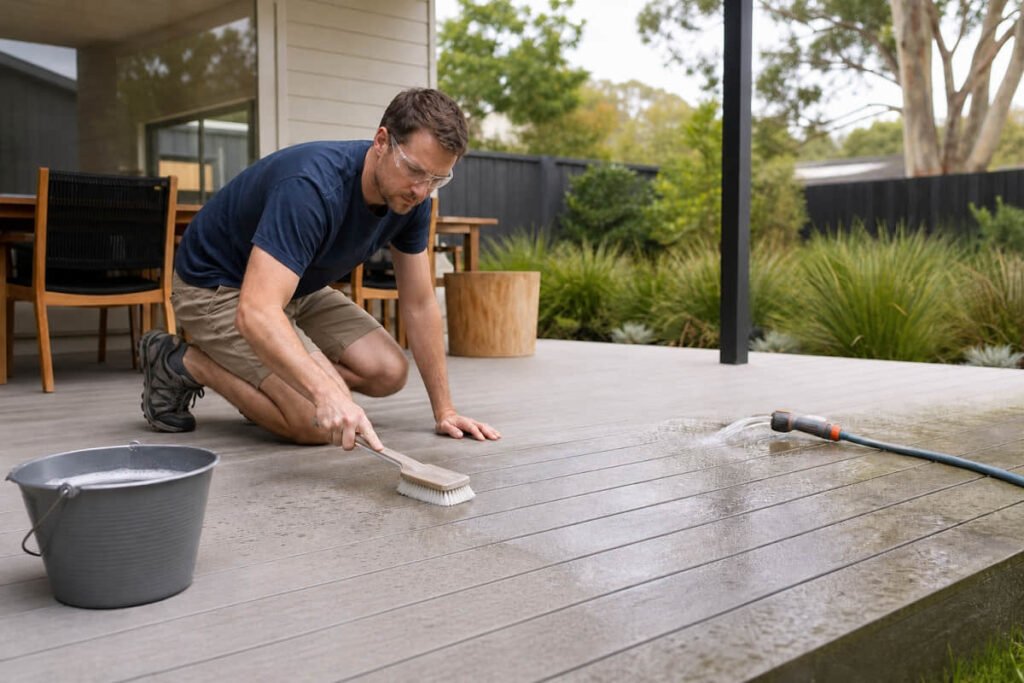
For most surface mould, use warm water, mild dish soap, and a soft bristle brush. Move to a stronger cleaner only when the manufacturer approves it.
For most jobs, this is the best way to clean composite decking:
- Confirm the board type and care requirements.
- Remove loose dirt and inspect nearby moisture sources.
- Test the cleaner on a hidden area.
- Clean and rinse the entire deck in small sections.
- Let the boards dry before checking the result.
Confirm the Board Before Choosing a Cleaner
Check the product series, purchase record, or installation file before work starts. If these details are missing, photograph the face, edge, fixings, and affected area.
A cleaner approved for one capped board may dull another finish. If you cannot identify the product, use a mild cleaning solution of warm water and mild soap. Ask the manufacturer or distributor before using stronger chemicals.
Inspect the Area Around the Mould
Remove furniture, mats, pots, and loose items. Sweep away leaves, soil, pollen, food waste, and bird droppings across the whole deck.
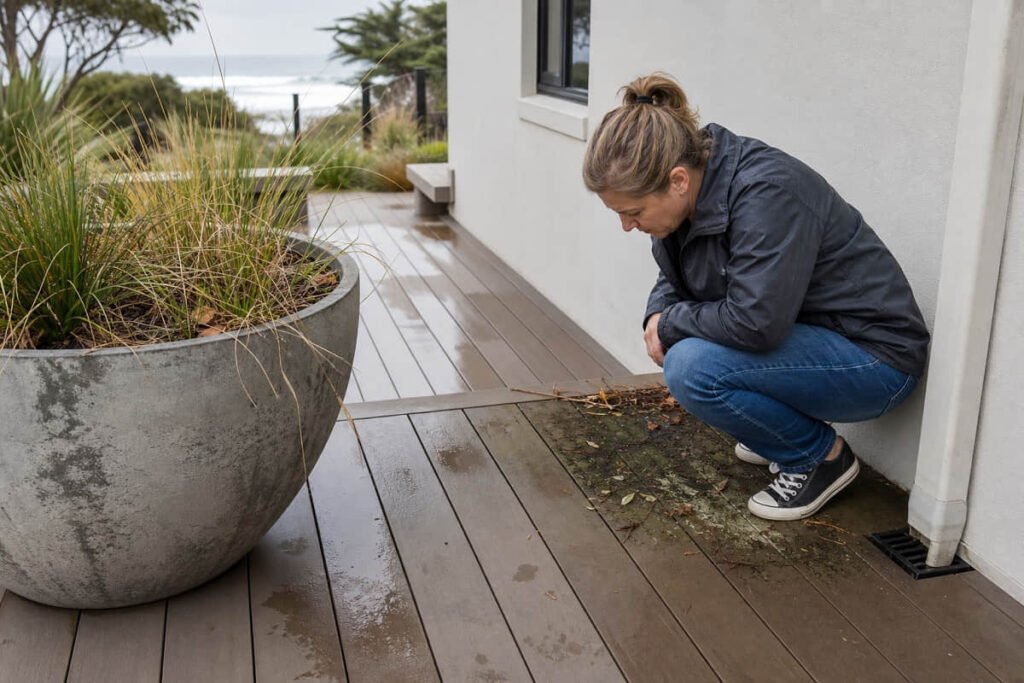
Check board gaps, wall edges, downpipes, drains, and shaded corners. Water and organic debris tend to collect in these areas.
On coastal projects, we often see mould start beneath planters beside solid walls. The boards remain sound, but the area gets little sun or airflow.
If the cause is unclear, inspect the deck after rain. The slowest area to dry will often develop mould first.
Choose Safe Tools and Cleaning Products
Most jobs need a garden hose, bucket, soft nylon brush, and approved cleaning product. Wear gloves, eye protection, and closed shoes with good grip.
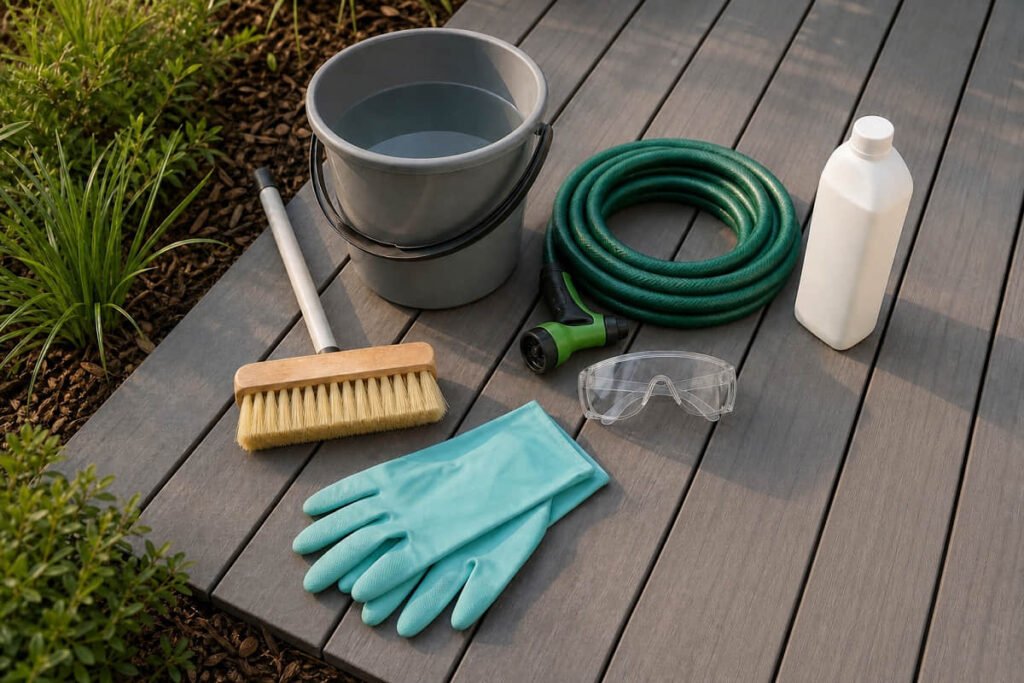
Read the product label before mixing. Check the dilution ratio, dwell time, coverage, and runoff advice. A stronger mix may leave residue or mark the finish.
Never mix cleaning products. Common household cleaners can create harmful fumes or react with the board surface. Keep people and pets away until the deck dries.
Test the Cleaner First
Apply the cleaner to an offcut or inconspicuous area. Use the same mix, brush, and dwell time planned for the deck.
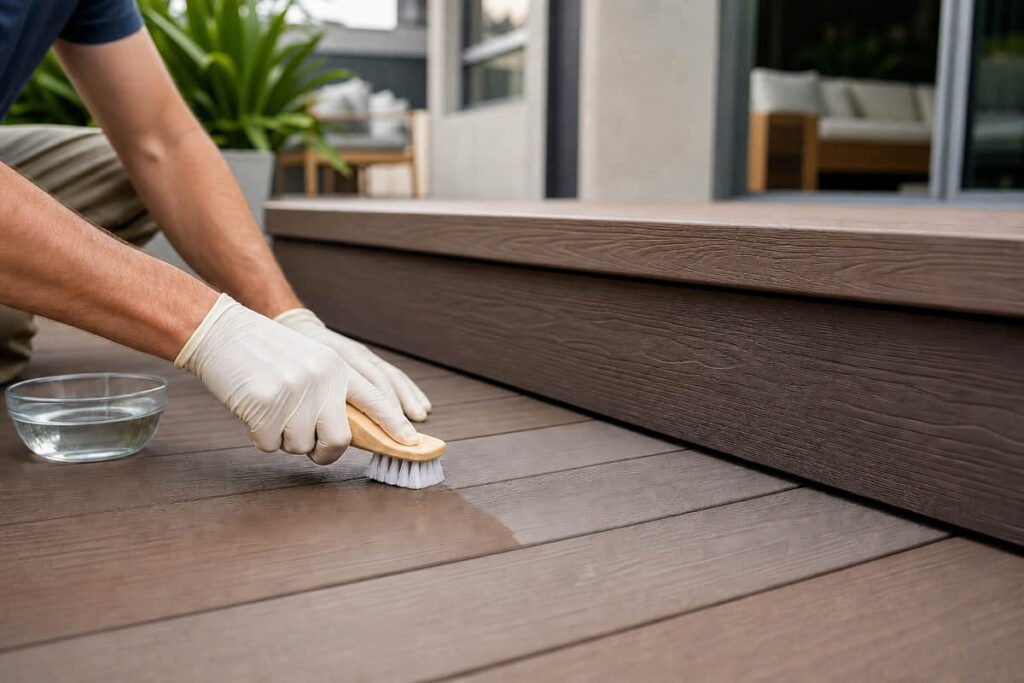
Rinse the test patch and let it dry. Compare its colour, texture, and sheen with nearby boards. Stop if the surface looks dull, fades, or feels rough.
Clean the Deck in Controlled Sections
Rinse away loose surface debris with a garden hose. Avoid pushing debris into board gaps or towards a blocked drain.
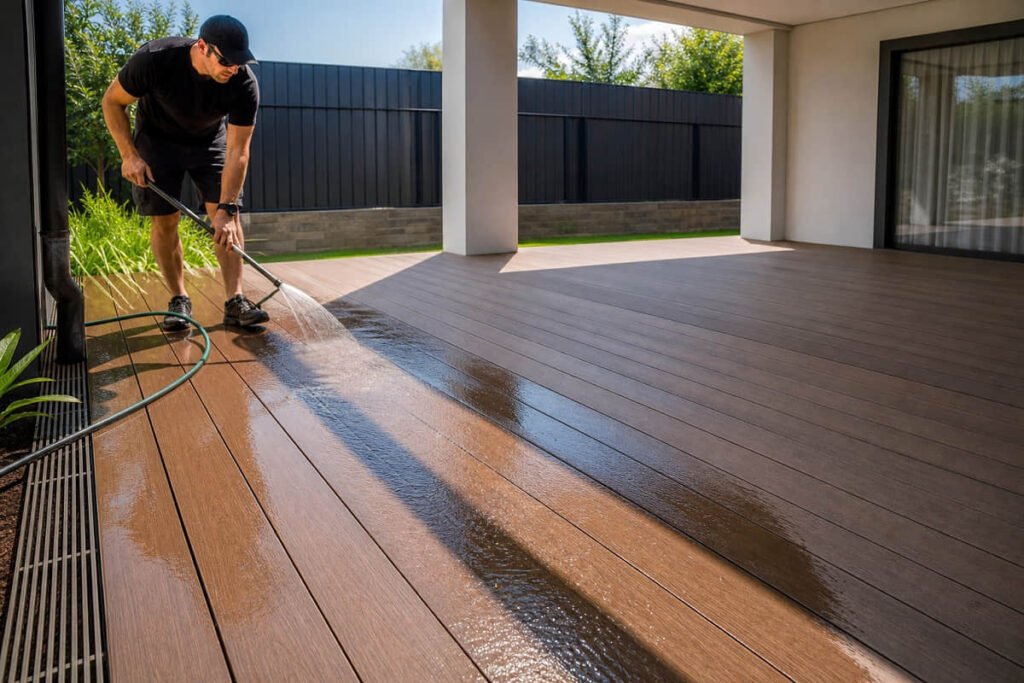
Divide the deck surface into sections you can clean before the product dries. Section size will depend on the sun, wind, and site access.
Apply the cleaning solution as directed. Brush along the grain and use steady pressure around grooves, fixings, and edges. Let the cleaner and dwell time do the work.
Rinse each section before moving on. Soapy water left to dry can form a patchy film.
Let the entire deck dry before judging the result. Repeat the approved mild process before using a stronger cleaner.
How Should You Treat Stubborn Black Spots?
Black marks do not confirm a mould species. On sound capped boards, they often form within damp pollen, soil, or food residue.
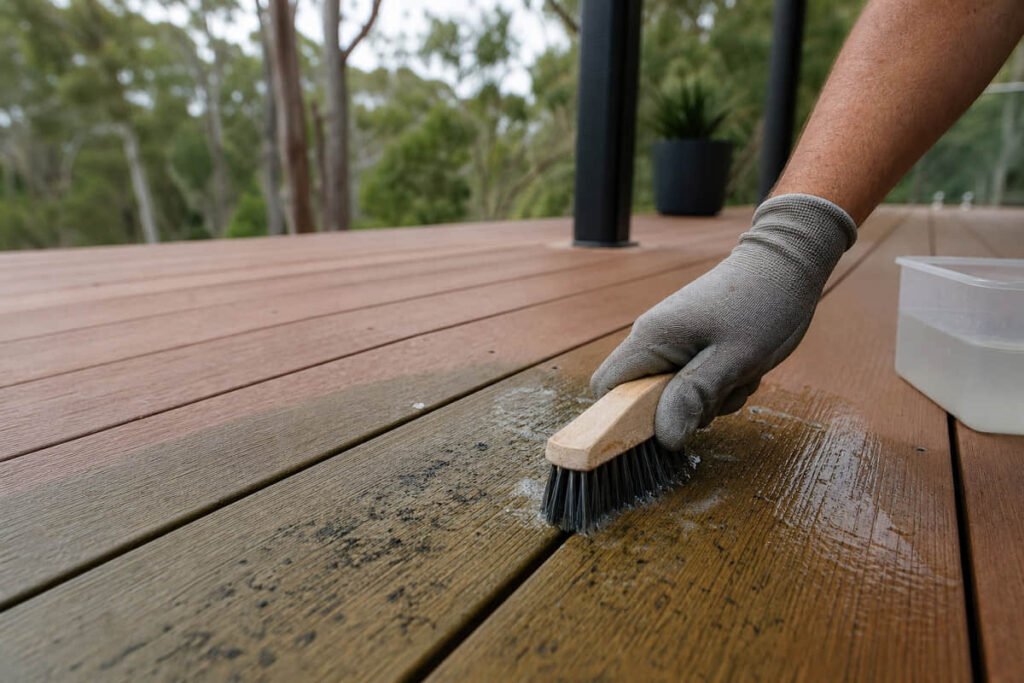
Repeat the mild cleaning process first. If marks remain, use an approved composite deck cleaner. Test every stronger treatment before applying it across the deck.
| What you find | First response | Next check | Stop work when |
|---|---|---|---|
| Light green film | Warm soapy water and soft brush | Inspect after drying | The finish changes |
| Local black spots | Approved composite deck cleaner | Check nearby moisture traps | Colour begins to fade |
| Heavy mildew stains | Request board-specific advice | Test a hidden area | The surface feels rough |
Photograph the area before and after cleaning. Record the product, mix ratio, dwell time, date, and weather. These details can help resolve a warranty query or prevent another site visit.
For an unknown LastElegance product, send the order reference and site photos to our team. We can check available records and confirm the right care advice.
Contact our sales team for help with board identification or cleaner compatibility.
Which Cleaning Methods Can Damage the Boards?
The wrong tool, chemical, or pressure setting can mark composite decking. Avoid these common causes of damage:
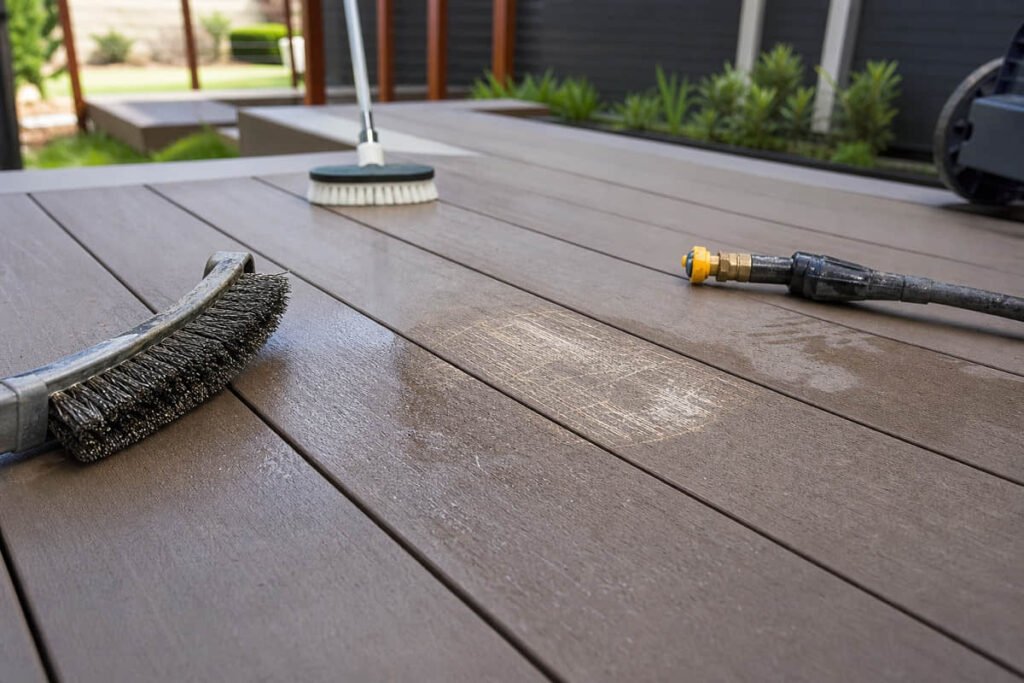
- Metal brushes: They can scratch or polish parts of the cap layer.
- Abrasive pads: They may change the sheen across a visible area.
- Unapproved chlorine bleach: It can fade some board finishes.
- Strong solvents: They may soften or stain the surface.
- Unapproved oxalic acid: It may change the board colour.
- Excess dwell time: Dried cleaner can leave a visible film.
- High-pressure spray: A narrow jet can mark grooves and edges.
A deck brightener product often targets rust stains or ground-in dirt. That does not make it suitable for mould. Likewise, “composite-safe” does not mean safe for every composite product.
If an unsuitable cleaning product reaches the boards, rinse it off with clean water. Do not add another chemical to neutralise it. Ask the manufacturer for advice if the finish changes.
Can You Use a Pressure Washer?
Some modern composite deck boards allow controlled pressure washing. Older or uncapped products may suffer permanent surface damage.
Before using a pressure washer, follow the care guide for the exact board. The approved pressure, fan tip, working distance, and spray direction can differ between products.
Do not copy settings from another brand or project. Use a garden hose and soft brush when the approved settings are unknown. Pressure washing may save time, but it will not fix trapped moisture.
Why Does Mould Grow on Composite Decking?
Mould can grow on pollen, soil, food waste, and plant matter sitting on the boards. It does not need the composite core as a food source.
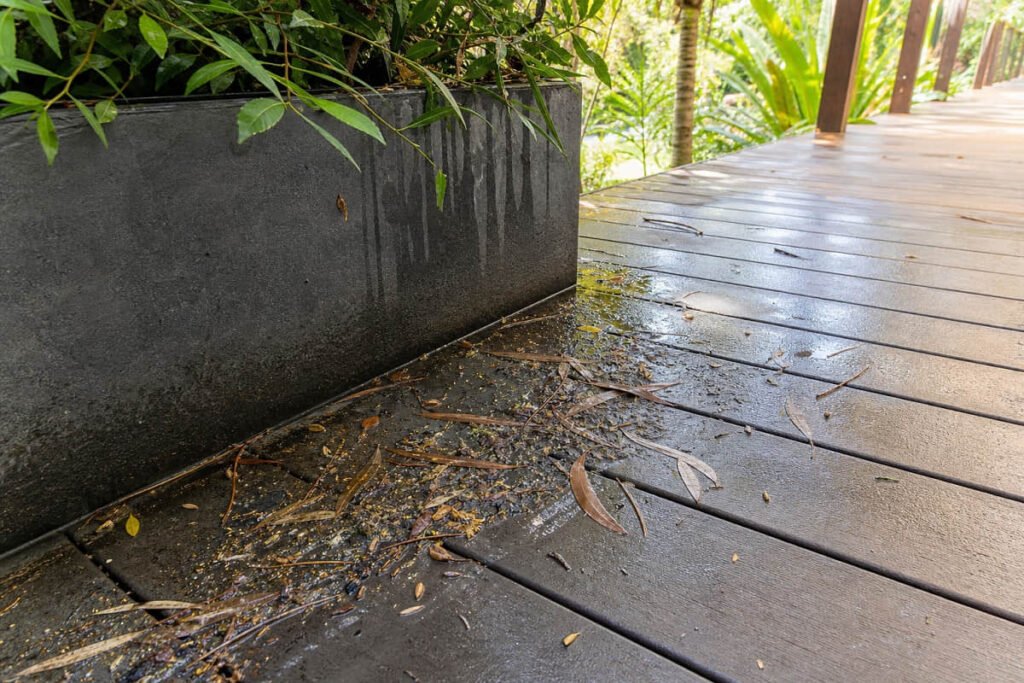
Surface growth does not mean the board has failed. It often means the deck surface stays damp for too long.
Deep grooves, blocked gaps, shade, and low airflow can slow drying. Pool splash, leaking irrigation, and planter runoff may also create local wet zones.
A cap layer limits water and stains from reaching the composite core. It cannot stop mould growing on dirt left across the surface. Product choice matters, but good drainage and airflow still play a key role.
Check product specs to compare LastElegance profiles, finishes, and available test data.
Is It a Cleaning Issue or an Installation Issue?
Start with the growth pattern. Scattered marks after wet weather often point to surface dirt and slow drying. Growth along one edge suggests a local drainage or airflow issue.
| Site pattern | Likely cause | What to do |
|---|---|---|
| Mould beneath pots or mats | Trapped surface moisture | Clean the area and raise suitable items |
| Growth along one wall | Shade, runoff, or poor airflow | Check fall and edge clearance |
| Growth around blocked gaps | Debris restricts drainage | Clear gaps without damaging clips |
| Decking boards remain wet for days | Drainage or ventilation fault | Inspect the deck and nearby levels |
| Boards move or lift | Possible board or subframe fault | Close the area and arrange an inspection |
Cleaning cannot correct poor fall, blocked drainage, or weak airflow. We see this during call-back inspections. The boards look clean, but the same wet corner develops mould after the next storm.
Ask the installer to inspect boards that move, lift, feel soft, or remain wet. The inspection should cover the subframe and the visible deck surface.
How Can Builders and Designers Prevent Call-Backs?
Prevention starts during design. The deck must shed water, maintain airflow, and remain easy to inspect.
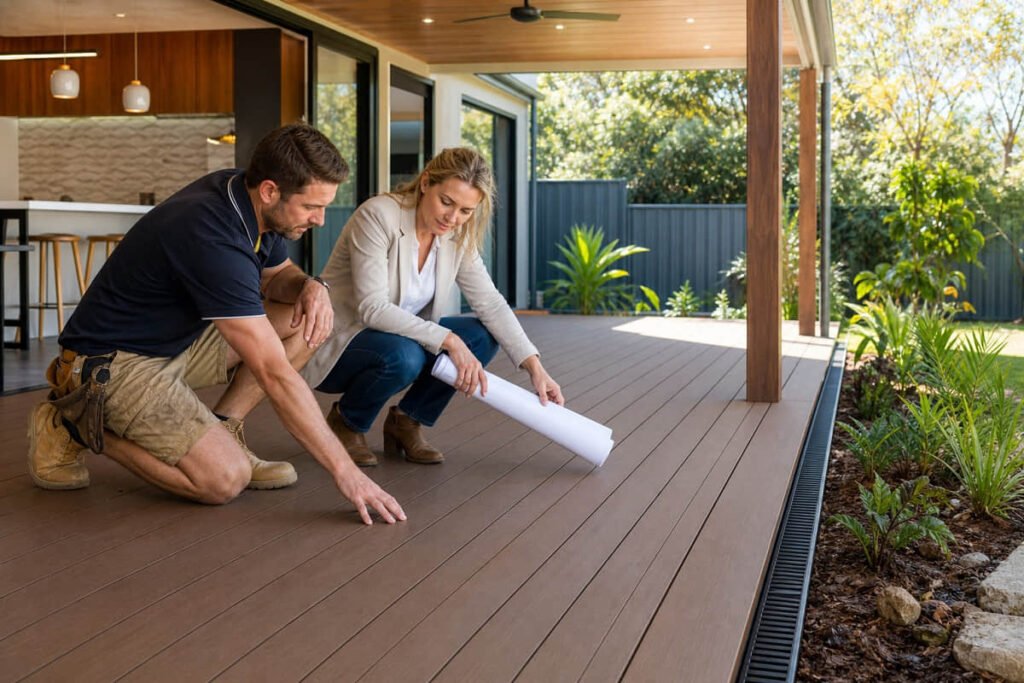
Design Water Out of the Deck
Map the drainage path before fixing the first board. Water should move away from walls, doors, and the subframe.
- Direct downpipes and irrigation away from the deck.
- Keep soil and mulch below the board edges.
- Follow the specified board gaps and joist spacing.
- Avoid details that trap runoff beside walls.
Use the product guide and site drainage plan. Do not apply one fall or clearance rule to every project.
Protect Airflow Around the Boards
Walls, screens, planter boxes, and low subframes can create damp pockets. Check their effect on cross-ventilation before approving the layout.
This step matters on shaded and coastal projects. Less sun and high humidity can extend drying times after rain.
Keep Maintenance Areas Accessible
Maintenance teams need access to drains, board gaps, and debris traps. Avoid placing fixed furniture or planters over key access points.
Record the board series, care guide, drainage points, and approved cleaning method at handover. Our distributors report fewer repeat questions when clients receive this information.
FAQs
Are there eco-friendly methods for removing mould from composite decking?
Use a biodegradable, bleach-free cleaner only when it meets the manufacturer’s cleaning recommendations. Sweep first and spot-clean small areas to reduce water use. Control runoff as the label directs.
Can vinegar be used to clean mildew off composite decking?
Use vinegar only when the care guide allows it. Vinegar is acidic and may change the colour or sheen of some capped finishes. A natural cleaner is not always board-safe.
What happens if you leave mould on composite decking?
Mould can reduce grip and leave stains that become harder to remove. Repeat growth may also point to blocked gaps, poor airflow, or a leak near the subframe.
A safe cleaning method protects the finish. Good drainage and airflow help stop the mould from returning.
