

Painting may seem like a quick fix for faded composite boards. However, the wrong coating can cause peeling, slip risks, and warranty issues.
So, can you paint composite decking? Some older uncapped boards may accept a compatible coating. Most modern capped boards shouldn’t be painted because the polymer surface resists adhesion.
Before proceeding, confirm the board type, check the warranty, and test the coating on a hidden area. This guide explains when painting may work and when replacement is the safer option.
What Is the Difference Between Capped and Uncapped Decking?
The main difference is the protective outer layer.
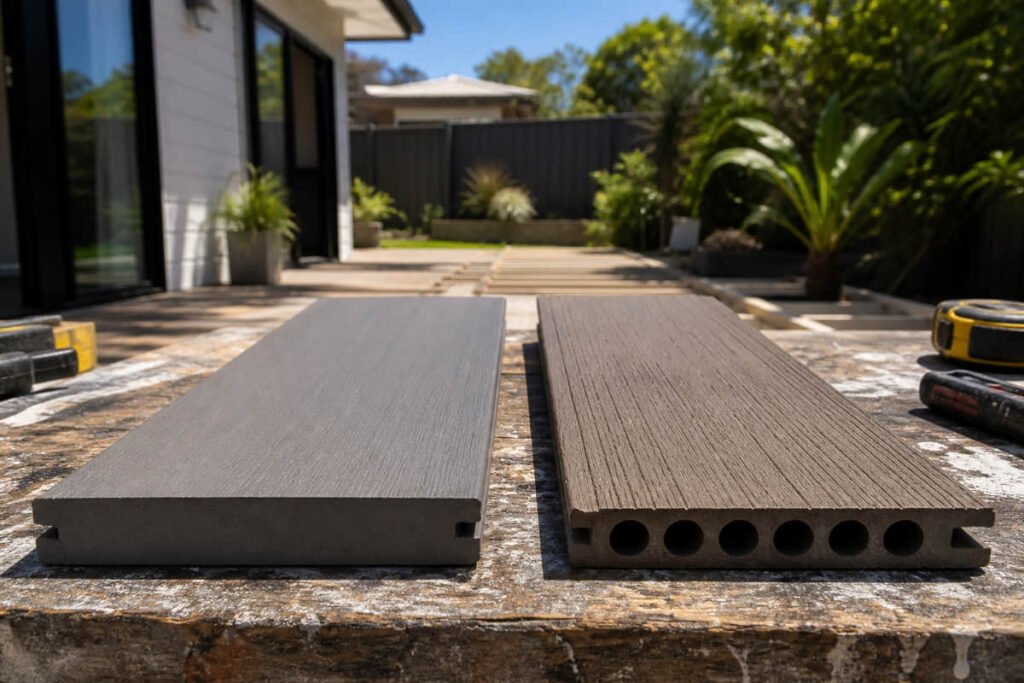
Uncapped composite decking
Uncapped boards use the same composite material through the full profile. Their surface may become more porous after years of weather exposure.
This can help some coatings bond. Results still depend on the board formula, surface condition, contamination, primer, and paint system.
Capped composite decking
Capped boards have a polymer shell over the composite core. This shell helps resist moisture, stains, UV exposure, and colour change.
It also makes the surface harder for paint to grip. For this reason, most capped composite decking shouldn’t be painted.
LastElegance co-extruded boards use a 0.8 mm protective cap. Sanding or coating may change the factory surface and reduce its performance.
Can You Paint Composite Decking in Its Current Condition?
You should only consider painting older, uncapped decking that is clean, dry, stable, and structurally sound.
| Board condition | Paint suitability |
|---|---|
| Older uncapped boards in sound condition | May be suitable |
| Modern capped composite boards | Usually unsuitable |
| Cracked, warped, or delaminated boards | Replace instead |
| Unknown board type | Confirm before coating |
| Damp or contaminated surface | Don’t paint |
| Manufacturer approves the coating system | Test before full use |
Paint won’t repair damaged boards, failed fixings, poor drainage, or subframe problems. Oil, wax, silicone, grease, and trapped moisture may also cause early peeling.
An expired appearance warranty doesn’t mean painting is safe. Ask the manufacturer how a coating may affect any remaining structural or product coverage.
Our trade partners often see failed coatings where the board type wasn’t confirmed first.
How Do You Prepare Composite Decking for Paint?
Preparation has the biggest effect on paint adhesion. Poor cleaning or trapped moisture can cause blistering and peeling.
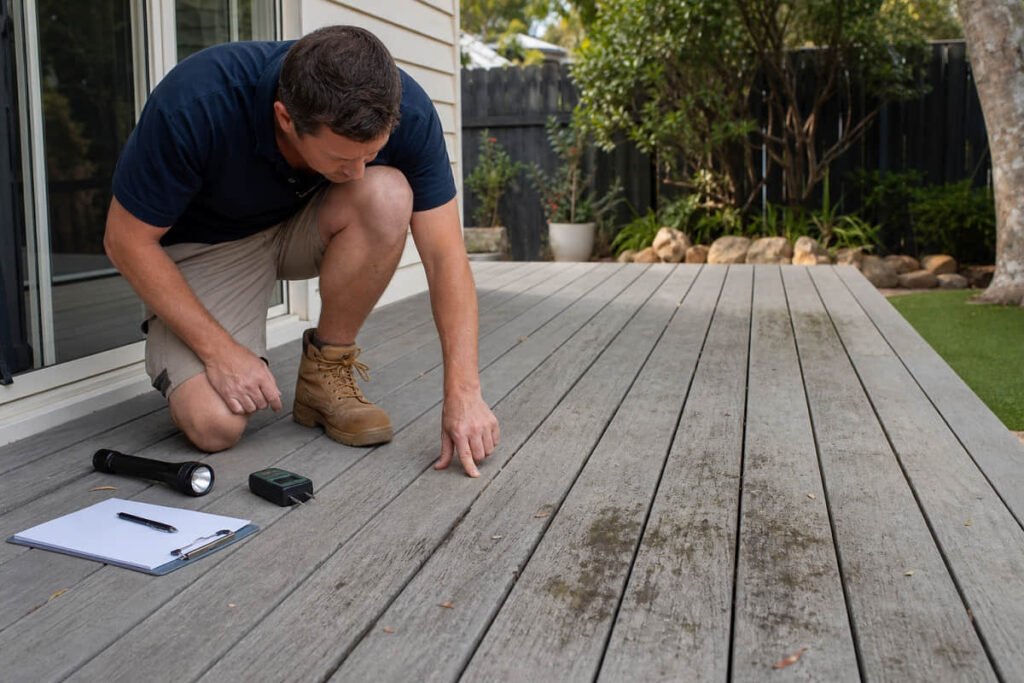
Use this process for approved uncapped boards:
- Confirm whether the boards are capped or uncapped.
- Read the care instructions and warranty terms.
- Clean with a composite-safe cleaner.
- Let the boards dry fully.
- Test the primer and coating in a hidden area.
- Apply the approved primer and finish coats.
- Keep the deck closed until the coating cures.
Avoid cleaners that leave soap, oil, or wax residue. These films can stop the primer from gripping.
Light sanding may help some uncapped boards. Only sand when both the board maker and coating supplier approve it.
Never sand through the cap layer on capped decking. This exposes the core and damages the protective finish.
Follow the coating supplier’s limits for temperature, humidity, drying time, and coat thickness.
What Paint Can Be Used on Composite Decking?
The answer depends on the coating system. Some approved uncapped boards may accept an exterior acrylic coating.
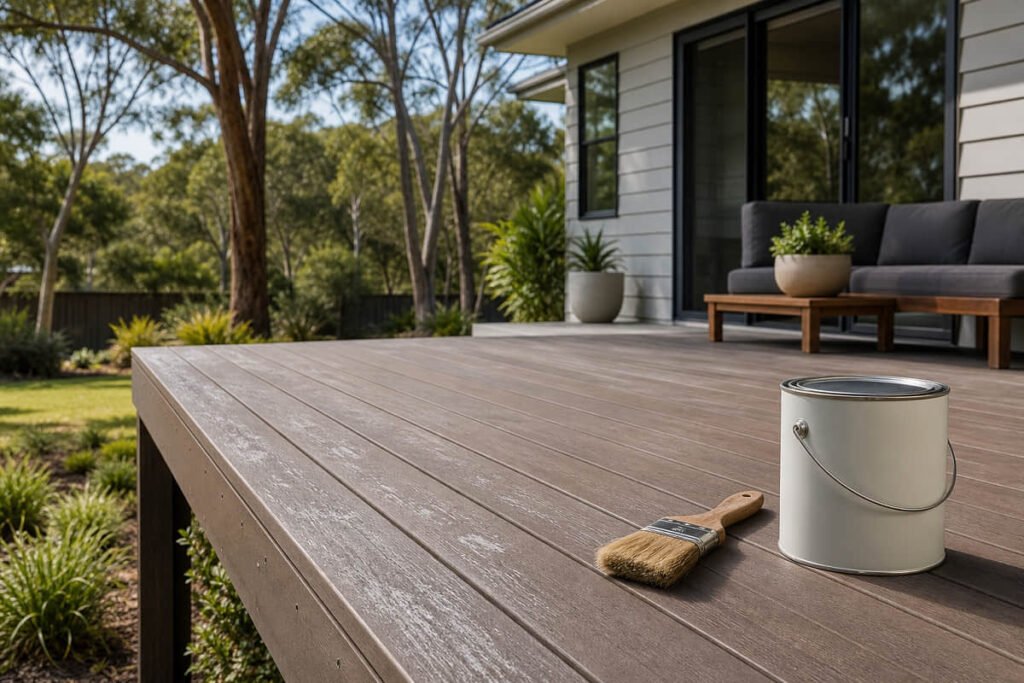
There is no single paint system that suits every composite formula.
Use a complete coating system approved for wood-plastic composite and pedestrian surfaces. Timber-only deck paint may not bond correctly.
Check the technical data sheet for:
- approved substrates;
- primer needs;
- application temperature;
- drying and curing time;
- required coat thickness;
- Wet-area suitability.
Test the full system before treating the deck. Check adhesion, colour, texture, and wet grip after curing.
Never rely only on the words “deck paint” on the label. Ask the supplier to confirm that the coating suits your exact board type.
Can Painting Affect Slip Resistance?
Yes. Paint may fill the original texture and reduce wet grip.
This matters around pools, stairs, ramps, outdoor kitchens, and commercial walkways. A smooth coating may become slippery after rain or cleaning.
LastElegance decking has an R11 slip resistance result under AS/NZS 4586 before coating. The original anti-slip properties will be lost after painted.
Contractors working near pools often treat slip performance as a product selection issue, not a later coating fix.
Is It Better to Paint or Replace Composite Decking?
The better option depends on the board type, damage, project life, and finish you need.
| Deck condition | Painting | Replacement |
|---|---|---|
| Faded uncapped boards | May be possible | Optional |
| Capped composite boards | Usually not recommended | Often the better option |
| Cracked or delaminated boards | Not suitable | Recommended |
| Localised damage | May look uneven | Replace affected boards |
| Major colour change | Results may vary | More consistent finish |
| Low-maintenance finish wanted | Adds future upkeep | Better suited |
Painting may cost less at the start. However, cleaning, testing, touch-ups, and future recoating add labour over time.
LastElegance manufactures capped composite decking in-house. This supports consistent specifications, tighter quality control, and custom colours, textures, sizes, and profiles.
Request Free Samples to compare factory colours and textures before selecting replacement boards.
What Are the Alternatives to Painting?
Painting isn’t the only way to refresh an older composite deck.
Deep clean the boards
Dirt, algae, and residue can make boards look more faded than they are. A suitable composite cleaner may restore much of the original appearance.
Follow the board maker’s instructions. Test the cleaner in a hidden area first.
Replace damaged boards or the deck surface
Replace isolated cracked, scratched, or worn boards when the rest of the deck remains sound.
New boards may not match older faded boards. Compare samples before ordering.
A full surface replacement gives a consistent factory finish. It also avoids the adhesion, upkeep, and slip risks linked to painting.
Explore composite decking to compare available colours, textures, and profiles.
Frequently Asked Questions
Can you paint composite decking without sanding?
Some uncapped boards may accept a compatible coating without sanding. Don’t sand capped decking unless the manufacturer provides written approval.
Can you stain composite decking?
Some older uncapped boards may accept a compatible stain. Capped boards usually resist stain for the same reason they resist paint.
Do you need primer before painting composite decking?
A compatible primer is often needed for approved uncapped boards. Follow the coating supplier’s instructions for the complete system.
Does painting composite decking affect the warranty?
It may affect warranty coverage. Check the written terms before applying paint, primer, stain, or sealer.