

PVC costs more upfront. Composite has a wood core that can absorb moisture if the cap layer fails. Both matter — but neither tells you which one belongs on your next job.
Australian builders face a real fork here. Fire compliance zones, coastal UV exposure, and client budgets all pull in different directions. The right call depends on your project type, not just the price per board.
This guide compares composite and PVC decking on what actually moves the needle: fire ratings, UV and weather performance, slip resistance, long-term upkeep, cost, and supply reliability. We’ll call out where each material wins — and where it doesn’t.
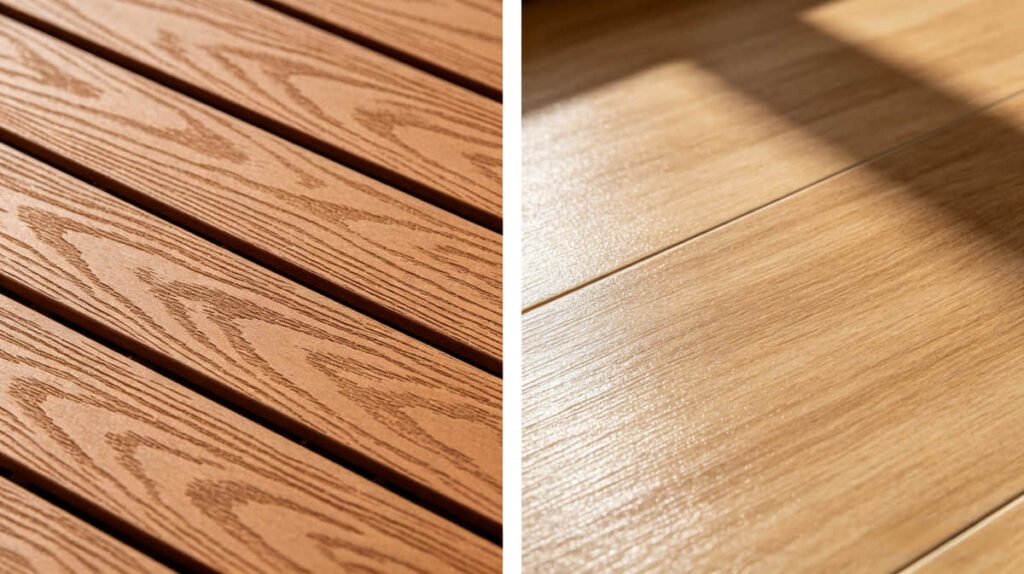
| Feature | Composite Decking | PVC Decking |
|---|---|---|
| Appearance | Wood grain texture, warm underfoot | More uniform; improved in recent years, but more plastic-like |
| Fire rating | ASTM E84: FSI 85, SDI 300 | Varies by product — check before specifying |
| UV performance | ΔE ≤ 4–5 after 3,000 hours QUV testing | Good, but dark colours expand more in direct heat |
| Slip resistance | AS/NZS 4586: R11 | Varies by product |
| Maintenance | Wash down twice a year | Slightly easier to wipe clean |
| Warranty | 15 years | Varies by brand |
| Cost | Lower board price | Typically higher per board |
| Sustainability | 60% recycled content; CE, RoHS, ISO certified | 100% plastic; harder to recycle at end of life |
What Is Composite Decking Made Of?
Composite boards blend wood fibre and recycled HDPE plastic into boards that look and feel close to natural timber. A co-extruded cap layer wraps the core — blocking UV rays, moisture, and surface wear.
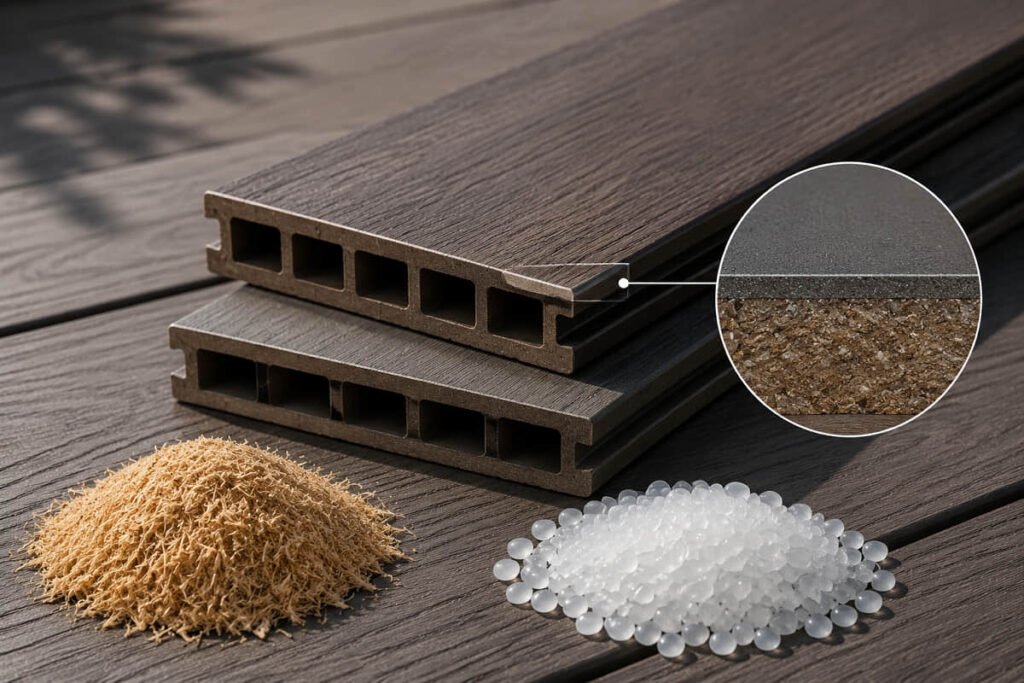
LastElegance composite boards use 60% recycled content. HDPE density sits at 0.95 g/cm³. The cap layer is 0.8 mm thick, which is on the thicker end compared to most products on the market. That extra cap thickness is what drives UV protection and colour retention over time.
The wood fibre gives boards their weight, rigidity, and warm underfoot feel. The HDPE binds it, seals it, and keeps moisture out.
For full specs and dimensions, view our composite decking range.
What Is PVC Decking Made Of?
PVC decking is 100% polyvinyl chloride — no wood fibre, no organic content. It’s a synthetic board shaped to mimic timber. Because there’s nothing organic inside, PVC boards can’t rot, swell, or feed insects.
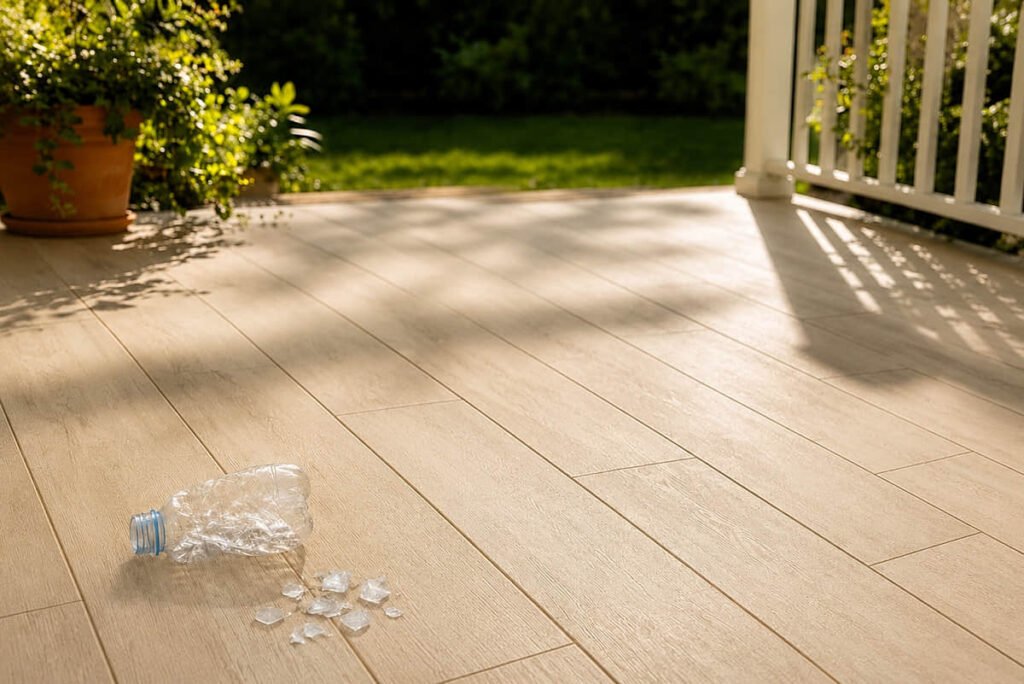
The trade-off is clear. Maximum moisture resistance. But a feel and look that doesn’t match natural timber — especially underfoot. For some projects, that’s fine. For others, it’s the deciding factor.
How Do They Look and Feel?
On appearance, composite decking wins clearly. Wood grain patterns are pressed into the surface. Boards come in a wide colour range. The feel underfoot is warmer than solid plastic — and for most clients, that’s what they’re asking for.
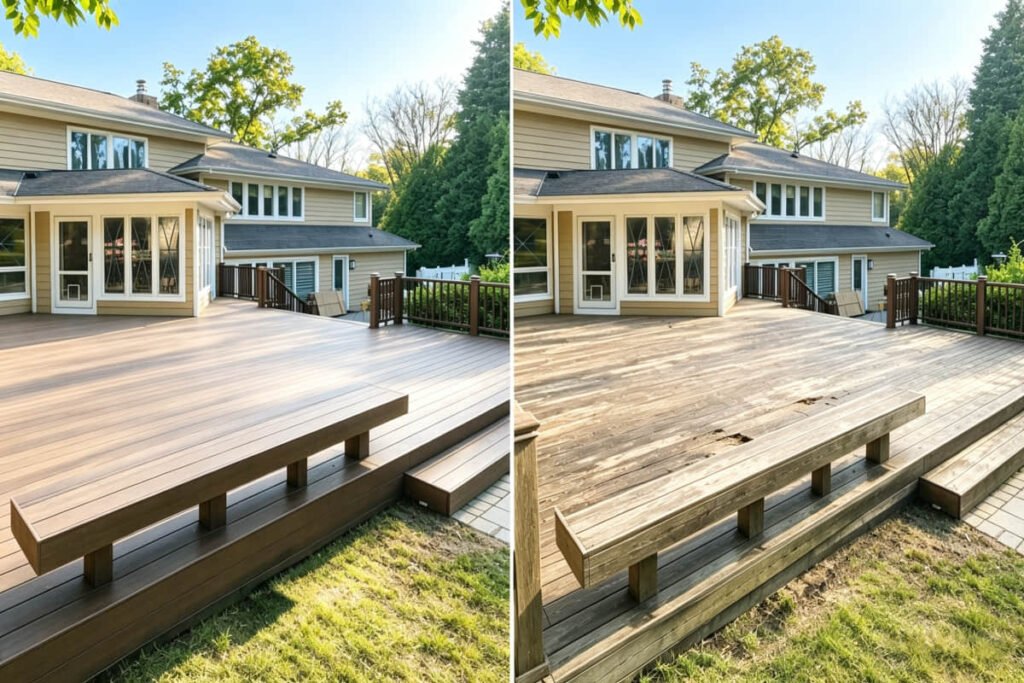
PVC boards have improved over the years. But for projects where a natural wood feel matters — residential developments, resort-style outdoor areas, landscaping jobs — composite is the stronger pick.
What gives composite decking a more natural look:
- Wood grain patterns pressed directly into the board surface
- Multi-tone colour blending that mimics real timber variation
- A warmer feel underfoot compared to PVC
- A colour range from light ash tones to deep charcoal
Our composite range shares the same colour palette across decking, cladding, and screening. For B2B buyers specifying a whole project, that means one colour system across every surface — no mismatches, no separate orders to manage.
How Does Each Material Perform in Australian Conditions?
Australia puts decking under real pressure. Queensland’s UV index is among the highest in the world. Add coastal salt air, humidity, and summer heat swings — and you need boards with solid test data behind them, not just a product brochure.
UV and Colour Stability
Composite handles UV exposure well. A combined HALS and UV absorber system in the cap layer keeps colour stable over years of direct sun. Our boards hold to ΔE ≤ 4–5 after 3,000 hours of QUV accelerated aging — the industry benchmark for long-term colour stability.
PVC’s UV story is also solid. But in full sun, dark PVC boards can expand more than composite. That’s worth noting on exposed installs. For shaded or covered areas, it’s less of a concern.
Slip Resistance
LastElegance composite decking carries an AS/NZS 4586 R11 slip resistance rating. That covers most Australian residential and commercial project specs — including pool surrounds and public outdoor areas. Always confirm the exact slip rating when specifying for wet zones.
Fire Compliance and BAL Ratings
Bushfire risk comes up on a growing share of Australian projects. Our composite boards are tested to ASTM E84, returning a Flame Spread Index of 85 and a Smoke Developed Index of 300.
Before specifying for a Bushfire Attack Level zone, check the BAL rating required under the NCC and your state’s planning rules — then match the product’s fire test data to that requirement. We can supply full fire test documentation on request.
Termite Resistance
Composite resists insects because of its HDPE content. PVC is also termite-resistant. Both beat timber — no treatment, no repeat inspections needed.
Our distributors in coastal Queensland see this on most commercial jobs: composite holds its surface finish without callbacks. That’s what the test data reflects in practice.
Which One Needs Less Upkeep?
Compared to timber, both materials require a fraction of the work. No oiling. No staining. No annual treatment cycle. That’s a real selling point for clients tired of the upkeep that comes with treated pine or merbau.
Composite needs a wash down twice a year. PVC is slightly easier to clean — no wood fibre to trap stains. In practice, the difference is small. Neither is zero maintenance, but both come close.
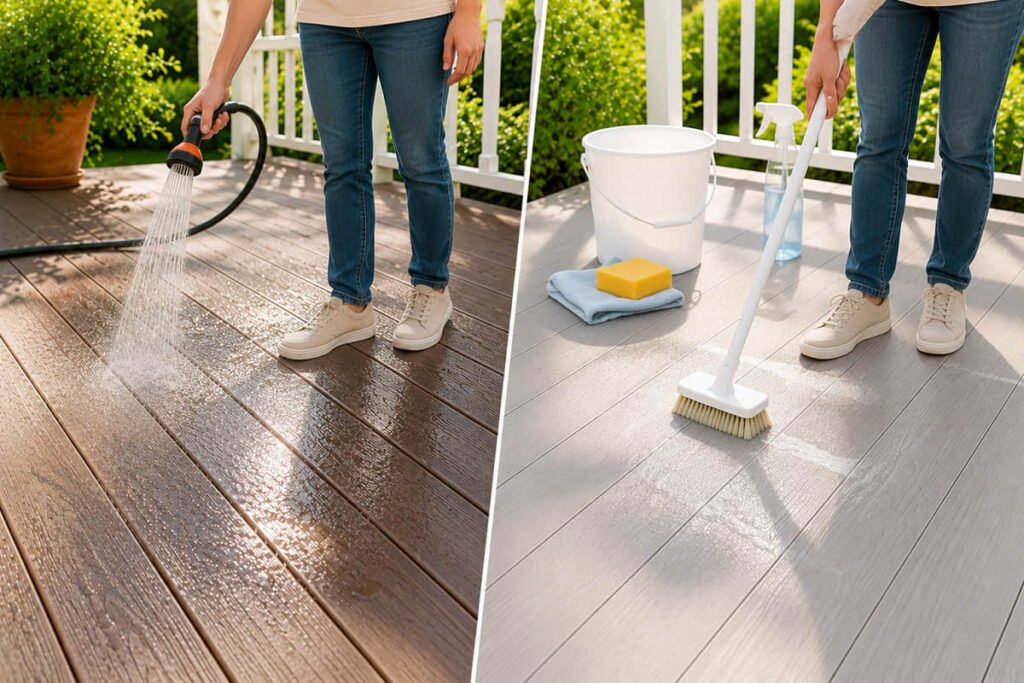
How to clean composite decking:
- Rinse with a garden hose to remove loose dirt and debris
- Mix warm water with a mild household detergent
- Scrub with a soft brush — pay attention to board grooves
- Rinse and leave to air dry
For B2B buyers, low upkeep translates directly: fewer client call-backs, lower long-term cost, and a stronger warranty story to close projects with.
What’s the Warranty and Expected Lifespan?
LastElegance composite decking carries a 15-year warranty. The warranty applies under normal use and correct installation, and excludes damage from incorrect fitting or misuse.
For context: quality composite boards are built for a 20–30 year lifespan under Australian conditions. The gap narrows when you factor in cost-per-year and total installed price. Be clear with clients on what the warranty covers — incorrect installation is the most common exclusion.
Is PVC or Composite Cheaper?
At the board level, composite is the more price-competitive option. PVC typically costs more per linear metre. But board price alone doesn’t give you the full picture.
Total project cost includes the subframe, fastener system, installation time, and long-term upkeep. Factor those in, and composite pulls further ahead on value for most jobs.
| Cost Factor | Composite Decking | PVC Decking |
|---|---|---|
| Board cost per m² | Lower | Higher |
| Installation | Hidden clip system; clean, screw-free surface | Varies by product |
| Maintenance over 10 years | Minimal — wash down only | Minimal — slightly easier |
| Long-term total cost | Lower for most projects | Higher |
For buyers sourcing at volume, factory-direct supply cuts cost further. LastElegance ships composite decking direct from our factory — no distributor margin added along the way.
Which Is the Greener Choice?
On environmental impact, composite has a clearer story. Our boards use 60% recycled content — reclaimed wood fibre and recycled HDPE — keeping material out of landfill and cutting demand for virgin plastic or fresh-cut timber.
PVC is 100% plastic with no recycled content in most products. It’s also harder to recycle at the end of life. Most PVC boards end up in a landfill when a project is replaced.
We won’t oversell it: composite still contains plastic. But the recycled content story is real and documentable. Our boards carry CE, ISO, RoHS, and SGS certifications. Formaldehyde testing to EN 717-1 returned not detected — relevant for any indoor cladding application too.
So Which Should You Choose?
For most Australian outdoor projects, composite decking is the right call. It offers a natural look, a lower board price, recycled content, and proven UV performance in local conditions.
Choose composite decking when:
- Appearance and natural wood feel matter to the client
- The project calls for recycled or sustainable materials
- You’re sourcing at volume and need price efficiency
- Custom sizes, colours, or profiles are part of the design
Choose PVC decking when:
- The installation has constant water exposure, and zero organic content is a hard requirement
- The client has a firm spec for fully synthetic boards
- The project is in a covered or marine-adjacent area where any wood content poses a risk
Custom lengths, colours, surface textures, and profiles are available directly from our factory. If you’re a distributor or contractor specifying at volume, enquire about B2B pricing and lead times.
Frequently Asked Questions
Does composite decking meet Australian BAL fire requirements?
It depends on the BAL zone. Our boards are tested to ASTM E84 (FSI: 85, SDI: 300), which covers many project specs. For confirmed BAL-rated zones under the NCC, request the full fire test report and match it to your local planning requirements. We can supply documentation on request.
Will dog pee ruin composite decking?
No — capped composite won’t be damaged by pet urine. The cap layer seals the board surface, stopping moisture from soaking in. A rinse with clean water keeps things fresh.
Is PVC decking good around a pool?
Yes — PVC’s waterproof surface suits pool surrounds well. Composite is also a solid pick, as long as it carries a full cap layer and an R11 or better slip resistance rating. Always check the AS/NZS 4586 slip rating before specifying either material for a wet area.
What goes under composite decking?
Composite sits on a joist subframe — typically aluminium, steel, or treated pine. Recommended joist spacing is 300–350 mm centre-to-centre. A weed mat underneath helps with drainage and keeps growth from coming through between boards.
Is composite decking worth the money?
For most projects, yes. The upfront cost is higher than treated pine, but you save on oiling, staining, and replacement over 10–15 years. Factor in the 15-year warranty and low ongoing maintenance, and composite works out cheaper for most buyers over its lifespan.
Are composite decking boards eco-friendly?
Our boards use recycled wood fibre and recycled HDPE — that cuts landfill waste and reduces demand for virgin timber. No material is impact-free, but composite has a better sustainability story than either PVC or pressure-treated timber.
What are the main advantages of PVC decking?
PVC contains no wood, so it won’t absorb moisture, rot, or attract insects. It’s a strong pick for high-moisture environments where any organic content is a risk. The trade-off is a higher price and a less natural look compared to composite.
